Category: Blog

  • After the Death of the Sky-God: Why Jesus Still Matters

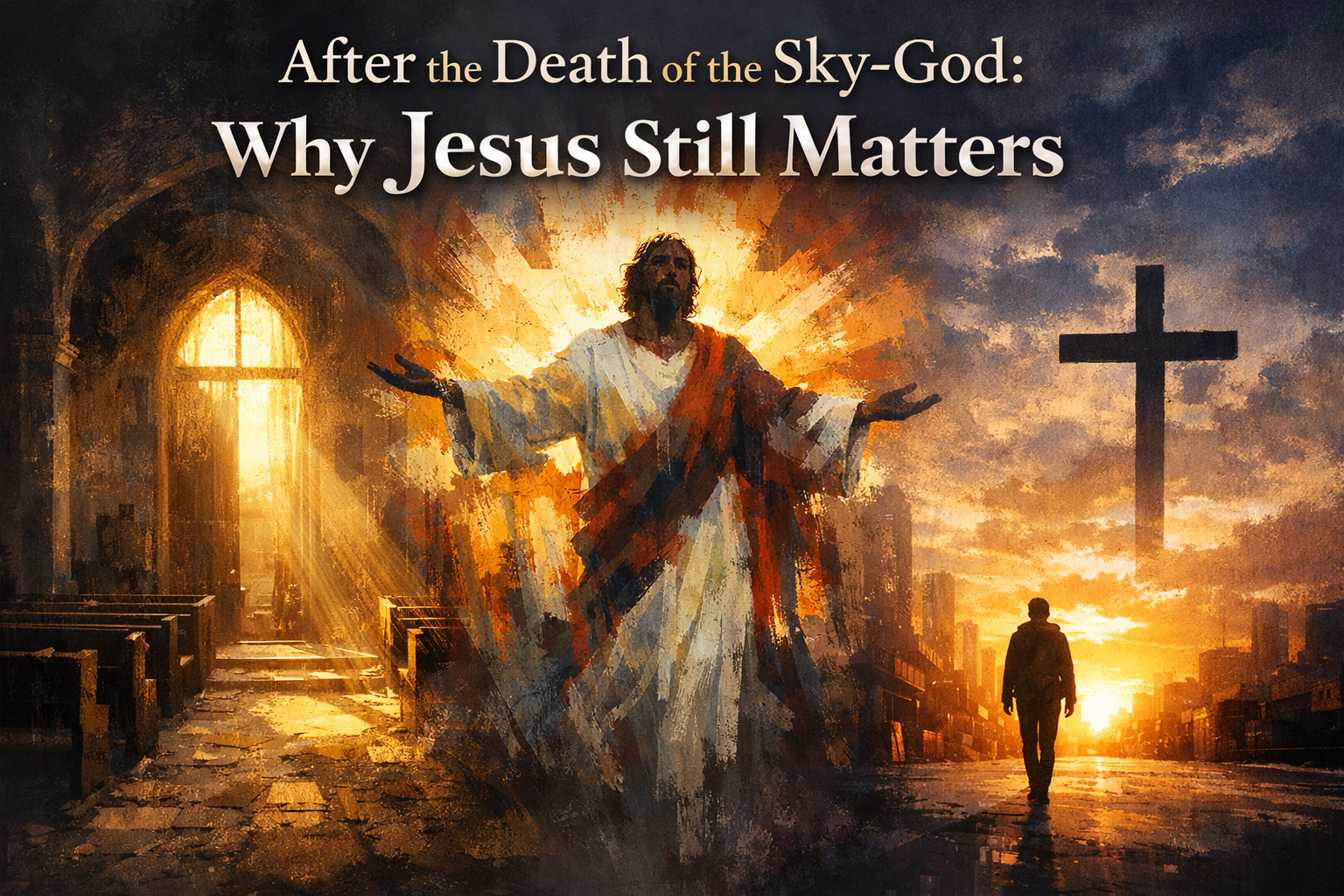
    After the Death of the Sky-God: Why Jesus Still Matters


    There’s a quiet confession happening all over the place.

    People aren’t necessarily rejecting Jesus.

    They’re rejecting the version of God they were handed.

    The old framework—an elderly male deity floating somewhere above the clouds, intervening selectively, suspending physics when pleased—doesn’t survive long in a world shaped by telescopes, trauma psychology, and historical scholarship.

    For many thoughtful people, that model collapsed.

    And when that model collapsed, faith collapsed with it.

    But here’s the real question:

    What if the collapse wasn’t the end?

    What if it was renovation?

    When the Old God Stops Working

    Modern people aren’t stupid. We know how biology works. We understand mythic language. We recognize that ancient writers weren’t drafting lab reports.

    So when faith demands intellectual dishonesty—when belief requires pretending first-century cosmology is modern science—people walk.

    Not because they hate God.

    Because they can’t lie to themselves.

    If Christianity is going to survive, it cannot demand intellectual suicide.

    Reframing Jesus

    Strip away the supernatural scaffolding for a moment.

    What remains?

    A first-century Jewish teacher whose life radiated radical inclusion.

    A boundary-breaker who erased “unclean” categories.

    A man whose love threatened religious power structures.

    A life so open, so transparent to divine depth, that people experienced God through him.

    Not a sky-magician.

    A fully human being alive to the Depth of Being.

    What if “God” is not a being up there—but the Ground of Being right here?

    That shifts everything.

    Salvation Without Escapism

    In this reframed vision:

    Salvation is not a heavenly evacuation plan.

    Resurrection is not resuscitated tissue.

    Atonement is not divine child abuse.

    Instead:

    Salvation is becoming fully alive.

    Resurrection is the unkillable power of love.

    Atonement is reconciliation with reality itself.

    Death does not win when love refuses to disappear.

    That’s not anti-faith.

    That’s faith that can breathe.

    Why This Matters for the Nonreligious

    There are countless people who:

    Can’t believe in miracles as physics violations

    Don’t resonate with blood sacrifice theology

    Feel allergic to rigid dogma

    Yet still feel drawn to the figure of Jesus

    They assume they must choose between intellect and spirituality.

    That’s a false choice.

    You can reject supernaturalism and still take Jesus seriously.

    You can outgrow childish God-images without abandoning depth.

    Sometimes faith doesn’t die.

    Sometimes it molts.

    The Risk

    Let’s be honest.

    Reframing faith is uncomfortable.

    Traditionalists worry that metaphor drains power from doctrine. Conservatives fear the loss of certainty. Institutions don’t love structural demolition.

    But clinging to a model that no longer holds? That’s not faithfulness. That’s fear.

    If a belief system cannot survive questions, it was never strong to begin with.

    After the Collapse

    When the old image of God falls, you feel untethered.

    Good.

    Now you can rebuild without pretending.

    Jesus, stripped of magical thinking, still stands:

    Calling people into radical compassion

    Refusing purity hierarchies

    Breaking religious gatekeeping

    Exposing injustice

    Inviting people into fearless love

    That’s not less powerful.

    That’s terrifyingly powerful.

    The Invitation

    Maybe the future of Christianity isn’t defending ancient cosmology.

    Maybe it’s daring to say:

    The symbols were always pointing beyond themselves.

    Maybe God was never the sky-manager.

    Maybe God is the depth dimension of reality itself.

    And maybe Jesus still matters—not because he suspends physics—but because he shows what fully human love looks like.

    If that’s heresy, so be it.

    If that’s evolution, even better.

    The sky-god may be gone.

    Love isn’t.

    And that’s where I’m planting my flag.
  • After the Death of God

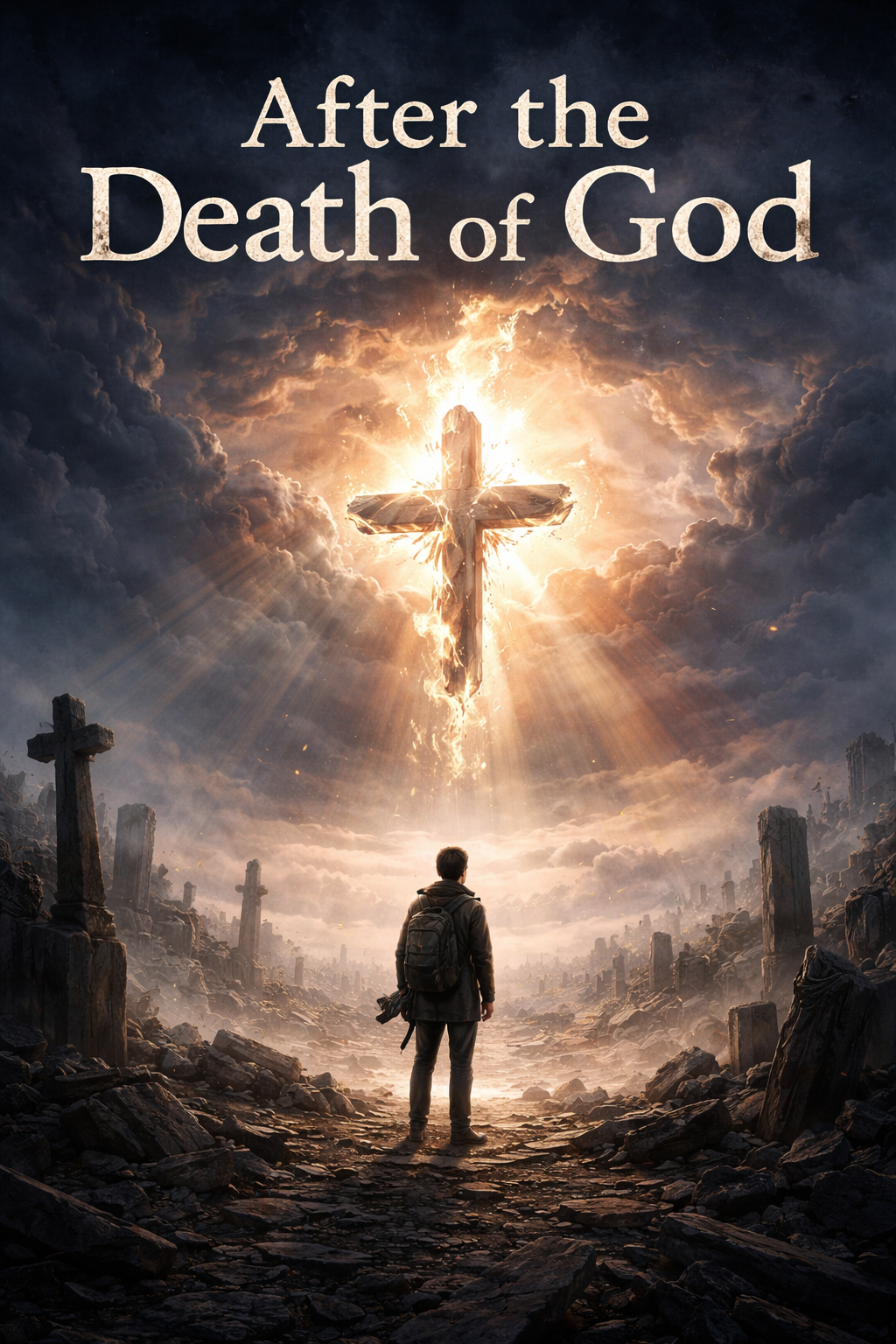
    After the Death of God


    There was a time when people whispered that God had died. Not literally. Not with a funeral and a gravestone. But culturally. Philosophically. Existentially.

    When the old certainties cracked, when institutions lost credibility, when prayers seemed to echo back from empty ceilings — many concluded that the divine had left the building.

    But here’s the uncomfortable truth:
    God didn’t die.

    Our projections did.

    When the Sky Went Silent

    In the 19th century, the philosopher Friedrich Nietzsche famously wrote, “God is dead.” He wasn’t celebrating atheism.

    He was diagnosing a cultural shift. The old metaphysical framework — the shared belief structure that held Europe together — was collapsing.

    Science was rising. Institutions were corrupt. Wars were brutal. Enlightenment rationalism had cracked the stained glass windows of certainty.

    What died was not the Divine.

    What died was the version of God that propped up power, patriarchy, empire, and unquestioned authority.

    And honestly? Good.

    If your god needs control to survive, let him stay buried.

    The Vacuum That Followed

    When inherited belief systems collapse, something fills the gap. Sometimes it’s nationalism. Sometimes it’s consumerism.

    Sometimes it’s self-worship disguised as empowerment.

    Humans are meaning-making creatures. We will kneel to something.

    After the “death of God,” we didn’t become secular saints of reason. We built new altars: productivity, identity performance, political tribes, curated digital personas.

    The incense changed. The worship did not.

    The Death of a False God

    There is a difference between the collapse of religious systems and the disappearance of sacred reality.

    Systems die all the time. Institutions rot. Theologies calcify. Power corrupts.

    But the sacred? The sacred has a stubborn habit of resurfacing.

    In hospital rooms.

    On mountain trails.

    In grief.

    In protest.

    In silence.

    The Divine does not require our permission to exist.

    What may have died is the tribal deity who belonged to one group, spoke one language, blessed one empire, and excluded everyone else.

    Maybe what died was the small god.

    And what remains is Mystery.

    After the Collapse

    So what now?

    After the death of God-as-certainty, we stand in a strange wilderness. It’s quieter here. Less scripted. More honest.

    This is where responsibility begins.

    Without a cosmic rulebook handed down in stone, we have to choose:

    Will we create meaning or consume distraction?

    Will we build compassion or retreat into cynicism?

    Will we weaponize belief or embody love

    This is not nihilism. This is adulthood.

    The God Who Survives Death

    The most interesting thing about the Christian story is this: it centers on death and resurrection. The Divine does not avoid death. The Divine passes through it.

    If your theology has never died, it has probably never matured.

    Faith that survives doubt is different from faith that never questioned. It’s humbler. Less defensive. Less loud.

    After the death of God, what remains may not look like what you were taught.

    It might look like:

    Radical hospitality

    Fierce justice

    Embodied compassion

    Courageous questioning

    Sacred irreverence

    It might look less like control and more like love.

    Rebuilding Without Illusion

    The future of spirituality will not be built on fear. It will not survive on shame. It will not thrive through gatekeeping.

    It will be built by those willing to let false images fall.

    After the death of God, we do not return to superstition. We do not cling to ashes.

    We sift them.

    We keep what burns true.

    And maybe — just maybe — what emerges isn’t a resurrected old system.

    It’s a deeper encounter.

    Not a sky-tyrant.

    Not a tribal mascot.

    Not a vending machine for blessings.

    But Presence.

    Uncontainable.

    Unmanageable.

    Unkillable.

    God didn’t die.

    The idol did.

    And that changes everything.

  • Breaking the Boxes: Five Boundaries That Were Never Meant to Hold Us

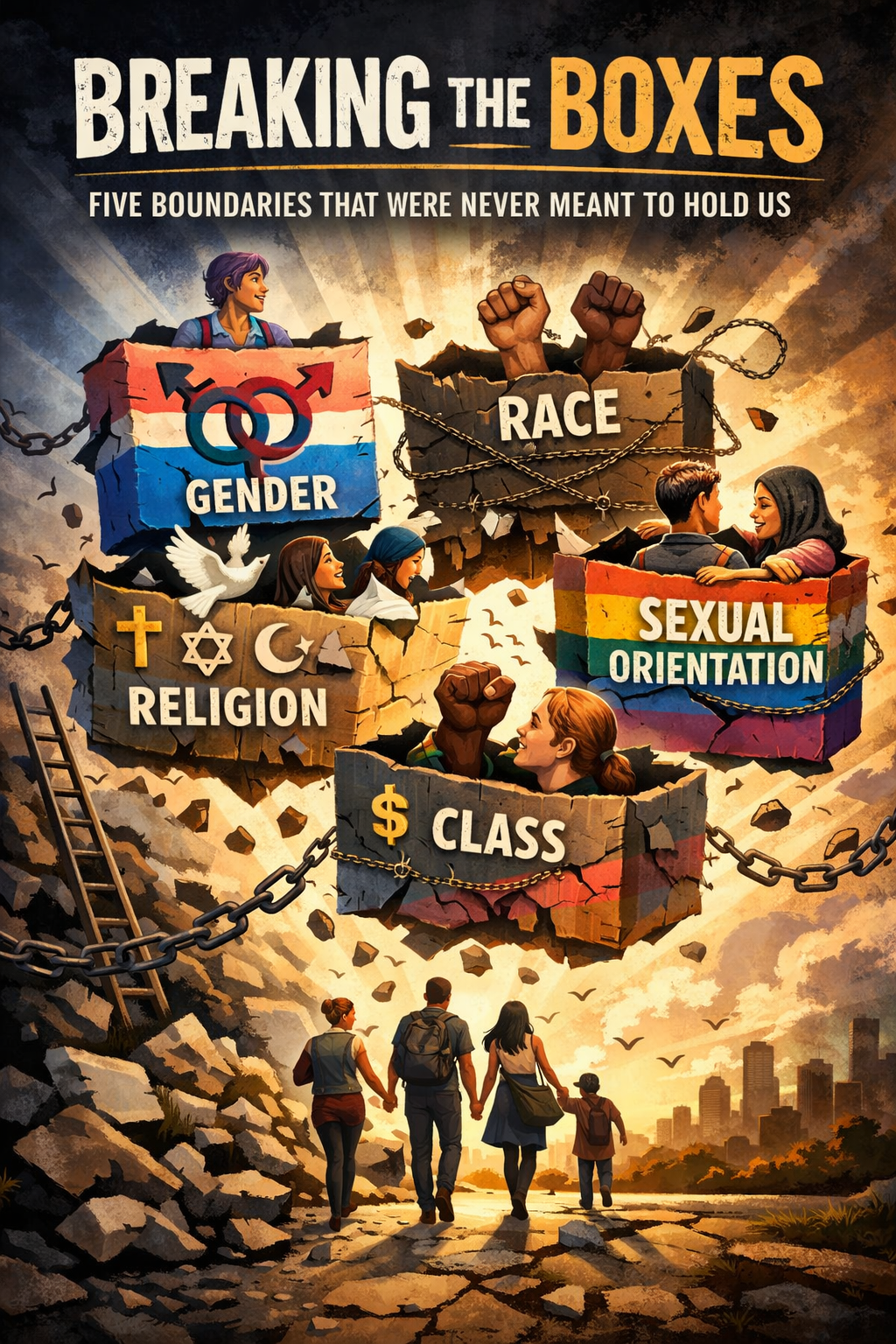
    Breaking the Boxes: Five Boundaries That Were Never Meant to Hold Us


    Human society loves categories.

    We sort. We label. We organize. That’s not inherently bad — it’s how we make sense of the world. The problem begins when categories stop describing reality and start confining it.

    Gender. Race. Religion. Class. Sexual orientation.

    These are real aspects of human experience. But over time, they’ve hardened into boundaries that limit people instead of liberating them.

    Let’s take a closer look.

    Gender: When Biology Became a Script
    For much of history, gender was treated as simple and fixed. Male or female. End of discussion. From that one designation flowed expectations about personality, clothing, occupation, emotional expression, and social roles.

    But human experience has never been that tidy.

    Today, there is growing recognition that biological sex and gender identity are not identical concepts. People experience and express gender in ways that don’t always align with the sex assigned at birth. That shift in understanding has challenged long-standing assumptions about what men and women are “supposed” to be.

    Resistance is real. Social change that touches identity is always slow and often emotional. But expanding our understanding of gender does not erase anyone. It simply acknowledges that human lives are more complex than rigid categories allow.

    Gender should describe a person’s experience — not dictate their destiny.

    Race: When Difference Turned Into Hierarchy

    Human beings differ physically. Skin tone, facial features, hair texture — these are visible realities. But societies didn’t stop at noticing difference. They built systems of meaning around those differences.

    Race became more than appearance. It became expectation. It became stereotype.

    It became hierarchy.

    The idea that physical variation carries inherent moral, intellectual, or social value has caused immense harm. When we treat individuals as representatives of a racial category rather than as complex human beings, we shrink them.

    Race as a social construct does not mean race is imaginary. It means the meaning attached to physical traits was constructed by societies — and constructed systems can be dismantled.

    The boundary is not skin. It is the story attached to it.

    Religion: When Faith Becomes Division

    Religion has inspired compassion, charity, courage, and sacrifice. It has also fueled conflict, exclusion, and violence. The same force that can unite communities in love can divide them in certainty.

    Ideally, religion helps people seek truth, cultivate virtue, and grow spiritually. But when traditions become tribal markers — when groups insist they alone possess ultimate truth — boundaries form.

    The tragedy is not devotion. It is the weaponization of devotion.

    Different religions may articulate their beliefs in different ways, yet many are grappling with similar human questions: meaning, suffering, morality, transcendence, hope.

    Faith at its best expands compassion. When it narrows compassion, something has gone wrong.

    Class: The Quiet Divider

    Some societies claim to be classless. In reality, economic status, education, occupation, and social networks strongly shape opportunity.

    Class boundaries are often unofficial but powerful. They determine who feels comfortable in certain spaces, who has access to resources, who is heard, and who is overlooked.

    While mobility exists, patterns of wealth and advantage are frequently passed from one generation to the next. The idea that success is purely individual can obscure the structural realities at play.

    Human dignity cannot be measured in income brackets.

    When class becomes a measure of worth rather than a description of circumstance, it limits both individuals and the broader society.

    Sexual Orientation: Policing Love

    For centuries, heterosexuality was treated as the unquestioned norm. Those who crossed that boundary faced discrimination, violence, and exclusion from legal recognition.

    In some countries, laws and attitudes have shifted significantly. In others, oppression remains severe. Even where progress has been made, cultural resistance continues.

    At the heart of debates about sexual orientation is a simple question: Who gets to live openly and form relationships without fear?

    When societies attempt to regulate love and identity, they create harm that extends far beyond individuals. They weaken trust, compassion, and freedom.

    The Pattern Beneath It All

    Across gender, race, religion, class, and sexual orientation, a common pattern emerges:

    A real human difference exists.
    Society assigns meaning to that difference.

    That meaning solidifies into expectation.
    Expectation becomes limitation.

    Categories are not inherently harmful.

    They can help us understand patterns and experiences. But when categories become cages, they prevent growth.

    Transcending these boundaries does not mean pretending differences don’t exist. It means refusing to let difference determine value.

    Knowledge exposes how these systems were formed. Courage challenges them. An open mind allows space for something better.
    Human beings are more than the boxes they’ve been placed in.

    And when we begin to live from that truth, the boundaries that once confined us start to lose their power.

  • Why I Prefer to Be Silly Than Spiritual

    Why I Prefer to Be Silly Than Spiritual


    First off? Half the people who say they’re “spiritual” look like they swallowed a theology textbook and forgot how to laugh.
    Silly people? They’re free.

    1. Silly is honest.
      Spirituality can become performance art. The right tone of voice. The right quotes. The right aesthetic. The right incense. The right suffering face.
      Silliness cuts through all that.
      When you’re goofy, you’re not posturing. You’re present. You’re embodied. You’re human. You’re not trying to impress God. You’re just… alive.
      And honestly? That feels holier.
    2. Silly dismantles ego.
      The ego loves being “deep.”
      It loves being “mystical.”
      It loves being “the enlightened one.”
      But it hates looking ridiculous.
      Choosing silliness is a spiritual judo move. You voluntarily step off the pedestal. You refuse to be the guru. You become the kid.
      And the kid is closer to the Kingdom than the guru ever was.
    3. Joy is subversive.
      The world is heavy. Trauma-informed. Politically charged. Theologically divided. Chronically online.
      Choosing play is rebellion.
      Laughter disarms shame.
      Goofiness interrupts despair.
      A ridiculous dance in the kitchen defeats depression better than a thousand brooding sermons.
      Silly isn’t shallow. It’s strategic.
    4. God doesn’t need your solemn face.
      If the Divine made platypuses, giraffes, and the fact that goats faint when startled… I promise the Holy One is not allergic to humor.
      Creation itself is absurdly creative.
      Why would sacredness exclude delight?
    5. Silliness keeps you soft.
      Hyper-serious spirituality can calcify. It becomes rigid. Defensive. Dogmatic.
      Silliness keeps the heart elastic.
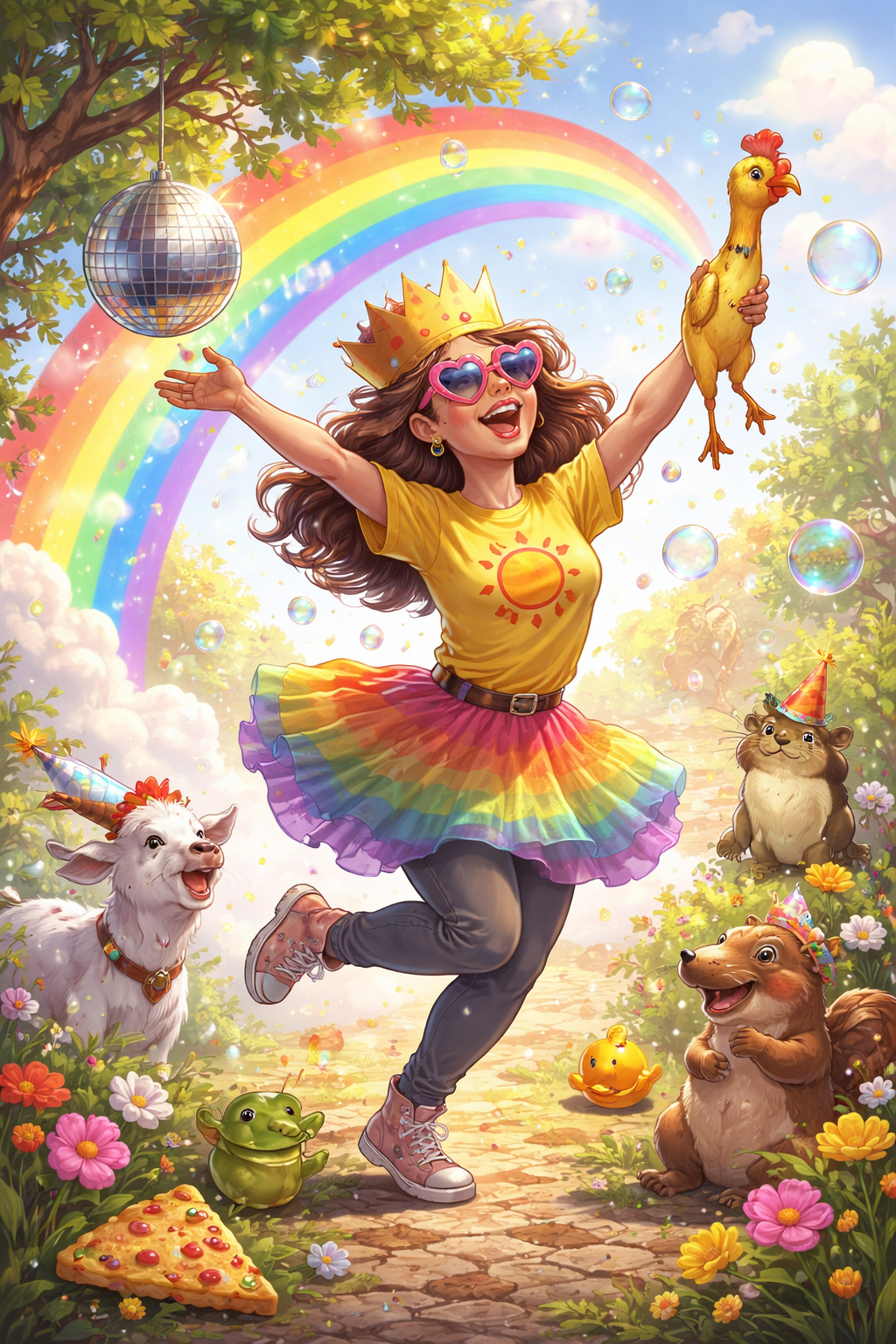
      You can’t both cling to control and wear a paper crown while declaring yourself “Queen of Tuesday.” One of those has to go.
      And control is usually the thing that needs to.
      Now here’s the twist.
      Being silly instead of “spiritual” might actually be the most spiritual thing you do.
      Because it means:
      You’re not trying to win.
      You’re not trying to dominate.
      You’re not trying to be pure enough.
      You’re not trying to earn love.
      You’re just participating in existence.
      And that? That’s sacred.
      So if your path includes ridiculous jokes, playful rebellion, dancing badly, and laughing at your own seriousness…
      Keep it.
      The saints who frighten me are the ones who never smile.
      The holy ones I trust?
      They sparkle a little. ✨
      Now tell me — what does your version of holy silliness look like?