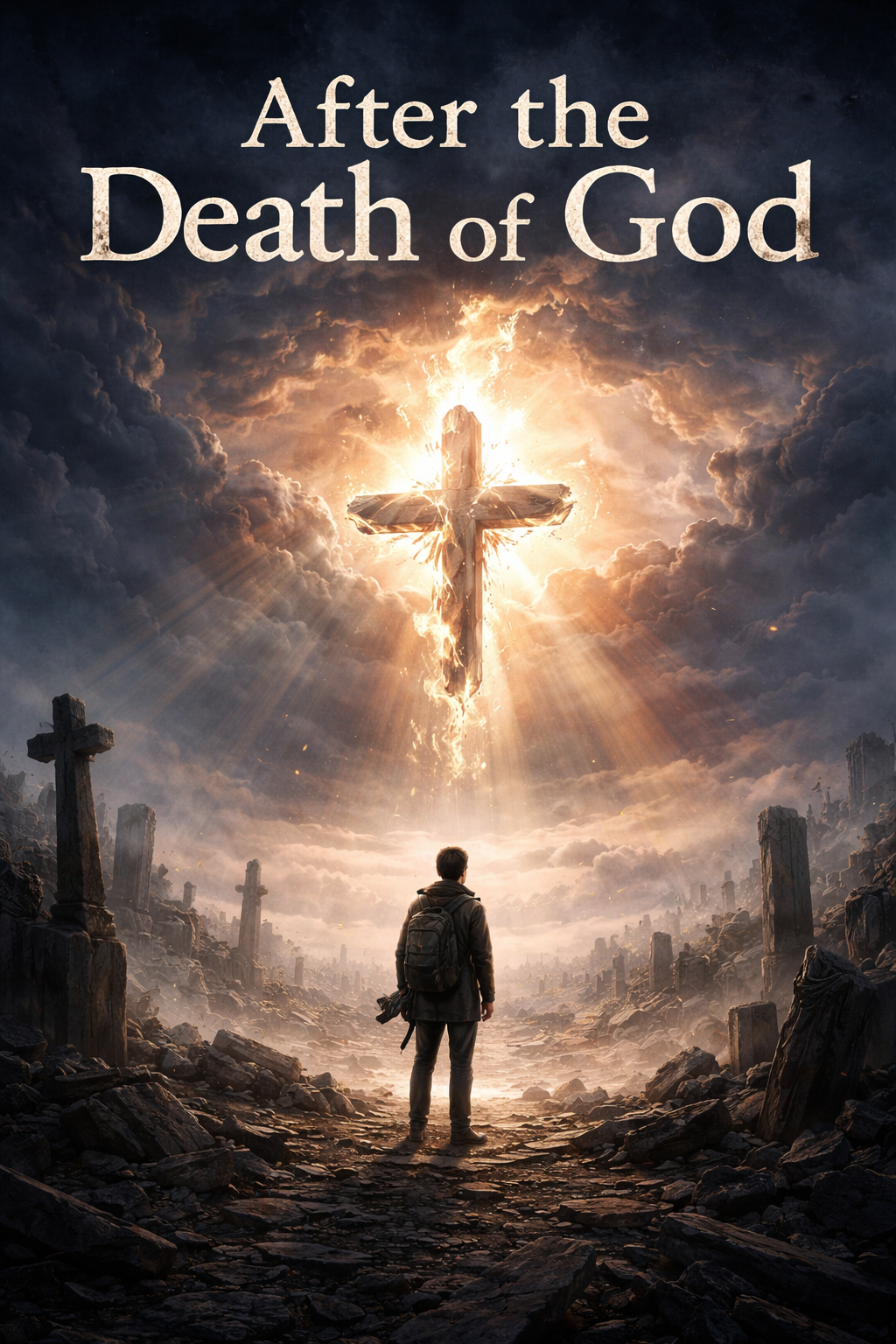
There was a time when people whispered that God had died. Not literally. Not with a funeral and a gravestone. But culturally. Philosophically. Existentially.
When the old certainties cracked, when institutions lost credibility, when prayers seemed to echo back from empty ceilings — many concluded that the divine had left the building.
But here’s the uncomfortable truth:
God didn’t die.
Our projections did.
When the Sky Went Silent
In the 19th century, the philosopher Friedrich Nietzsche famously wrote, “God is dead.” He wasn’t celebrating atheism.
He was diagnosing a cultural shift. The old metaphysical framework — the shared belief structure that held Europe together — was collapsing.
Science was rising. Institutions were corrupt. Wars were brutal. Enlightenment rationalism had cracked the stained glass windows of certainty.
What died was not the Divine.
What died was the version of God that propped up power, patriarchy, empire, and unquestioned authority.
And honestly? Good.
If your god needs control to survive, let him stay buried.
The Vacuum That Followed
When inherited belief systems collapse, something fills the gap. Sometimes it’s nationalism. Sometimes it’s consumerism.
Sometimes it’s self-worship disguised as empowerment.
Humans are meaning-making creatures. We will kneel to something.
After the “death of God,” we didn’t become secular saints of reason. We built new altars: productivity, identity performance, political tribes, curated digital personas.
The incense changed. The worship did not.
The Death of a False God
There is a difference between the collapse of religious systems and the disappearance of sacred reality.
Systems die all the time. Institutions rot. Theologies calcify. Power corrupts.
But the sacred? The sacred has a stubborn habit of resurfacing.
In hospital rooms.
On mountain trails.
In grief.
In protest.
In silence.
The Divine does not require our permission to exist.
What may have died is the tribal deity who belonged to one group, spoke one language, blessed one empire, and excluded everyone else.
Maybe what died was the small god.
And what remains is Mystery.
After the Collapse
So what now?
After the death of God-as-certainty, we stand in a strange wilderness. It’s quieter here. Less scripted. More honest.
This is where responsibility begins.
Without a cosmic rulebook handed down in stone, we have to choose:
Will we create meaning or consume distraction?
Will we build compassion or retreat into cynicism?
Will we weaponize belief or embody love
This is not nihilism. This is adulthood.
The God Who Survives Death
The most interesting thing about the Christian story is this: it centers on death and resurrection. The Divine does not avoid death. The Divine passes through it.
If your theology has never died, it has probably never matured.
Faith that survives doubt is different from faith that never questioned. It’s humbler. Less defensive. Less loud.
After the death of God, what remains may not look like what you were taught.
It might look like:
Radical hospitality
Fierce justice
Embodied compassion
Courageous questioning
Sacred irreverence
It might look less like control and more like love.
Rebuilding Without Illusion
The future of spirituality will not be built on fear. It will not survive on shame. It will not thrive through gatekeeping.
It will be built by those willing to let false images fall.
After the death of God, we do not return to superstition. We do not cling to ashes.
We sift them.
We keep what burns true.
And maybe — just maybe — what emerges isn’t a resurrected old system.
It’s a deeper encounter.
Not a sky-tyrant.
Not a tribal mascot.
Not a vending machine for blessings.
But Presence.
Uncontainable.
Unmanageable.
Unkillable.
God didn’t die.
The idol did.
And that changes everything.
Leave a Reply