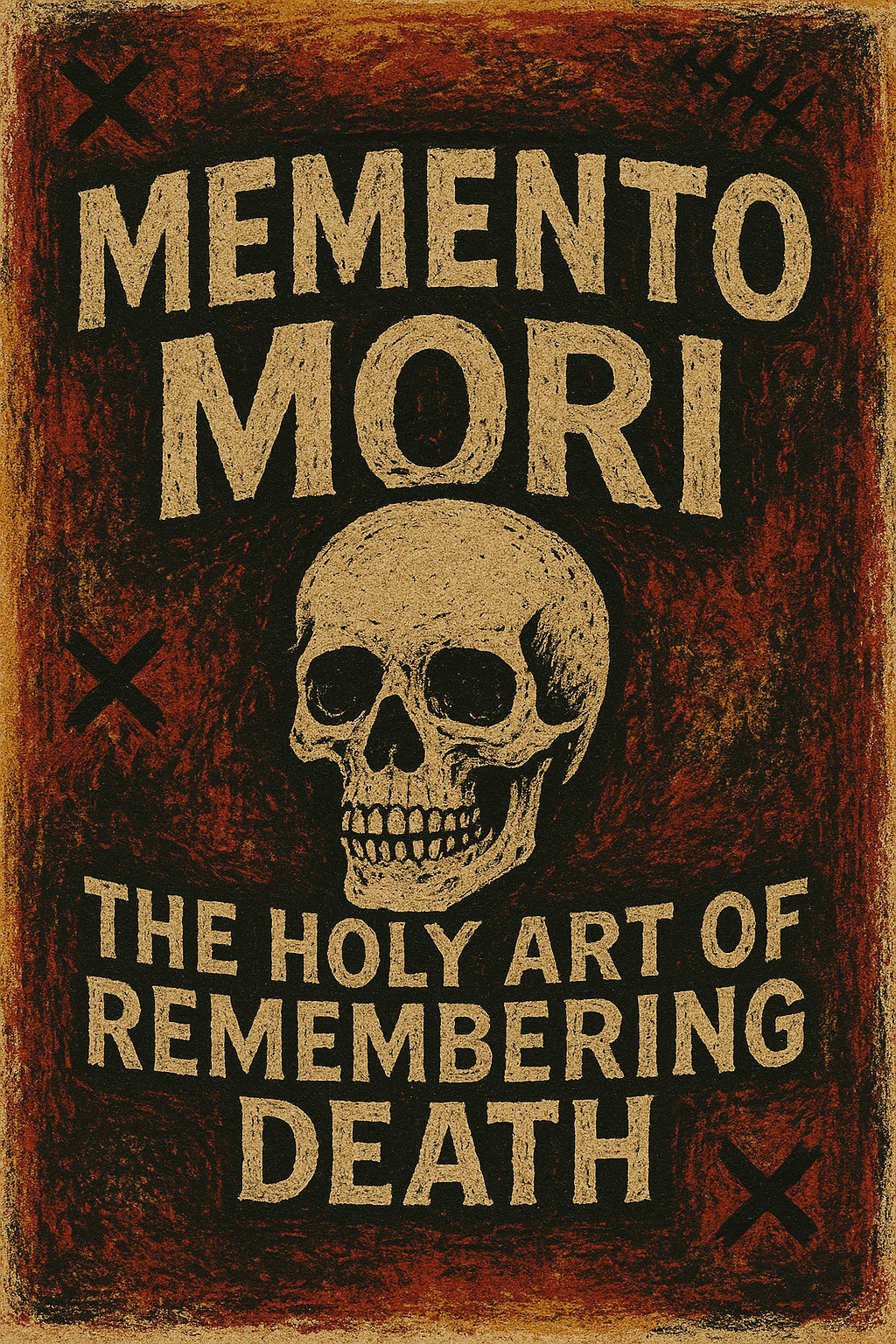

Memento Mori: The Holy Art of Remembering Death
“Remember that you will die.”
That’s what memento mori literally means—an ancient Christian and monastic meditation that’s less about doom and more about awakening.
Facing Death to Find Life
From the early desert monks to St. Francis of Assisi himself, memento mori was a spiritual mirror. It reminded the faithful that time is a precious, fragile gift—not a possession. To remember death is to live more fully, love more fiercely, and cling less desperately to the illusions of control and permanence.
Francis, who called death “Sister,” didn’t fear her—he welcomed her as part of creation’s rhythm. To the Franciscan Clarean heart, death isn’t an enemy. It’s the Great Uncloaking—when all falsehood falls away and truth finally breathes freely.
From Skulls to Smartphones
In the Middle Ages, monks kept skulls on their desks. Artists painted grim reapers beside kings and peasants alike. These weren’t horror props; they were invitations to humility.
Today, memento mori might mean something simpler: turning your phone off long enough to watch the sun set, writing a letter you’ve been putting off, or forgiving someone before it’s too late. Every breath could be your last—so make it beautiful.
Prophetic Living in a Dying World
Modern society hides death behind hospital curtains, plastic surgery, and endless productivity. But the world feels increasingly fragile—climate collapse, war, political violence, and loneliness are our new memento mori.
To live prophetically now means daring to see what others deny: that we are dust, yes—but sacred dust. Knowing our mortality frees us to live counterculturally—to love without condition, give without hoarding, and build communities that outlast empires.
A Franciscan Clarean Reflection
For the Franciscan Clarean, memento mori is not morbid—it’s merciful. It calls us to simplicity, repentance, and joy. We learn to bless the transient, to bow to the inevitable, and to find Christ in every ending and beginning.
When we remember that life ends, we finally begin to live like it matters.
“Praised be You, my Lord, through our Sister Bodily Death.”
— St. Francis of Assisi, The Canticle of the Creatures


Leave a comment