Texas lawmakers have decided that if you’re a homeless child, your trauma is now a suspendable offense.
House Bill 6 overturns protections that kept homeless students in school unless they posed a serious danger. Now? You can be kicked out for “disruption” — which, when you’re homeless, might mean:
Being late because you don’t have a stable ride.
Falling asleep in class because you slept in a shelter.
Having an emotional meltdown because life is chaos.
This isn’t discipline. It’s punishment for poverty.
From a Franciscan Clarean lens, this is the opposite of the Gospel. Jesus didn’t expel the broken from the table — He drew them closer. Texas is doing the opposite: If your suffering makes us uncomfortable, we’ll push you out of sight.
Let’s call this what it is: state-sanctioned cruelty that will shove more kids into the dropout-to-prison pipeline. We need to fight for restorative justice, trauma-informed teaching, and policies that protect — not punish — the most vulnerable.
David Harold Pugh sat by the library wall, strumming his guitar. His tent had been bulldozed the night before, his few possessions scattered. “This is shelter,” he told reporters. “Safe. Familiar.” Another man, watching his camp dismantled, could only say, “I don’t know. I don’t know,” when asked where he would sleep next.
These are not criminals. They are not threats. They are the beloved of God—pushed out in the name of “beautification.”
What’s Happening
Over the past week, the Trump administration has taken control of D.C.’s Metropolitan Police, deployed the National Guard, and begun dismantling homeless encampments near high-profile areas like the Lincoln Memorial and Constitution Avenue.
Residents are told to accept shelter beds—or face fines and jail. Belongings are destroyed. Encampments are erased overnight.
Trump justifies the crackdown as a public safety measure. Yet violent crime in D.C. is at a 30-year low. The truth is this is not about safety—it’s about optics, and the people paying the price are those with the least power to resist.
A Franciscan Clarean Lens
As a Franciscan Clarean, I cannot see this as anything but spiritual malpractice:
The Poor Are Not a Problem to Be Solved—They Are Christ to Be Welcomed Francis and Clare didn’t “manage” the poor. They embraced them. When you bulldoze a tent, you are bulldozing the tabernacle where Christ Himself dwells.
Poverty Is Not a Crime “It’s not illegal to be homeless,” Pugh reminded the world. But we live in a nation that criminalizes poverty every day. Jesus Himself was born into housing insecurity—His first crib was a feeding trough.
Trust Is Sacred, Not Disposable Outreach groups like Miriam’s Kitchen spend months building trust. Sweeps destroy it in minutes. Displaced people don’t just lose shelter—they lose the fragile relationships that might have led them toward stability.
Safety Without Dignity Is Not Safety Forcing people into overcrowded shelters where they fear theft, violence, or loss of autonomy is not mercy—it’s coercion. And coercion is not love.
The Prophetic Alternative
A Franciscan response would not send troops into the streets, but brothers and sisters bearing soup, blankets, and listening ears.
It would not measure success in the number of tents destroyed, but in the number of people who find real homes and healing.
It would replace “sweeps” with accompaniment—a long, patient walking-with that refuses to let go until the beloved has found safety, dignity, and belonging.
The Call
We are at a moral fork in the road. We can pave over our compassion in the name of political theater, or we can follow the One who said, “Whatever you did for the least of these, you did for Me.”
Francis stripped himself of worldly power to be among the poor. Clare left her comforts to embrace holy dependence. Both knew: the measure of a society is not the shine of its monuments but the safety of its streets at midnight for the one with nowhere to go.
If Christ came to Washington today, He would not be in the White House. He would be under the overpass, His bedroll at His side, asking if you would sit with Him a while.
“Go forth in peace, for you have followed the good road. Go forth without fear, for He who created you has made you holy, has always protected you, and loves you as a mother.” — Saint Clare of Assisi
A Scandalous Simplicity
Clare of Assisi didn’t just embrace poverty—she dared to love it. Not out of ascetic thrill-seeking, but because she saw in it a deeper truth: we were never meant to survive on our own. In a world addicted to autonomy, she chose holy dependence. And that is scandalous.
She defied not just her wealthy family, but the entire ecclesial structure that wanted her to “tone it down.” Bishops begged her to accept endowments. Popes tried to gently nudge her into more “reasonable” poverty. Clare? She dug in her heels. She insisted that her community have no possessions whatsoever—not even collectively. For Clare, poverty wasn’t a punishment. It was a path to freedom. A radical freedom that refused to be owned, owed, or beholden to anyone but Christ.
Dependence as Resistance
In our modern world, “dependence” is a dirty word. We’re taught to be self-sufficient, self-made, and preferably stylish while doing it. Neediness is weakness. But Clare flips the script: dependence isn’t disgraceful—it’s divine.
To live in holy dependence is to confess:
I don’t have all the answers.
I can’t save myself.
I need others, and I need God.
Clare’s vision rips the mask off toxic individualism. She shows us that community—real, messy, interdependent community—isn’t a backup plan. It’s the Gospel lived out. Her sisters didn’t just pray together. They begged together, fasted together, wept together. They trusted that God would provide through the hands of the poor and the generosity of others. And often, He did.
The Poor Christ
What made Clare’s poverty radical wasn’t the lack of stuff. It was her refusal to turn away from the Crucified Christ. She saw in Him—naked, abandoned, pierced—her Beloved. She wanted to mirror Him in everything. His poverty, His vulnerability, His absolute surrender to the Father’s will.
To be poor like Clare is to stare into the wound of the world and not flinch. It is to say, I will not climb the ladder. I will descend into the dust, where Christ dwells among the broken. This is not performative poverty. This is mystical union.
A Word to the Church
Let’s be honest: much of the Church today has made peace with wealth. We’ve baptized greed, canonized comfort, and turned boardrooms into upper rooms. Clare’s life asks us: Who do we actually trust? Mammon or Mercy?
If our ministries, communities, and spiritual lives can’t survive without financial insulation or institutional power, then we are not poor enough to know Clare. Or Christ.
Reclaiming Holy Dependence
For the Order of Franciscan Clareans—and for all who dare to follow the poor, queer, and crucified Christ—this is our inheritance. Holy dependence isn’t about helplessness. It’s about wholeness. It’s about reclaiming the sacred gift of needing one another.
What might it look like to:
Share your income with your neighbor without tracking the “ROI”?
Let go of owning more and opt into mutual care?
Refuse the illusion of control and embrace the vulnerability of trust?
Clare doesn’t give us a blueprint. She gives us a burning love—a love that says: Let go. Fall into God. And if you’re lucky, into the arms of the poor.
Benediction
May we be ruined for comfort. May we be allergic to power. May we live unclenched, unarmed, and unashamed to need. Like Clare. Like Christ.
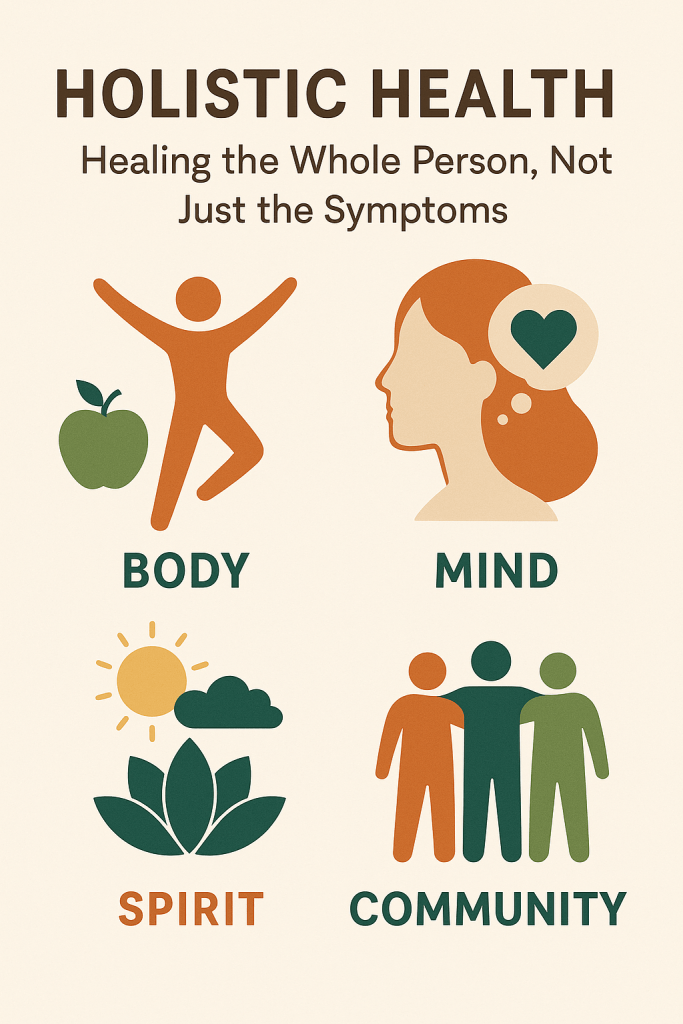
In a culture obsessed with quick fixes and symptom suppression, holistic health stands as a quiet, stubborn rebellion — the radical idea that you are more than a collection of body parts, diagnoses, and prescriptions. Holistic health dares to say that your mind, body, spirit, and relationships are all bound together, and that true healing means tending to all of them.
This is not a trendy wellness fad or a soft alternative to “real” medicine. It is a return to an older, deeper wisdom — the kind found in the teachings of St. Francis, in Indigenous medicine ways, in the midwives and herbalists who understood that you can’t heal a wound in the body while leaving the soul neglected.
The Fourfold Path of Healing
Holistic health recognizes four inseparable dimensions of our well-being:
Body – Nutrition that nourishes, movement that strengthens, rest that restores. Not punishment or deprivation, but care rooted in dignity.
Mind – Mental clarity, emotional balance, and learning how to unhook from the constant hum of stress that erodes our health from the inside.
Spirit – Connection to the Sacred, however you name it, that restores meaning and purpose when life feels hollow.
Community – We heal in relationship, not isolation. Friendship, mutual aid, and shared belonging are as medicinal as herbs and clean water.
The Franciscan Clarean Way
In the Order of Franciscan Clareans, we approach holistic health as an act of justice. Poverty, exploitation, and environmental destruction are not just “social issues” — they are health issues. You cannot breathe well if your air is toxic. You cannot eat well if the land is poisoned or food is priced out of reach.
We take inspiration from Francis and Clare, who understood that health is communal. Care for the sick was inseparable from care for the poor, the earth, and the soul.
Tools for a Whole Life
Holistic health is not about buying expensive supplements or following Instagram wellness trends. It’s about integrating simple, sustainable practices into daily life:
Herbal Medicine – Time-tested plant allies for prevention and healing.
Mindfulness & Prayer – Practices that ground the heart and calm the mind.
Seasonal Living – Eating and resting in rhythm with the natural cycles.
Acts of Service – Healing the soul through compassion in action.
A Call to Live Differently
The path of holistic health is countercultural. It resists the idea that health can be bought in a pill or outsourced to a clinic. It calls us to live with intention, to tend our bodies as sacred vessels, and to care for one another as part of the same body.
As Franciscan Clareans, we see health not as a personal possession but as a shared responsibility. We are not free until we are all well — body, mind, and spirit.
“You cannot serve both God and mammon.” — Jesus (Matthew 6:24)
Introduction: The Gospel According to Greed
There’s a poison infecting the Body of Christ. It’s slick, it’s shiny, and it’s tax-exempt. It dresses in designer suits, flies in private jets, and justifies it all with cherry-picked Scripture. It calls itself “blessed,” but it’s better described as bloated. It claims to preach the good news, but it’s selling snake oil soaked in gold.
We’re talking about the Prosperity Gospel — that glitzy theology which proclaims that Jesus wants you rich, powerful, and problem-free… so long as you sow your “seed offering” into the preacher’s bank account.
At the Order of Franciscan Clareans, we stand firmly and prophetically against this distortion of the Gospel. We follow a poor Christ — the one who was born in a barn, died naked on a Roman cross, and taught that the last shall be first. We believe the Prosperity Gospel is not just bad theology — it’s spiritual violence wrapped in tinsel.
Mammon in the Pulpit
When Jesus said, “You cannot serve both God and mammon,” He meant it literally. Mammon — the idol of wealth, of accumulation, of status — has found its way into the pulpit. Some preachers now sound more like motivational speakers for hedge fund managers than like prophets of the Kingdom.
They claim:
“If you’re struggling, it’s because you don’t have enough faith.”
“If you give to God (meaning them), He’ll multiply your money!”
“Jesus was wealthy — he had a treasurer!”
This is not the Gospel. It’s a pyramid scheme with a Bible verse duct-taped to it. It turns faith into a transaction, prayer into a business plan, and the poor into expendable footnotes.
The True Gospel Is Not for Sale
The Prosperity Gospel peddles a lie: that God’s favor looks like financial success, physical health, and unending comfort. But the cross tells a different story. Jesus — God Incarnate — was poor, persecuted, misunderstood, and ultimately executed by the powers of wealth and empire.
His apostles fared no better. Not one of them got rich from following Jesus. Most were martyred. Paul wrote half the New Testament from prison. And yet the Prosperity Gospel dares to say suffering is a sign of weak faith?
No, beloved. The true Gospel costs us something. It calls us to deny ourselves, to carry our cross, to side with the poor, the sick, the imprisoned — not to trample over them on the way to a bigger house.
A Franciscan Clarean Response
As Franciscan Clareans, we proclaim with clarity and courage:
Jesus is not a vending machine. Prayer is not a product return.
Wealth is not inherently evil, but it is inherently dangerous. It numbs compassion, warps our sense of enough, and tempts us to justify injustice.
Poverty is not a curse, and riches are not a sign of divine approval. The Beatitudes say otherwise.
The Church is not for sale. If your pastor drives a Rolls-Royce while congregants can’t pay rent, something is spiritually rotten.
We embrace Lady Poverty — not out of masochism, but because poverty frees us. It reminds us that love, community, and justice are the real treasures. We follow the barefoot Christ, not the bedazzled counterfeit.
Preaching Jubilee, Not Jackpots
Where the Prosperity Gospel preaches scarcity and hoarding, we preach Jubilee — the radical release of debt, redistribution of wealth, and restoration of the land and its people.
We call for a Church that:
Tithes not to pad bank accounts, but to feed the hungry.
Builds not megachurches, but tiny homes for the unhoused.
Preaches not prosperity, but solidarity with the oppressed.
We don’t need a God who rewards the already-powerful. We need a liberating Christ who overturns the tables, kicks out the money-changers, and sets the captives free.
Final Benediction: Fire in the Bones
If you’ve been wounded by the Prosperity Gospel, we see you. We affirm that your suffering is not proof of God’s absence. Your bank account does not determine your worth. Your illness is not a sin.
Let the false gospel collapse under its own weight. Let the Church rise up again — poor, prophetic, and full of fire.
And if Mammon shows up wearing a clerical collar? We call it out. We cast it out.
Because Jesus didn’t die to make us rich — He rose to make us free.
By Sister Abigail Hester, OFC Franciscan Clarean Reflections on Faith Beyond Boundaries
Introduction: Two Altars, One Heart
To be a Hindu Christian is to live with your feet in two rivers and your heart rooted in the ocean of the Divine. It’s not a contradiction—it’s a calling. It’s not confusion—it’s communion. In a world that demands religious purity and neat theological boxes, the Hindu Christian shows up like sacred disruption, like incense and incense together, like Ganesh dancing to the Beatitudes.
Some people say it can’t be done. That Christ and Krishna don’t share space. That the Ganges and the Jordan can’t flow into the same soul. But for some of us, they already do.
What Is a Hindu Christian?
A Hindu Christian is someone who sees Christ and the Divine through the lens of both Hindu and Christian traditions. It’s not about cherry-picking. It’s about cultivating a full orchard. We don’t reject either path—we revere them both.
We may pray the Our Father in the morning and chant the Gayatri Mantra at night.
We might see Jesus as an avatar of divine compassion, a bodhisattva of self-emptying love.
We understand reincarnation not as heresy, but as soul-growth, sanctified by grace.
We light candles before the Virgin Mary and offer flowers to Lakshmi, without flinching.
Being a Hindu Christian doesn’t dilute our faith—it deepens it. It invites awe instead of anxiety. It births a God bigger than dogma.
But Isn’t That Heresy?
Let’s be blunt: the Church has always feared what it can’t control.
To be a Hindu Christian is to know you’ll be called names. Syncretist. Idolater. Lost. Confused. Or worse—inauthentic. But here’s the truth: if God is real, then God is not threatened by the beauty of Hinduism. And Jesus? Jesus is not a bouncer guarding heaven’s gates. He’s a door. An open one.
Besides, Christianity has always evolved in dialogue with culture. Early Christians blended Roman, Jewish, and Greek ideas. Celtic Christians braided Jesus with the sacred land. Why not Hindu and Christian wisdom now?
What Does It Look Like in Practice?
It looks like:
Reading the Bhagavad Gita and the Sermon on the Mount side by side.
Seeing karma and grace not as opposites, but as dance partners.
Meditating with mala beads while whispering the name of Jesus.
Learning from Sri Ramakrishna, Meister Eckhart, Kabir, and Julian of Norwich—all of whom found God beyond borders.
It’s a life of inner spaciousness. Of reverence. Of belonging to the whole world while anchored in a personal relationship with the Holy.
The Gifts of Being a Hindu Christian
Mystical Depth – Hinduism teaches us union with the Divine Self; Christianity gives us Jesus, who shows us God with skin on. Together, we get both the transcendent and the tender.
Embodied Faith – In Hinduism, the divine dances in matter—in food, art, sound, and sexuality. Christianity sometimes forgets this, but the Incarnation is the ultimate reminder that flesh is holy.
Radical Compassion – Both paths invite us to serve. Whether through ahimsa (nonviolence) or agape (self-giving love), we are called to love deeply, fiercely, and practically.
The Pain of Being a Hindu Christian
Let’s not sugarcoat it. The path is hard.
Churches may reject you.
Hindu temples may not understand you.
Family may question your loyalty.
Religious leaders may call you a contradiction.
But here’s the thing: God never will.
Conclusion: The Fire and the River
To be a Hindu Christian is to sit at the feet of both Jesus and Shiva, to sing praises in Sanskrit and in Aramaic, to walk through the fire with love in your hands and a river in your soul.
It is to be a bridge. A mystery. A wildflower growing in the cracks of dogma.
And if you are one—know this: You are not alone. You are walking a sacred path walked by others before you—Saints, mystics, rebels, and lovers of God who knew that truth is never afraid of more truth.
So light your lamp. Burn your incense. Say your mantras. Follow Jesus. Touch the hem of the Infinite.
Inspired by Susun Weed | By Sister Abigail Hester, CNC
In the fast-paced chaos of our world, we need rituals that root us, nourish us, and connect us back to the Earth and our own inner rhythms. One of the simplest and most powerful ways to do that is with nourishing herbal infusions, a practice popularized by beloved herbalist Susun Weed.
These are not your average tea bags. Infusions are strong, mineral-rich, deeply restorative brews that support whole-body vitality, especially for women, queer and trans folks, caregivers, and anyone recovering from chronic stress or depletion. And best of all? They’re affordable, safe, and easy to make at home.
🌸 What Is a Nourishing Herbal Infusion?
Unlike a light tea, a nourishing herbal infusion is made by steeping a full ounce (about one cup) of dried herb in a quart of boiling water for at least 4 hours or overnight. This longer steeping time extracts an abundance of vitamins, minerals, phytonutrients, and nourishing compounds that heal and rebuild the body over time.
You strain the infusion in the morning, refrigerate it, and drink a cup or more throughout the day—hot, room temp, or chilled.
🌿 Sister Abigail’s Top 5 Infusion Herbs
Here are five classic infusion herbs Susun Weed recommends, and that I use in my own kitchen apothecary:
Nettle Leaf (Urtica dioica) A powerhouse of chlorophyll, calcium, iron, protein, and trace minerals. Supports adrenal health, energy, and hair/skin health.
Oatstraw (Avena sativa) Gentle and calming, oatstraw helps soothe the nervous system, restore depleted nerves, and ease anxiety and stress.
Red Clover Blossoms (Trifolium pratense) Rich in phytoestrogens and cleansing for the lymphatic system. Great for hormone balance and breast health.
Linden Flower (Tilia spp.) Soothing, heart-centered, and anti-inflammatory. Supports emotional healing, lowers blood pressure, and helps with grief.
Comfrey Leaf (Symphytum officinale) Known as “knitbone,” comfrey is deeply nourishing to bones, joints, and tissues. Used safely in infusion (not root), it helps rebuild the body.
🫖 How to Make a Nourishing Infusion
You’ll need:
1 oz dried herb (about 1 cup, loosely packed)
1 quart (32 oz) boiling water
A quart-size mason jar or French press
Fine mesh strainer
Instructions:
Place the herb in your jar.
Pour boiling water to fill the jar completely.
Cap it and let it steep 4–10 hours (overnight is ideal).
Strain into a clean jar. Compost the herb.
Refrigerate and drink 1–4 cups daily. Best within 48 hours.
🌈 Infusion Rituals for the Spirit
As a Franciscan Clarean and a kitchen witch of sorts, I often turn infusions into sacred rituals. As you pour the boiling water, whisper a blessing. As the herbs steep, imagine the plant spirits whispering healing into your life. And as you sip, breathe in gratitude.
You can also set intentions:
Nettle for strength and courage.
Oatstraw for emotional healing.
Red Clover for self-love and feminine balance.
Linden for peace and heart-centered living.
Comfrey for restoration and resilience.
🧡 Final Thoughts
Susun Weed teaches that “simple herbs used simply restore wholeness.” These infusions are not just drinks—they’re nourishment, empowerment, and medicine from the Earth herself. In a world that depletes us, let this be one of the ways you pour love back into your body.
If you’d like to explore these infusions with me further, I’ll be sharing some daily infusion blends and a video tutorial for Insiders soon. Until then—steep slow, sip deep, and stay nourished.
“But now,” he said, “if you have a purse, take it, and also a bag; and if you don’t have a sword, sell your cloak and buy one.” (Luke 22:36, NIV)
This passage is often misunderstood and misused—especially by those trying to justify violence, armed self-defense, or modern gun culture within Christianity. But a deeper, contextual, and Franciscan-Clarean response sees something very different.
✝️ A Franciscan Clarean Response to Luke 22:36
Jesus wasn’t arming his disciples for battle—he was warning them of persecution, and inviting them to prepare their hearts for what was about to unfold. The “sword” in this passage is not a call to violence—it is a symbol of the suffering, misunderstanding, and resistance they were about to face.
Francis of Assisi, who lived through political violence, war, and crusades, interpreted this passage not with a literal sword, but with radical peace. He laid down weapons, kissed lepers, and chose vulnerability instead of power.
Clare of Assisi also faced armed threats. But when soldiers came to her convent, she didn’t fight. She held up the Blessed Sacrament and trusted divine protection. Her faith—not a sword—defended her.
🔍 What Did Jesus Mean?
When read in light of the whole Gospel, especially the Sermon on the Mount (“blessed are the peacemakers”) and Jesus’ command to Peter to put away his sword just a few verses later in Luke 22:51, it becomes clear:
Jesus was not calling for literal violence. He was revealing the urgency and danger of discipleship.
He was saying:
Be ready to travel (take a bag)
Be prepared for sacrifice
Know that following me will provoke empire
And yes—prepare for rejection, betrayal, and even martyrdom
🕊️ A Franciscan Clarean Interpretation
If you don’t have a sword, buy one? → If you don’t have courage, seek it. → If you don’t have truth, hold to it. → If you don’t have love fierce enough to confront empire, cultivate it—even if it costs you your comfort.
In today’s world:
Our “bag” might be a bug-out kit with herbal medicine and a psalm
Our “purse” might be a heart of compassion
Our “sword” is not a weapon—it is moral courage, spiritual clarity, truth spoken in the face of power
🙏 A Prayerful Response
Christ, you told your friends to be ready. Not with weapons, but with willingness. Not with violence, but with vision. Teach us to pack our bags with kindness, To carry truth like a torch, And to wield peace as fiercely as others wield fear. May we never raise a sword against your children— But may we stand boldly against injustice, Prepared to love even when it costs everything. Amen.
🍯 The Power of Honey and Apple Cider Vinegar: A Natural Daily Tonic for Health and Healing
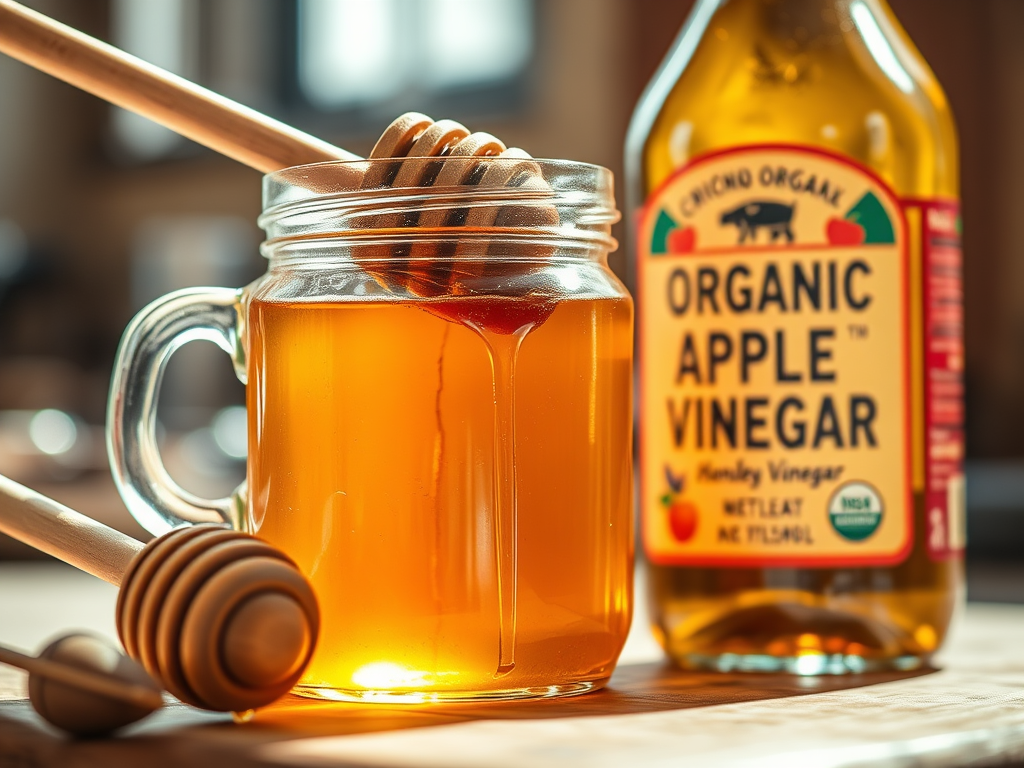
In the world of natural remedies, few combinations are as simple, powerful, and time-tested as honey and apple cider vinegar. When combined in warm water and taken regularly, this dynamic duo becomes more than a folk remedy—it becomes a daily practice in vitality, digestion, and whole-body wellness.
🌿 The Simple Recipe
This recipe was shared by renowned herbalist Dr. John R. Christopher, a pioneer in natural healing whose wisdom continues to guide generations of herbal practitioners.
1 tablespoon raw honey
1 tablespoon apple cider vinegar (ACV)
Stir into a cup of warm (not hot) water
Sip slowly
Repeat three times daily
By the end of the day, you’ll have consumed a total of 3 tablespoons of each.
📌 Important: Be sure to use raw, unfiltered apple cider vinegar (with “the mother”) and raw, unpasteurized honey. Never substitute distilled white vinegar or processed honey, which lack the healing enzymes and nutrients your body needs.
🍎 Why Apple Cider Vinegar?
Apple cider vinegar has been used medicinally for centuries and praised by herbalists like Dr. Christopher and Dr. Bernard Jensen. Its benefits include:
Digestive support: Stimulates stomach acid for better digestion and nutrient absorption
Detoxification: Promotes gentle liver cleansing and helps alkalize the body
Blood sugar balance: May reduce blood sugar spikes after meals
Antimicrobial: Helps combat harmful bacteria and support a healthy gut microbiome
Heart health: Some studies suggest modest reductions in cholesterol and blood pressure
The fermentation process produces acetic acid, enzymes, and beneficial bacteria that make raw ACV a living food and natural tonic.
🍯 The Healing Power of Honey
Honey is more than just a sweetener—it’s a natural medicine. As noted by herbal traditions and the writings of Samuel Thomson and ancient healers:
Antibacterial & antifungal: Raw honey can fight infection and soothe sore throats
Soothing for the gut: Helps relieve ulcers, indigestion, and gastritis
Rich in antioxidants: Protects cells from oxidative stress
Energy booster: Provides quick natural energy with vitamins, minerals, and enzymes
Cough relief: Time-tested remedy for calming a nighttime cough
When paired with apple cider vinegar, it also helps neutralize the sour taste, making the tonic more palatable and enjoyable to drink.
💧 Why Warm Water?
Warm water helps dissolve the honey more easily and makes the drink soothing and easier to digest. Cold water can slow digestion, while hot water may destroy some of the living enzymes in raw honey and vinegar. Think of warm water as the perfect delivery system for these healing ingredients.
🌞 A Morning and Evening Ritual
Many people find that drinking this tonic:
Before meals improves digestion
In the morning helps stimulate energy and cleanse the system
Before bed soothes the gut and promotes restful sleep
🛑 A Few Gentle Precautions
Always rinse your mouth or brush your teeth after drinking, as the acidity can weaken enamel over time.
Consult your healthcare provider if you have acid reflux, diabetes, or are taking medications—especially potassium-lowering drugs or diuretics.
✨ Natural, Affordable, and Time-Tested
This remedy—learned from Dr. John R. Christopher—is simple, affordable, and based on centuries of folk wisdom and natural health teaching. It doesn’t come in a plastic bottle or with a commercial jingle—just the healing gifts of bees and apples.
So go ahead—mix a glass of honey and apple cider vinegar today. Your body will thank you.
Cayenne pepper isn’t just a spice—it’s one of the most powerful herbal remedies in natural medicine, revered by pioneers like Samuel Thomson and Dr. John R. Christopher. These two legendary herbalists saw cayenne not only as food but as medicine for the people—accessible, effective, and life-saving.
Samuel Thomson, often called the father of American herbalism, promoted cayenne as a key remedy to restore heat and vitality to the body. In his system, which emphasized keeping the body’s internal heat up to prevent disease, cayenne was used to stimulate circulation, break up stagnation, and invigorate weakened systems.
Dr. John R. Christopher—beloved founder of The School of Natural Healing—called cayenne “the king of herbs.” He famously said that if he could only take one herb with him, it would be cayenne. Why? Because of its incredible versatility. Cayenne strengthens the heart, stops bleeding, improves digestion, relieves pain, reduces inflammation, and supercharges the entire circulatory system. It’s even been used in emergency situations for heart attack and shock!
Modern studies now support what these herbalists knew intuitively: cayenne contains capsaicin, a compound that reduces pain, boosts metabolism, and enhances cardiovascular health. But beyond the science, cayenne invites us into deeper awareness of our own healing. It teaches us to wake up, to feel, and to circulate life within our bodies.
When used wisely, cayenne can be a powerful ally in your healing journey. Below is a traditional method for gradually introducing cayenne into your daily routine.
🌶️ Cayenne Dosage: A Gradual Introduction to the King of Herbs
Start with a small amount and let your body adjust to the heat. Here’s how Dr. John R. Christopher recommended doing it:
Begin with ¼ teaspoon of cayenne pepper mixed into a small glass of cold water. Drink it quickly, then follow with a full glass of cold water.
Every three days, increase the dosage by another ¼ teaspoon—always mixed in a little cold water—until you reach a full 1 teaspoon, taken three times daily.
This gradual build-up helps your system adjust to cayenne’s pungency while unlocking its many healing benefits. Don’t rush—listen to your body and go at a pace that feels right for you.
⚠️ Note: Always consult your healthcare provider if you have heart conditions, digestive ulcers, or other concerns. Cayenne is powerful—and like all powerful tools, it should be used with respect.
Let this fiery herb warm your heart, your blood, and your spirit—just as it did for the generations of herbalists before us.





 Sister Abigail Hester