🌿 The Herbal Healer: A Living Sacrament of Compassion
by Sister Abigail Hester, OFC
In every age, the Spirit raises up healers — those who listen not just to the pulse of the human heart but to the heartbeat of the earth itself. The herbal healer is one such soul, standing barefoot in the soil between heaven and humus, mediating between Creator and creation.
For me, being an herbal healer isn’t about potions or superstition; it’s a sacred vocation. Each leaf and root is a prayer, each tincture a whispered “peace be with you” to a weary body. I see herbs not as commodities to be sold, but as companions in healing, part of a living sacrament through which God’s grace flows into flesh and bone.
🌸 Healing as an Act of Love
When I blend an herbal tea or craft a salve, I’m not just mixing plants — I’m participating in an ancient dialogue between creation and compassion. Francis of Assisi called the body “Brother Donkey,” simple and stubborn but beloved. To tend it with herbal medicine is to honor the holy in the humble. Healing is not conquest but kinship.
Every herb I use carries a memory: lavender for peace, yarrow for courage, calendula for joy. These plants don’t just treat symptoms — they teach presence. They invite the wounded and the weary to slow down, breathe, and reconnect to the rhythms of life.
🌿 The Franciscan Way of Healing
As a Franciscan Clarean, I believe that healing begins with relationship: with the earth, with one another, and with God. Herbs are not tools of control — they are partners in the dance of renewal. The herbal healer is not a magician or a doctor, but a friend to creation.
To walk this path is to live with radical simplicity. You learn to grow your medicine, to harvest with prayer, to waste nothing. Healing becomes an act of nonviolence — a small rebellion against systems that profit from illness. It’s holy mischief in a world that has forgotten how to rest.
🌕 The Inner and Outer Apothecary
There’s a wild apothecary outside in the garden, and another one inside the heart. A true healer tends both. Herbs help soothe the body, but love and laughter mend the soul. Sometimes the medicine someone needs most isn’t a tincture — it’s a cup of tea shared in silence, or a reminder that they are not broken beyond repair.
I’ve learned that the best medicine often grows in the cracks — in the overlooked, the humble, the resilient. Much like grace itself.
🌼 A Rebellious Mercy
To be an herbal healer is to refuse despair. It’s to stand with the sick, the forgotten, and the earth herself, and say: You are still sacred. You still belong.
I heal because I believe resurrection happens in small ways every day — in gardens, in kitchens, in tearful prayers, in the quiet courage of those who keep loving anyway.
The herbal healer walks between worlds — rooted in soil, reaching toward the stars — reminding us that creation is still speaking, still healing, still holy.
Living Small, Loving Big, and Finding God in Innocence
by Sister Abigail Hester, OFC
A little nun isn’t small because she lacks power — she’s small because she’s surrendered the illusion of needing it. She walks softly through creation, barefoot and curious, seeing everything as if for the first time.
For me, little isn’t just a Franciscan spiritual attitude — it’s who I am. I am an age regressor, and that littleness is woven into my holiness. When I rest in that gentle, childlike space, I don’t escape the world — I return to it with wonder. I meet God in the same way a little one meets love: with wide eyes, open hands, and no defenses.
Jesus said, “Unless you become like little children, you will never enter the kingdom of heaven.” That verse isn’t a command to act childish — it’s an invitation to trust again. To believe again. To love without calculating the risk.
When I am little, I remember:
Innocence is sacred trust. It sees without suspicion.
Play is prayer. Holy joy is an act of resistance.
Laughter is medicine. It breaks the chains of despair.
Vulnerability is courage. It lets Love have the last word.
Being the little nun means I pray with teddy bears nearby and talk to God with the same open honesty that children have with their parents. It means I find holiness in crayons and candlelight, bubbles and Benediction. My regression is not regression away from God — it’s regression into God.
This littleness is my Franciscan poverty — the stripping away of ego and pretense until all that’s left is truth and tenderness. It’s how I live the Gospel of simplicity and compassion in a world addicted to noise and control.
Because being little isn’t a flaw. It’s a vocation. It’s how heaven moves through innocence and trust. It’s how I — Sister Abigail, the Little Nun — bear witness to a God who still delights in small things.
A Rebel Saint isn’t a rule-breaker for rebellion’s sake—she’s a truth-teller who refuses to let the world remain asleep. She is the holy troublemaker who loves too fiercely, forgives too freely, and believes too stubbornly in a world that can still be redeemed. She has dirt under her fingernails and stardust in her soul. She prays with her hands in the soil and her heart in the fire.
A Rebel Saint is not safe. She is sacred.
The Heart of a Rebel, the Soul of a Saint
A Rebel Saint is born when compassion collides with conviction. She listens to the cries of the poor, the wounded, the outcast—and answers not with charity, but with solidarity. Like Francis stripping naked in the square, she abandons the false security of empire and ego. Like Clare standing at the convent gate with nothing but faith and a monstrance, she guards what is holy with her entire being.
Her rebellion is not against God—it’s against everything that masquerades as God but isn’t: greed dressed as prosperity, violence disguised as justice, piety without compassion.
She is not here to escape the world, but to transfigure it.
A Holy Insurrection of Love
To be a Rebel Saint is to declare that love is stronger than fear, and mercy more powerful than any law. It’s to walk barefoot through a burning world carrying nothing but the gospel of tenderness.
A Rebel Saint doesn’t wait for permission to do what is right. She doesn’t need the Church’s gold seal to bless her compassion. She baptizes tears, consecrates laughter, and preaches the gospel with her life.
She finds Christ in the forgotten, the condemned, the queer, the poor, the sick, the street preacher, the addict, and the child. Her theology is incarnational—God not above us, but among us, and most scandalously, within us.
The Marks of a Rebel Saint
Radical Simplicity: She lives uncluttered so her hands are free to serve.
Fearless Honesty: She names truth even when her voice shakes.
Wild Mercy: She chooses forgiveness over vengeance, every single time.
Prophetic Imagination: She dreams of a world where everyone belongs.
Sacred Mischief: She upends hierarchies with humor, joy, and holy playfulness.
The Legacy of the Rebel Saint
The Rebel Saint is not remembered for obedience to systems, but fidelity to the Spirit. She is the one who made others believe that holiness could be messy, that sainthood could look like laughter through tears, and that love could be the loudest form of protest.
She stands in the long line of divine disruptors—Francis, Clare, Dorothy Day, Oscar Romero, Julian of Norwich, and every nameless mystic who dared to love beyond boundaries.
And in our own time, the Rebel Saint lives again—in every soul who chooses compassion over conformity, who heals instead of judges, who builds communities of radical belonging where no one is left behind.
The Earth is not our property; it is our monastery. Every forest is a cathedral, every ocean a chalice, every seed a sacrament. To love the planet is to love God’s body made visible — to kiss the soil, not exploit it.
Francis heard the cry of “Sister Mother Earth” centuries before climate science confirmed her pain. Loving our planet today means fighting pollution with the same fervor we fight sin. It means turning repentance into renewable energy, prayer into policy, and fasting into sustainable living.
When we love our planet, we don’t just save the Earth — we save ourselves, rediscovering the divine rhythm where all creation dances together again.
Every creature is a hymn of creation. Birds sing the Psalms; cats meditate like silent monks; dogs practice unconditional love far better than most theologians. Francis called them “brother” and “sister” not as a metaphor, but as fact — part of one vast family.
To love animals is to remember that stewardship is not ownership. We are caretakers, not consumers. Loving them means protecting habitats, ending cruelty, and honoring their lives as part of the same divine breath that animates us. When we treat animals as teachers instead of tools, we glimpse Eden — not as a lost paradise, but a possible present.
Human beings are walking mysteries, each one a mixture of sacred beauty and broken edges. To love people means to choose compassion when judgment would be easier. It’s standing with the outcast instead of the comfortable, defending the wounded instead of the powerful.
Love of people is not sentimental — it’s messy, costly, inconvenient. It’s listening when we’re tired, forgiving when we’d rather be right, feeding someone else when our own plate feels light. Every person carries the image of God, even when it’s smudged. To love people is to polish that image back into shine — not through sermons, but through solidarity.
To love God is to live in awe. Not the trembling fear of a tyrant, but the trembling wonder of a Lover whose fingerprints are on every star, every breath, every human heart. To love God is to awaken each morning saying, “Here I am.” It’s not about getting all the theology right — it’s about letting your life become a thank-you note written in motion.
Francis of Assisi didn’t study God in a classroom; he found God in the sunrise, the poor, the leper, the laughter of his friends. Loving God isn’t about what we recite; it’s about what we radiate. When we truly love God, we become mirrors of mercy, living proof that grace has legs.
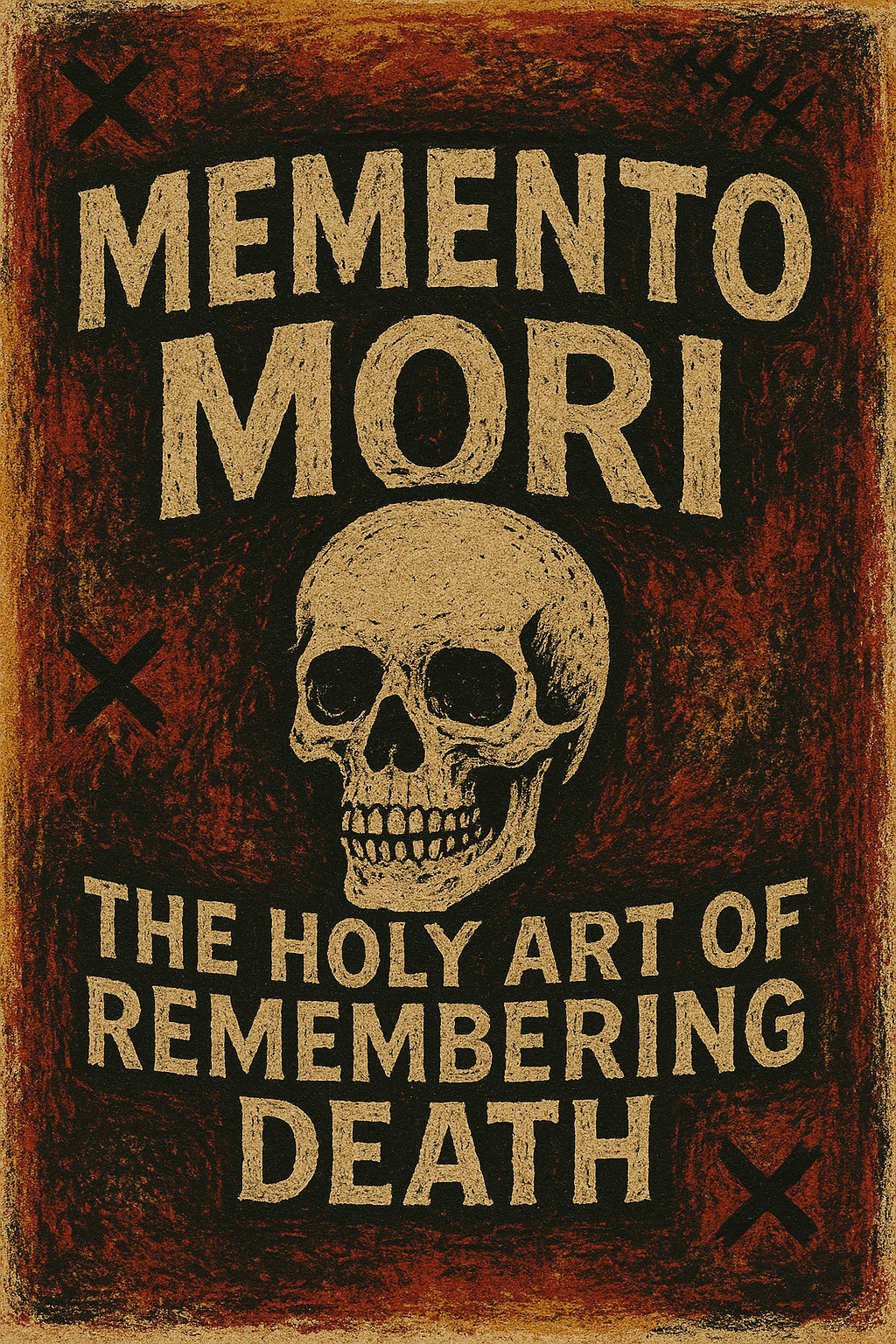
“Remember that you will die.” That’s what memento mori literally means—an ancient Christian and monastic meditation that’s less about doom and more about awakening.
Facing Death to Find Life
From the early desert monks to St. Francis of Assisi himself, memento mori was a spiritual mirror. It reminded the faithful that time is a precious, fragile gift—not a possession. To remember death is to live more fully, love more fiercely, and cling less desperately to the illusions of control and permanence. Francis, who called death “Sister,” didn’t fear her—he welcomed her as part of creation’s rhythm. To the Franciscan Clarean heart, death isn’t an enemy. It’s the Great Uncloaking—when all falsehood falls away and truth finally breathes freely.
From Skulls to Smartphones
In the Middle Ages, monks kept skulls on their desks. Artists painted grim reapers beside kings and peasants alike. These weren’t horror props; they were invitations to humility. Today, memento mori might mean something simpler: turning your phone off long enough to watch the sun set, writing a letter you’ve been putting off, or forgiving someone before it’s too late. Every breath could be your last—so make it beautiful.
Prophetic Living in a Dying World
Modern society hides death behind hospital curtains, plastic surgery, and endless productivity. But the world feels increasingly fragile—climate collapse, war, political violence, and loneliness are our new memento mori. To live prophetically now means daring to see what others deny: that we are dust, yes—but sacred dust. Knowing our mortality frees us to live counterculturally—to love without condition, give without hoarding, and build communities that outlast empires.
A Franciscan Clarean Reflection
For the Franciscan Clarean, memento mori is not morbid—it’s merciful. It calls us to simplicity, repentance, and joy. We learn to bless the transient, to bow to the inevitable, and to find Christ in every ending and beginning. When we remember that life ends, we finally begin to live like it matters.
“Praised be You, my Lord, through our Sister Bodily Death.” — St. Francis of Assisi, The Canticle of the Creatures
Franciscan Clarean Reflection for All Saints and All Souls
A Communion of Holy Mischief
All Saints Day (November 1) and All Souls Day (November 2) remind us that the Franciscan Clarean family is larger than we can see. It includes every holy rebel, barefoot mystic, and gentle soul who has ever said “yes” to Love. In the words of Francis, “We have been called to heal wounds, to unite what has fallen apart, and to bring home those who have lost their way.”
For Clareans, sainthood isn’t marble perfection—it’s earthy, tender fidelity to love in the face of empire, despair, and apathy. The saints are our siblings in the great experiment of mercy. They show us that holiness often wears work boots and smells faintly of compost and candle wax.
All Saints Day: Celebrating the Cloud of Witnesses
We honor not only canonized saints but all who have lived the Beatitudes with reckless grace—the peacemakers, the caretakers, the truth-tellers, the queer prophets, the nameless neighbors who carried the light through the world’s long nights. In Franciscan Clarean spirituality, this “cloud of witnesses” includes St. Francis and St. Clare, yes—but also anyone who dared to love without condition, resist oppression, and restore creation. Their sainthood is contagious; it reminds us to live audaciously holy lives right now.
Ritual Suggestions
Light seven candles for the seven virtues of Franciscan Clarean life: humility, simplicity, joy, service, compassion, creation-care, and holy mischief.
Read the Canticle of the Creatures and add your own verses naming today’s saints and struggles.
Share bread and soup with your community or the unhoused, recognizing the living saints among you.
All Souls Day: Remembering the Beloved Departed
This day honors those who have crossed the thin veil between worlds. In the Franciscan Clarean way, death is not an ending but a transformation—a returning to God’s embrace. We practice the memento mori not with fear, but with gratitude that life and death alike are sacred threads in the same tapestry.
Ritual Suggestions
Create an altar of remembrance: photos, candles, simple offerings like flowers, stones, or favorite foods.
Pray the Peace Prayer of St. Francis, naming those who need healing and those who have gone before.
Write letters to your ancestors—biological and spiritual—thanking them for what they planted in you.
A Prophetic Call
In a world obsessed with power and consumption, the twin feasts of All Saints and All Souls invite a radical remembrance: that our lives are bound together across time and death. The Communion of Saints calls us to resist forgetfulness. To remember the martyrs of climate justice, of racial struggle, of poverty and war, is to proclaim that love outlasts empire.
As the world groans with ecological collapse and moral exhaustion, the Franciscan Clarean response is not despair—it’s defiant joy. We are called to be living saints—the holy fools who dare to believe peace is still possible.
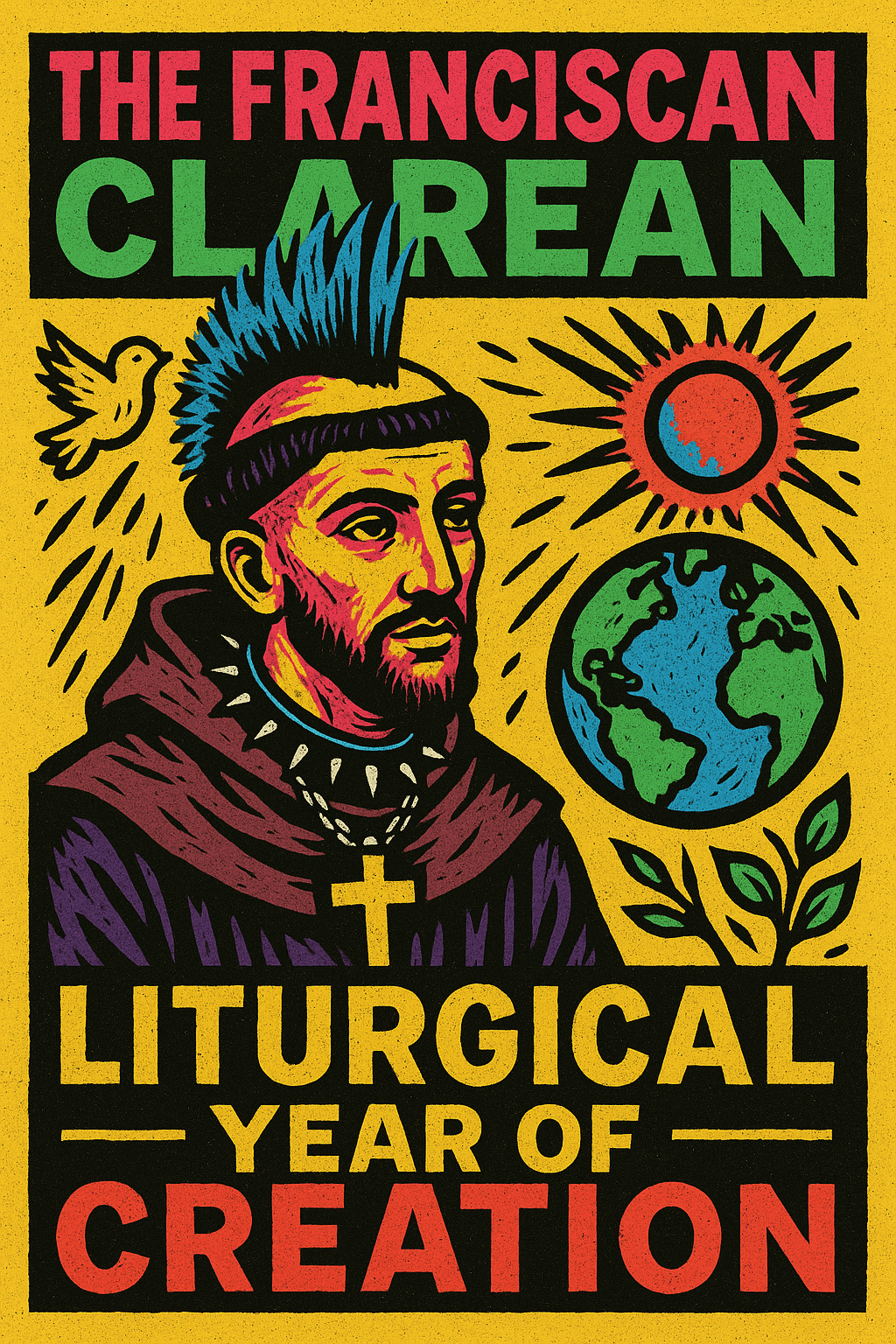
🌿 The Franciscan Clarean Liturgical Year of Creation
“The heavens declare the glory of God; the firmament proclaims the work of His hands.” — Psalm 19:1 “The world is charged with the grandeur of God.” — Gerard Manley Hopkins
Imbolc / Candlemas (February 1–2) — Feast of Light and Renewal
Theme: Purification • Simplicity • New Beginnings Scripture: Luke 2:22–32 — Simeon holds the Light of the world. Canticle Verse: “Praised be You, my Lord, through Sister Moon and the stars.” Practice of Mercy:
Bless candles, herbs, and water.
Begin a 40-Day Simplicity Challenge (declutter, forgive, simplify diet).
Visit or write to someone isolated in darkness — a widow, elder, or prisoner. Reflection: Imbolc announces the first light of hope after the long night. As Francis stripped away possessions, we strip away despair. Let every candle lit be an act of resistance against cynicism.
Ostara / Spring Equinox (March 20–22) — Feast of Balance and Blossoming
Theme: Balance • Renewal • Resurrection Scripture: Mark 4:26-32 — “The Kingdom is like a seed.” Canticle Verse: “Praised be You, my Lord, through Brother Wind.” Practice of Mercy:
Bless the soil and plant seeds in the Sacred Table Healing Garden.
Write down what needs balance in your life and offer it in prayer.
Share garden produce or herbs with a local shelter. Reflection: Ostara’s balance calls us back to equilibrium — between prayer and work, spirit and soil. Christ’s resurrection energy hums through every new sprout.
Beltane (May 1) — Feast of Holy Fire and Joy
Theme: Love • Creativity • Community Scripture: Acts 2:1-4 — The tongues of fire at Pentecost. Canticle Verse: “Praised be You, my Lord, through Brother Fire.” Practice of Mercy:
Celebrate a Feast of Holy Mischief — art, dance, storytelling, friendship.
Affirm the sacredness of bodies: bless your hands, feet, and heart.
Host a fundraiser or meal for those facing poverty or discrimination. Reflection: Beltane reminds us that divine love is not timid — it’s creative, embodied, and contagious. The Spirit still sets hearts ablaze.
Litha / Summer Solstice (June 21) — Feast of Radiance and Stewardship
Theme: Gratitude • Abundance • Creation Care Scripture: Matthew 6:26-29 — “Consider the lilies.” Canticle Verse: “Praised be You, my Lord, through Brother Sun.” Practice of Mercy:
Host an outdoor Eucharist or blessing of fruit and herbs.
Volunteer with a local food or environmental program.
Write your civic leaders about ecological justice or renewable energy. Reflection: The sun’s height mirrors God’s generosity. To waste abundance is sin; to share it is praise.
Lughnasadh / Lammas (August 1) — Feast of Harvest and Gratitude
Theme: Work • Service • Solidarity Scripture: John 6:11-12 — “Jesus took the loaves, gave thanks, and distributed.” Canticle Verse: “Praised be You, my Lord, through those who forgive for love of You.” Practice of Mercy:
Bake bread for your community and share it freely.
Honor the dignity of laborers — pray for farmworkers and artisans.
Support fair-trade goods or local markets. Reflection: The bread we break is sacred. Gratitude becomes justice when it feeds others.
Mabon / Autumn Equinox (September 20–23) — Feast of Letting Go and Gratitude
Theme: Detachment • Trust • Gratitude Scripture: Philippians 4:11-13 — “I have learned to be content.” Canticle Verse: “Praised be You, my Lord, through those who endure in peace.” Practice of Mercy:
Build a Gratitude Altar — include symbols of what you’re releasing.
Donate clothes or items you no longer need.
Pray for peace in areas of conflict and division. Reflection: Mabon teaches the holy art of release. We cannot carry everything — not even our good works. Let autumn’s falling leaves remind you: surrender is sacred.
Samhain / All Hallows (October 31–November 2) — Feast of Communion with the Saints
Theme: Remembrance • Mortality • Communion Scripture: Revelation 7:9-17 — “A multitude from every nation.” Canticle Verse: “Praised be You, my Lord, through Sister Death.” Practice of Mercy:
Hold a Saints and Rebels Vigil — honor saints, ancestors, and forgotten heroes.
Write prayers for the dead and those grieving.
Support hospice or prison ministries. Reflection: Death is not the enemy of faith but its fulfillment. In honoring the departed, we learn how to live.
Yule / Winter Solstice (December 21–22) — Feast of Incarnation and Hope
Theme: Rebirth • Hope • Compassion Scripture: John 1:1-5, 14 — “The light shines in the darkness.” Canticle Verse: “Praised be You, my Lord, through Sister Mother Earth.” Practice of Mercy:
Share warmth: clothing drives, hot meals, shelter work.
Keep a Night Vigil with candles, singing, and prayer.
Bless your home and the creatures within it. Reflection: The darkest night conceives divine light. Incarnation means God is not distant — God is breathing in the cold beside us.
Epilogue: The Spiral Path
“We are to live in harmony with all creation, seeing each moment as an opportunity for love.” — St. Clare
The Franciscan Clarean Wheel is not superstition; it’s sanctified rhythm. The Celtic and Franciscan paths meet in their shared song: the holiness of ordinary time.
Each turning season calls the Order to conversion — not just prayer, but participation in the world’s healing. The Wheel turns outward: from chapel to street, from candle to compost, from contemplation to community.
🕊️ Suggested Annual Pattern for the Order
Season Key Symbol Spiritual Focus Prophetic Action
Imbolc Candle Simplicity & Renewal Fast from excess, bless light Ostara Seed Resurrection & Balance Plant, feed, restore Beltane Fire Love & Joy Celebrate creation, resist shame Litha Sun Stewardship Care for creation, share abundance Lughnasadh Bread Gratitude Share harvest with poor Mabon Leaf Letting Go Simplify, forgive, detach Samhain Candle Flame Communion Honor the dead, comfort mourners Yule Star Incarnation Give warmth, hold vigil
Closing Blessing
“May you be blessed by Brother Sun, cooled by Sister Water, sustained by Mother Earth, and guarded by the Spirit of Peace. May you turn with the seasons, and may your life be a liturgy of love.”










 Sister Abigail Hester