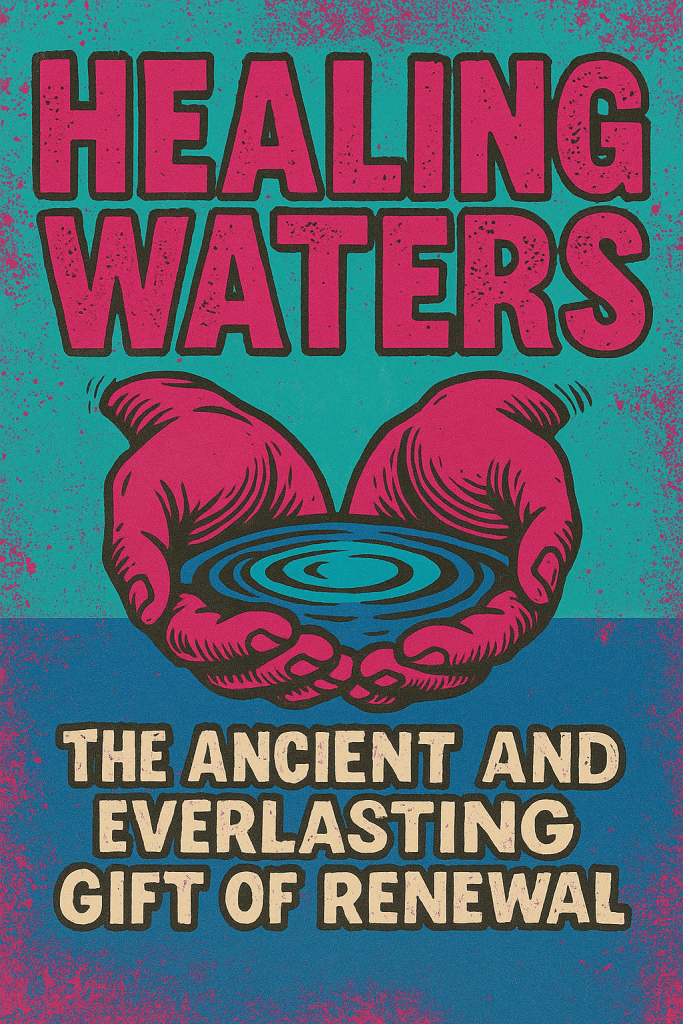
From the dawn of civilization, water has been revered not only as a source of life but also as a sacred agent of healing. Across centuries and cultures, the practice of using water therapeutically has flowed like a stream through human history—cleansing, restoring, and renewing body and spirit alike.
A History Written in Water
Long before the advent of modern medicine, ancient civilizations intuitively recognized the power of water. Egyptian and Greek physicians used hydrotherapy to relieve pain and stimulate circulation. Even before the time of Hippocrates—the so-called “Father of Medicine”—healers turned to springs, baths, and rituals of immersion to restore balance in the body. Hippocrates himself, in the 4th century BCE, famously recommended water treatments for a variety of ailments, from fever to fatigue.
In the 18th century, John Wesley, the great revivalist and founder of the Methodist movement, penned Primitive Physick, a little book of natural remedies grounded in Christian piety and practical wisdom. Among his many recommendations was the regular and intentional use of water for maintaining health and treating disease. For Wesley, the body was a temple of the Holy Spirit, and water—a gift from God—was to be received with gratitude and used with care.
Prophets of the Healing Stream
As the centuries progressed, a river of thinkers and practitioners carried forward the legacy of water healing. Father Sebastian Kneipp, a 19th-century Bavarian priest, developed a system of hydrotherapy rooted in his personal recovery from tuberculosis using cold water immersion, herbs, and exercise. His work sparked a European naturopathic revival, influencing others like Dr. Winternitz of Vienna and Dr. John Harvey Kellogg of Battle Creek Sanitarium—each integrating water therapy into larger health regimens.
Dr. Kellogg, in particular, combined hydrotherapy with vegetarianism, exercise, and spiritual discipline, laying the groundwork for many of today’s holistic health movements. Dr. Benedict Lust, the father of American naturopathy, further expanded Kneipp’s principles in the United States.
The 20th century saw passionate voices like Dr. Paul C. Bragg, Dr. N.W. Walker, and Allen E. Banik championing the curative powers of water. Walker, author of Colon Health, emphasized internal cleansing through water-rich foods and juicing. Banik, an optometrist, praised the purity of natural water as essential for vision, vitality, and overall well-being. These health advocates drew on both science and intuition, echoing the wisdom of yogis such as Yogi Ramacharaka, who taught about the pranic (life-force) benefits of water in spiritual healing.
Water as Sacred, Healing, and Free
The common thread among these many voices? Water is accessible, elemental, and universal. It doesn’t require a prescription, a co-pay, or a fancy label. It is the birthright of all creation—a holy sacrament in liquid form.
For us in the Franciscan Clarean tradition, this rings especially true. Saint Francis of Assisi called water “sister,” singing her praises in his Canticle of the Creatures:
“Praised be You, my Lord, through Sister Water, who is very useful and humble and precious and chaste.”
Water is humble. It meets us where we are—whether in a river, a teacup, or a warm cloth on a fevered brow. It is precious and chaste, unpretentious and healing. Its simplicity invites us to slow down, cleanse, and begin again.
Embracing the Waters of Renewal
Today, amidst chronic illness, environmental stress, and an often over-medicated society, a return to the healing traditions of water may be one of the most revolutionary acts of all. Cold compresses, warm baths, internal cleansing, herbal infusions, and prayerful immersion can serve as gentle tools of restoration.
Water therapy isn’t a magic cure—it’s a sacred rhythm. It invites us to cooperate with the natural healing processes already at work in our bodies. It beckons us to live more simply, more attentively, and more in tune with the divine wisdom embedded in creation itself.
So let us return to the waters. Let us drink deeply, bathe reverently, and give thanks for the life-giving stream that flows from the heart of God, through the earth, and into our bodies—cleansing, renewing, and reminding us of who we are: beloved, embodied, and worthy of healing.
 Sister Abigail Hester
Leave a comment