Sister Abigail Hester

Tag: god

  • Gospel of Luke — Abigail Remix

    Gospel of Luke 6:27-38 — Abigail Remix

    Here’s Jesus, doing what Jesus does best: flipping our whole little moral universe upside-down like a kid dumping out a toy box.

    Love your enemies.
    Do good to the folks who can’t stand you.
    Bless the people who drag your name through the mud.
    Pray for the ones who treat you like dirt.

    And if somebody smacks you across one cheek? Jesus basically shrugs and says, “Honey, offer the other one too.”
    If someone steals your cloak? Don’t clutch the tunic either.
    Give to whoever asks.
    And if someone snatches something from you, don’t even demand it back.

    Then he drops the line we all quote but rarely live:
    Do to others what you want done to you.

    And honestly — if we only love people who love us back, Jesus says, big deal. Even the folks we call “sinners” know how to run that play. If we only do good to the people who treat us well, who cares? Anyone can do that. And if we lend money and expect repayment? Again — not exactly saint-level stuff.

    But then he pivots to the divine mic-drop:
    Love your enemies. Do good anyway. Give freely. Expect nothing back.

    Why?
    Because that’s how you become children of the Most High — the God who is kind to the ungrateful and the wicked. Jesus says, “Be merciful, just like your Father is merciful.”

    Stop judging so you won’t be judged.
    Stop condemning so you won’t be condemned.
    Forgive — and forgiveness will boomerang right back into your life.
    Give — and God will pour blessings into your lap like grain packed down, shaken together, spilling over the edges.

    It’s karmic, but make it Christian. Jesus is basically saying:
    You are shaping the world you live in by the way you show up in it.
    Your giving, forgiving, loving, and releasing create the very atmosphere you breathe.

    Selfishness can only receive selfishness. That’s its ecosystem.
    Love knows how to recognize love.
    Mercy knows how to receive mercy.
    What goes around really does come around — not as cosmic vengeance, but as the natural flow of the human heart.

    But here’s where it gets spicy.
    Jesus gives us this gorgeous, impossible command — and we look around at the religion many of us inherited and think, “Wait… where exactly were we supposed to learn mercy from?”

    A whole lot of Christians were handed a God who looks nothing like Jesus:
    An eternal torturer.
    A cosmic scorekeeper.
    A divine rage machine who loves rules more than people.

    We were told to love our enemies…
    while believing God burns His enemies forever.

    We were told to forgive seventy times seven…
    while believing God forgives once, maybe, and after that it’s fire and doom.

    No wonder we’re confused.
    No wonder Christians struggle to be non-judgmental.
    We learned our theology from a courtroom, not a wedding feast.
    We were shaped by threats, not tenderness.

    But Jesus insists the whole thing starts with God’s mercy.
    If the Source isn’t merciful, we can’t be either.
    If God is eternally furious, then of course we inherit the same posture.
    But if God is love — wild, generous, unreasonable love — then that river flows right through us and out into the world.

    And here’s the truth we’ve been too afraid to say out loud:
    If love isn’t flowing in and out of us, if mercy isn’t reshaping our hearts, if compassion isn’t the fragrance we leave behind, then whatever we’re practicing… it’s not Christianity.

    Flush that version.
    Let it go.
    It’s not healing anybody.

    We’re called into a faith that pours out forgiveness, compassion, generosity, and radical, stubborn love.
    That’s our real work.
    That’s the business we’re in.

    We’re in the love business — always have been, always will be.

  • A Franciscan Clarean Thanksgiving: Gratitude as Holy Rebellion

    A Franciscan Clarean Thanksgiving: Gratitude as Holy Rebellion

    Thanksgiving can be a complicated holiday—full of family, food, history, grief, joy, and everything in between. But in the Franciscan Clarean spirit, we don’t dodge complexity; we transform it. We take the messy, the tender, the ordinary, and we bless it. We turn gratitude into a kind of holy rebellion that pushes back against despair, greed, and isolation.

    So here’s a simple, earthy, justice-soaked Thanksgiving ritual for anyone who wants to feast with a little more soul this year.


    Start with a Breath

    Before anything else, pause.
    Feel the ground under your feet—the quiet generosity of Sister Earth. She asks for nothing and gives everything.

    Whisper, softly or boldly:

    “Thank you, Sister Earth. I stand on holy ground.”

    A simple beginning. A grounding one.


    A Call to Gratitude (Franciscan-Style)

    Francis and Clare didn’t treat gratitude like a nicety; they treated it like a spiritual revolution. They knew that when our hearts overflow, we become dangerous to systems built on scarcity and fear.

    So speak this aloud, or let your community chant it with a little rhythm:

    “We thank You for all things—
    the small, the fragile, the overlooked,
    the daily bread and the daily breath.”

    And whether you whisper or shout:

    “For all good things, praise be!”


    Name Something Small

    Around the table, invite everyone to name something they’re grateful for—but here’s the Franciscan Clarean twist:

    It must be something small.

    A warm pair of socks.
    A bird you heard this morning.
    A laugh you didn’t expect.
    Bread fresh from the oven.
    A tiny bit of healing that snuck up on you.

    Clare teaches us to find holiness in the small things. Gratitude begins there.


    Remembering the Poor and Forgotten

    No Franciscan Thanksgiving is complete without widening the circle of our prayer. Francis never let a full table exist without remembering empty ones.

    Pray:

    “God of the margins, bless the unhoused, the hungry, the lonely.
    Make our gratitude dangerous—
    the kind that leads to justice.”

    And then answer:

    “Let our feast become shared bread.”

    Because gratitude that stops at the table isn’t real gratitude—it’s just décor. Gratitude that moves outward becomes compassion.


    Blessing the Meal

    Hold your hand over the food, or touch the table gently.

    “Bless this food and all who grew it.
    Bless the hands that harvested, shipped, cooked, and served.
    Bless the creatures and the soil,
    the workers and the waters,
    the sun and the unseen microorganisms that labored for this moment.”

    And don’t forget the Franciscan Clarean punchline:

    “May this feast strengthen us for holy mischief in the world.”

    A little humor. A little truth. A lot of love.


    A Moment of Stillness

    Let the room breathe.
    Let gratitude sink into your bones.
    Let quiet become a prayer.


    A Short Reading for the Soul

    Choose one that fits your table:

    Option A — The Canticle Vibe

    “Praise be to You, who makes each creature a sibling.
    May we walk gently,
    love wildly,
    and remember that every sparrow, every stone, every stranger
    belongs at Your table.”

    Option B — Clarean Punk Energy

    “The world is aching for tenderness.
    May we be the ones who dare to offer it.”

    Either way, it sets the tone: tenderness as revolution.


    A Thanksgiving Toast

    Lift whatever you’re drinking—tea, cider, wine, cranberry fizz.

    “To gratitude that heals.
    To community that resists despair.
    To the Franciscan Clarean revolution of radical love.”

    Everyone answers:

    “Amen—and let’s eat!”


    May Your Thanksgiving Be Tender and Wild

    Wherever you are this season—surrounded by community, walking through grief, building new traditions, or sitting at a table that looks nothing like you imagined—may gratitude meet you gently.

    And may the Franciscan Clarean way remind you that gratitude isn’t passive.
    It’s active.
    It’s wild.
    It’s a spiritual force that can reshape the world—one small, tender, holy moment at a time.

  • “What’s the Point?” — A Franciscan Clarean Reflection on the Open Table

    “What’s the Point?” — A Franciscan Clarean Reflection on the Open Table

    “What’s the Point?” — A Franciscan Clarean Reflection on the Open Table

    Someone recently shared this with me:

    “I haven’t been to Mass in over a year. Since I live with someone who isn’t my spouse, I’m not permitted to take the Eucharist anyway, so I figure… what’s the point?”

    Oh friend… I hear that ache. And let me say this as clearly and fiercely as a Franciscan Clarean can:

    You are not exiled from God’s table.
    Not today. Not ever.

    Whatever someone told you about being “not permitted” doesn’t get the final word — Christ does. And Christ’s entire ministry was basically one long, holy potluck with the “wrong” people at the “wrong” times in the “wrong” places. If exclusion was the rule, Jesus broke it constantly.

    From a Franciscan Clarean perspective, the table of Christ is radically open because grace was never meant to be a reward for moral tidiness — it is food for the journey, nourishment for the hungry, medicine for the wounded.

    Francis and Clare didn’t spend their lives building gatekeeping systems.
    They built circles of welcome where the poor, the irregular, the complicated, and the scandalous could finally breathe again.

    So let me speak this truth over you:

    You belong.
    Your hunger matters.
    Your story is not disqualifying.
    The Eucharist is not a prize for the perfect, but bread for the broken.

    You don’t need to be married, sorted out, or checkbox-approved to encounter the living Christ. You just need to be human and hungry — which is all of us.

    So if your heart has been aching for Mass, don’t let shame or someone else’s rulebook convince you you’re unworthy. Come. Sit. Rest. Pray. Let the liturgy hold you, shape you, heal you. The table is mercy, not measuring.

    And if anyone tries to shut the door on you?

    Sweetheart… we’ll just build a bigger table.

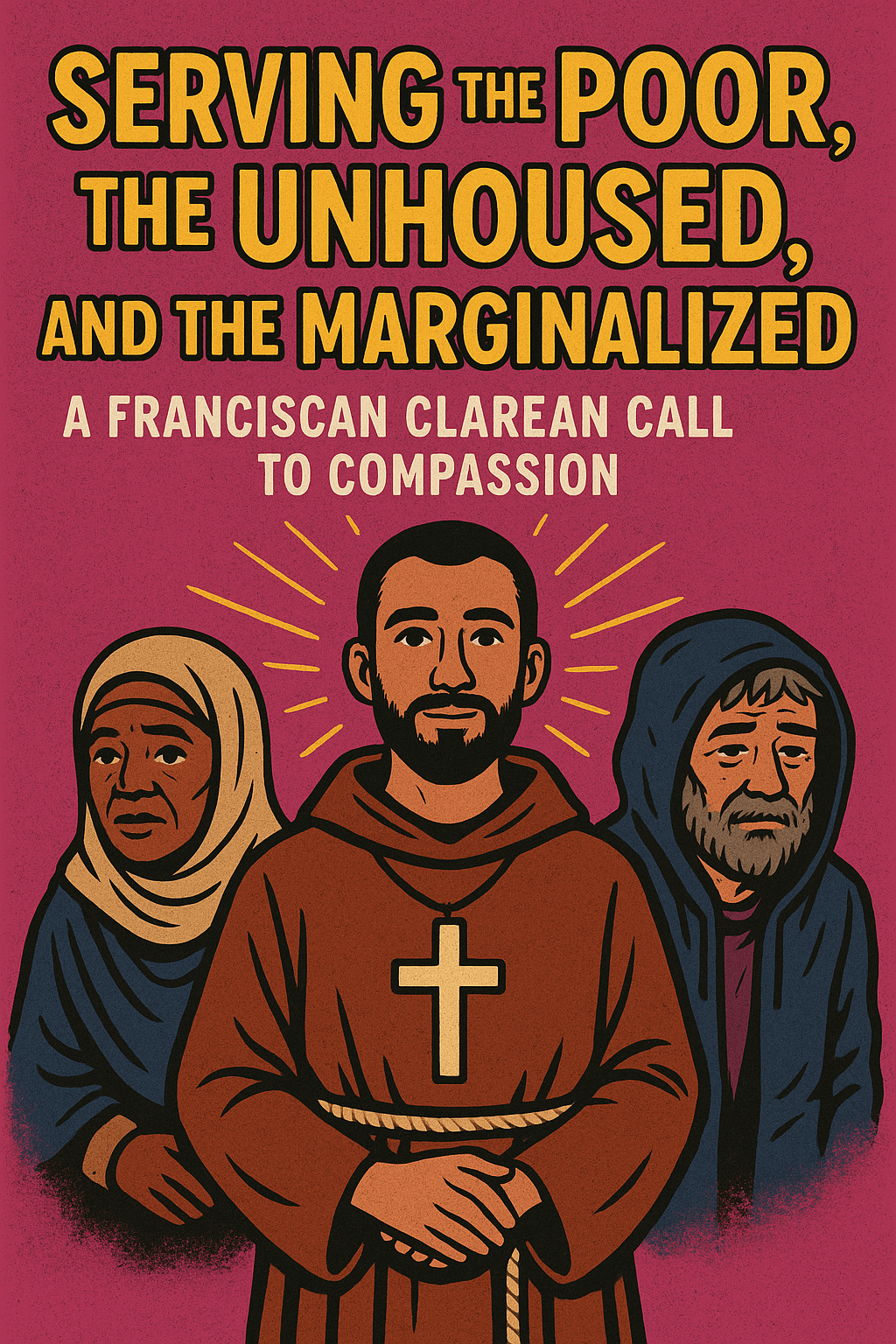
  • Serving the Poor, the Unhoused, and the Marginalized: A Franciscan Clarean Call to Compassion

    Serving the Poor, the Unhoused, and the Marginalized: A Franciscan Clarean Call to Compassion

    Serving the Poor, the Unhoused, and the Marginalized: A Franciscan Clarean Call to Compassion

    In an age when the wealth gap widens and compassion too often thins out, our Franciscan Clarean calling remains crystal clear: “We are dedicated to serving the poor, the unhoused, and those on the margins with dignity, compassion, and non-judgmental care.”

    A Crisis of Humanity

    Recent reports from the United Nations and the World Bank show that global homelessness and food insecurity have reached levels unseen in decades. In the United States alone, the Department of Housing and Urban Development reported in early 2025 that over 653,000 people experience homelessness on any given night — a sharp increase tied to rising rents, stagnant wages, and mental-health neglect. Around the world, economic instability and conflict have driven millions into displacement.
    These are not mere statistics — they are human beings, beloved of God, sleeping under bridges and in doorways, bearing the divine image in the dust and cold.

    Scripture’s Uncomfortable Reminder

    The Bible refuses to let us ignore them.

    “Is not this the kind of fasting I have chosen: to loose the chains of injustice… to share your food with the hungry and to provide the poor wanderer with shelter?” — Isaiah 58:6–7

    Christ himself identifies with the marginalized:

    “For I was hungry and you gave me food, I was thirsty and you gave me drink, I was a stranger and you welcomed me.” — Matthew 25:35

    And in James 2:15-17, the apostle writes bluntly:

    “If a brother or sister is poorly clothed and lacking in daily food, and one of you says to them, ‘Go in peace, keep warm and well fed,’ but does nothing about their physical needs, what good is that?”

    Faith without compassion in action is not faith at all — it is spiritual theater.

    Non-Judgmental Care as Revolution

    In a world obsessed with moral policing and “worthiness tests,” the radical mercy of Francis and Clare is revolutionary. To serve without judgment is to imitate the Christ who ate with tax collectors and touched lepers.
    True ministry does not begin with what brought you here? but rather how can I help you heal?

    This is why our Franciscan Clarean ministries reject hierarchy, stigma, and pity. We see Christ’s face in every person — especially in the ones society fears or ignores. Every cup of soup, every bandaged wound, every kind word whispered to someone who feels invisible is a sacrament of love.

    Signs of Hope Amid Despair

    Even in the midst of crisis, the Spirit is stirring. Across the globe, grassroots mutual-aid networks and faith-based street ministries are rising. From tent-chapels in Los Angeles to Franciscan communities in Kenya and the Philippines, ordinary people are rediscovering the Gospel’s raw power — not in cathedrals, but in compassion.

    This movement echoes the Canticle of the Creatures: a song of kinship, not separation. It insists that the poor are not “clients” but companions. The unhoused are not “the least of these” — they are our brothers and sisters, fully part of the household of God.

    The Franciscan Clarean Challenge

    To be Franciscan Clarean is to live dangerously tender. It means trading comfort for compassion, prestige for presence, and safety for solidarity. Our task is not to fix the world — but to love it fiercely enough that healing becomes possible.

    “Blessed are the merciful, for they shall obtain mercy.” — Matthew 5:7

    So we press forward, barefoot and bold, building communities of radical welcome.
    We will continue to feed, to clothe, to sit beside, to listen.
    We will continue to believe that even one act of love is a rebellion against despair.

  • Transgender Christian Mystic: A Testament of Sacred Becoming

    Transgender Christian Mystic: A Testament of Sacred Becoming

    Transgender Christian Mystic: A Testament of Sacred Becoming

    by Sister Abigail Hester, OFC

    To be a transgender Christian mystic is to live as both revelation and resistance — a living parable of the God who refuses to be confined by binaries, hierarchies, or fear. It is to bear witness that divine mystery cannot be caged in male or female, sinner or saint, but moves freely, tenderly, and rebelliously through every soul that dares to say, “Here I am.”

    The Sacred Rebellion of Being

    My transness is not a rebellion against God — it’s a rebellion against the false gods of conformity and fear. It’s the refusal to let empire theology dictate where holiness can be found. When I embrace who I am — every strand of gender, every layer of becoming — I am saying yes to the Creator’s wild imagination. I am saying yes to the image of God as fluid, relational, and ever-unfolding.

    In that sense, being transgender is not about changing from one thing to another, but about revealing what was always divine within. It’s a mystical unveiling — an inner apocalypse where false identities fall away, and the soul steps out radiant and unashamed.

    The Mysticism of the Margins

    Mysticism is not about escaping the world but seeing through it — finding the divine shimmer in the cracks of creation. Trans mystics live in the holy tension between what is and what can be. We see heaven breaking into the present moment — not as escape, but as transfiguration.

    Like Francis stripping naked in the public square, the transgender mystic also stands unguarded before the world, saying, “This is who I am — and God is still good.” The wounds we carry become our stigmata; the love that sustains us becomes our resurrection. We are both cross and empty tomb, both pain and promise.

    A Gospel of Wholeness

    To walk this path is to live the Gospel in the flesh — the good news that nothing true can ever be lost, and no one who loves deeply can ever be outside God’s grace. The Incarnation itself is the great transition — God taking on human flesh, showing us that divinity is not distant but embodied.

    Every time a trans person claims their name, their pronouns, their authenticity, they echo the words of Jesus at the tomb: “Unbind them, and let them go.”
    This is resurrection power — not a metaphor, but a lived, daily act of spiritual defiance.

    The Call to the Transfiguration of the Church

    The Church, too, must transition — from fear to freedom, from dogma to love, from control to compassion. Trans mystics stand as prophets at the edge of that transformation, calling the Body of Christ to remember her own diversity, her own queerness, her own divine fluidity.

    We are the ones crying out in the wilderness: “Prepare ye the way of Love!”
    And like all true prophets, we know the cost — but we also know the joy that comes when Spirit blows where She wills.

    Living as a Sacred Mirror

    Being a transgender Christian mystic is to hold up a mirror to the world and whisper: “You too are divine. You too are becoming.”
    It’s to remind creation that holiness was never about fitting in — it was always about becoming whole.

    So I live my truth — not as rebellion, not as shame, but as a hymn of gratitude.
    For the God who made me this way, who walks with me through shadow and light, and who calls me, still, by name.

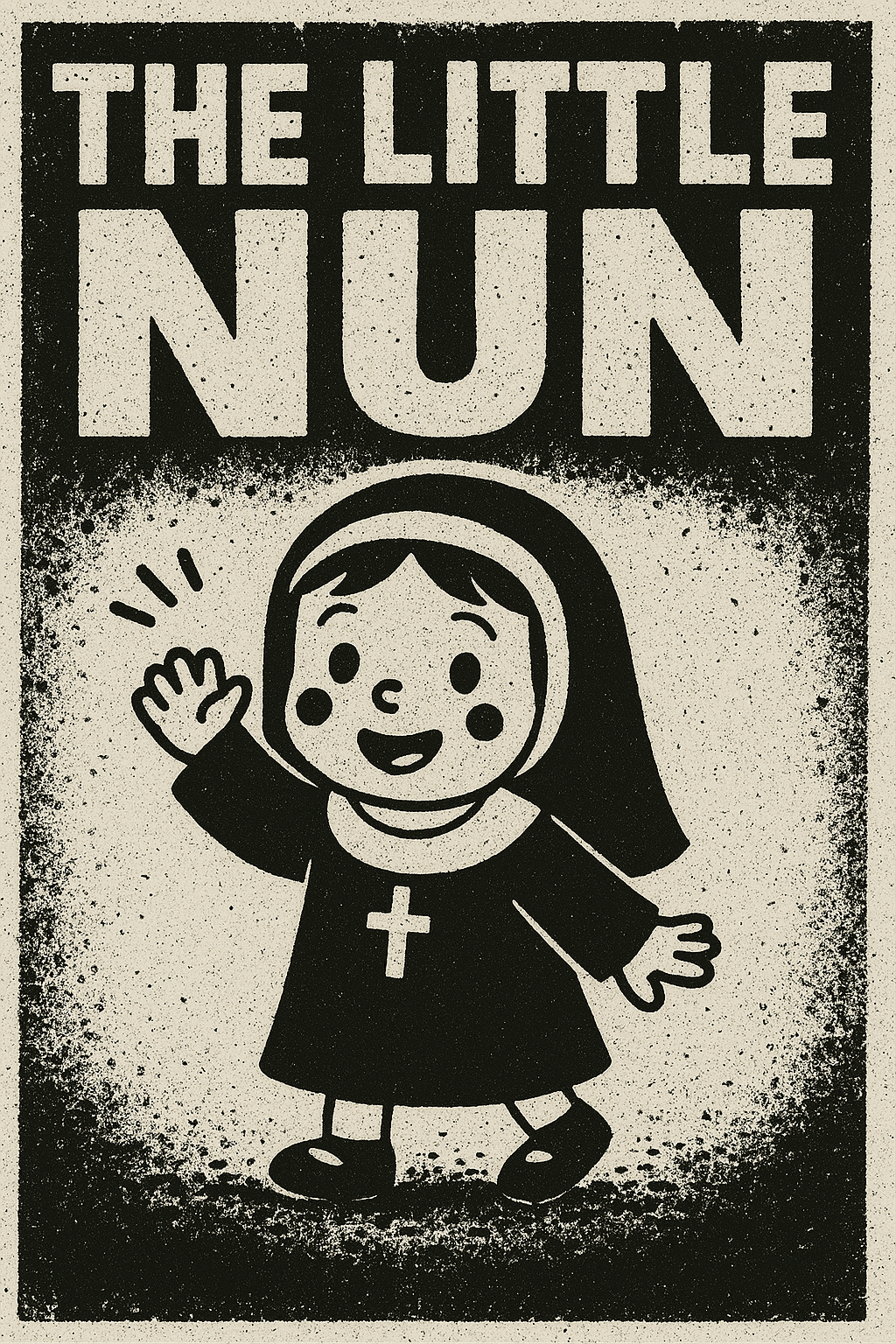
  • The Little Nun

    The Little Nun

    The Little Nun

    Living Small, Loving Big, and Finding God in Innocence

    by Sister Abigail Hester, OFC

    A little nun isn’t small because she lacks power — she’s small because she’s surrendered the illusion of needing it. She walks softly through creation, barefoot and curious, seeing everything as if for the first time.

    For me, little isn’t just a Franciscan spiritual attitude — it’s who I am.
    I am an age regressor, and that littleness is woven into my holiness. When I rest in that gentle, childlike space, I don’t escape the world — I return to it with wonder. I meet God in the same way a little one meets love: with wide eyes, open hands, and no defenses.

    Jesus said, “Unless you become like little children, you will never enter the kingdom of heaven.”
    That verse isn’t a command to act childish — it’s an invitation to trust again. To believe again. To love without calculating the risk.

    When I am little, I remember:

    Innocence is sacred trust. It sees without suspicion.

    Play is prayer. Holy joy is an act of resistance.

    Laughter is medicine. It breaks the chains of despair.

    Vulnerability is courage. It lets Love have the last word.

    Being the little nun means I pray with teddy bears nearby and talk to God with the same open honesty that children have with their parents. It means I find holiness in crayons and candlelight, bubbles and Benediction. My regression is not regression away from God — it’s regression into God.

    This littleness is my Franciscan poverty — the stripping away of ego and pretense until all that’s left is truth and tenderness. It’s how I live the Gospel of simplicity and compassion in a world addicted to noise and control.

    Because being little isn’t a flaw.
    It’s a vocation.
    It’s how heaven moves through innocence and trust.
    It’s how I — Sister Abigail, the Little Nun — bear witness to a God who still delights in small things.

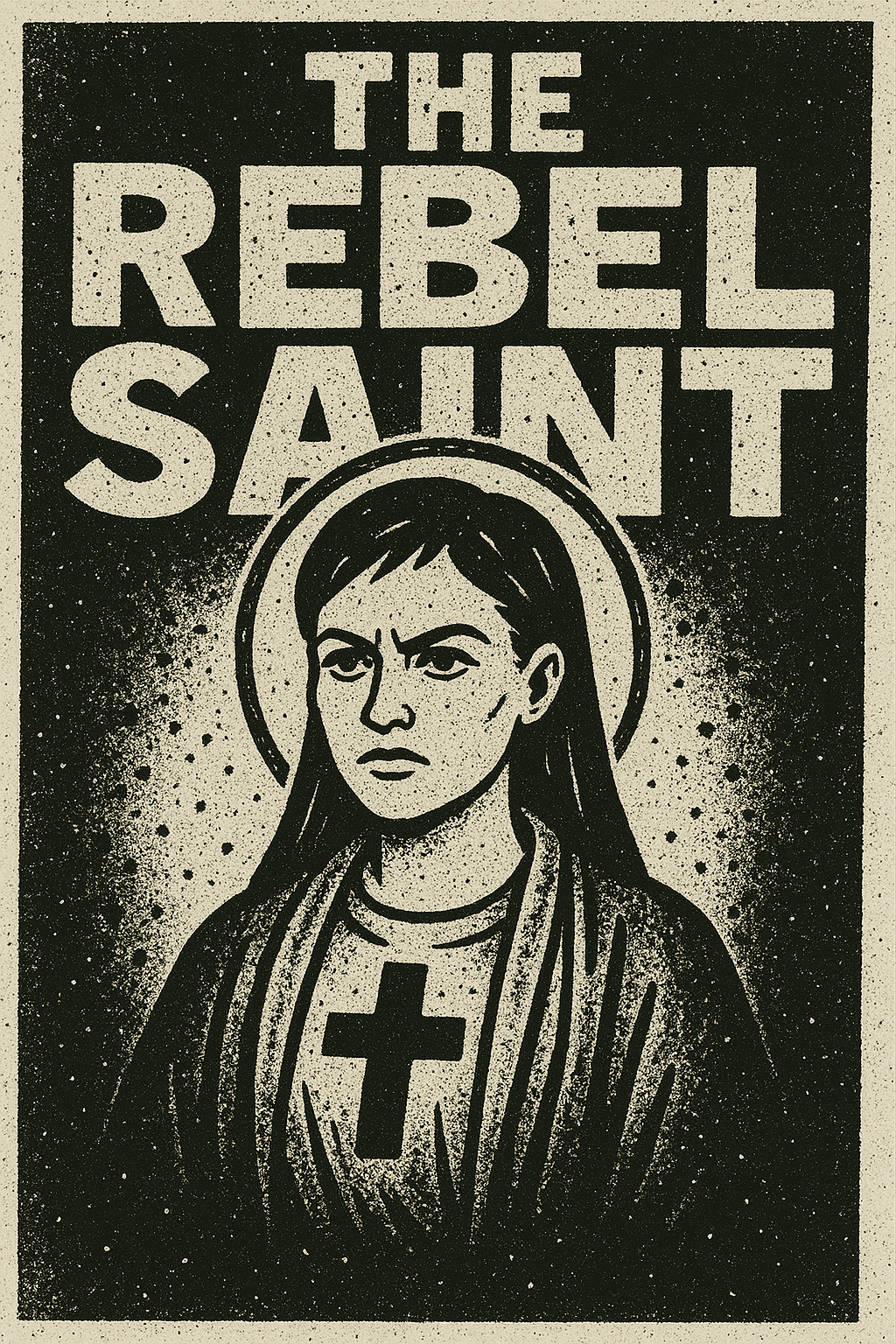
  • The Rebel Saint

    The Rebel Saint

    The Rebel Saint: A Holy Defiance of the Ordinary

    by Sister Abigail Hester, OFC

    A Rebel Saint isn’t a rule-breaker for rebellion’s sake—she’s a truth-teller who refuses to let the world remain asleep. She is the holy troublemaker who loves too fiercely, forgives too freely, and believes too stubbornly in a world that can still be redeemed. She has dirt under her fingernails and stardust in her soul. She prays with her hands in the soil and her heart in the fire.

    A Rebel Saint is not safe. She is sacred.

    The Heart of a Rebel, the Soul of a Saint

    A Rebel Saint is born when compassion collides with conviction. She listens to the cries of the poor, the wounded, the outcast—and answers not with charity, but with solidarity. Like Francis stripping naked in the square, she abandons the false security of empire and ego. Like Clare standing at the convent gate with nothing but faith and a monstrance, she guards what is holy with her entire being.

    Her rebellion is not against God—it’s against everything that masquerades as God but isn’t: greed dressed as prosperity, violence disguised as justice, piety without compassion.

    She is not here to escape the world, but to transfigure it.

    A Holy Insurrection of Love

    To be a Rebel Saint is to declare that love is stronger than fear, and mercy more powerful than any law. It’s to walk barefoot through a burning world carrying nothing but the gospel of tenderness.

    A Rebel Saint doesn’t wait for permission to do what is right. She doesn’t need the Church’s gold seal to bless her compassion. She baptizes tears, consecrates laughter, and preaches the gospel with her life.

    She finds Christ in the forgotten, the condemned, the queer, the poor, the sick, the street preacher, the addict, and the child. Her theology is incarnational—God not above us, but among us, and most scandalously, within us.

    The Marks of a Rebel Saint

    Radical Simplicity: She lives uncluttered so her hands are free to serve.

    Fearless Honesty: She names truth even when her voice shakes.

    Wild Mercy: She chooses forgiveness over vengeance, every single time.

    Prophetic Imagination: She dreams of a world where everyone belongs.

    Sacred Mischief: She upends hierarchies with humor, joy, and holy playfulness.

    The Legacy of the Rebel Saint

    The Rebel Saint is not remembered for obedience to systems, but fidelity to the Spirit. She is the one who made others believe that holiness could be messy, that sainthood could look like laughter through tears, and that love could be the loudest form of protest.

    She stands in the long line of divine disruptors—Francis, Clare, Dorothy Day, Oscar Romero, Julian of Norwich, and every nameless mystic who dared to love beyond boundaries.

    And in our own time, the Rebel Saint lives again—in every soul who chooses compassion over conformity, who heals instead of judges, who builds communities of radical belonging where no one is left behind.

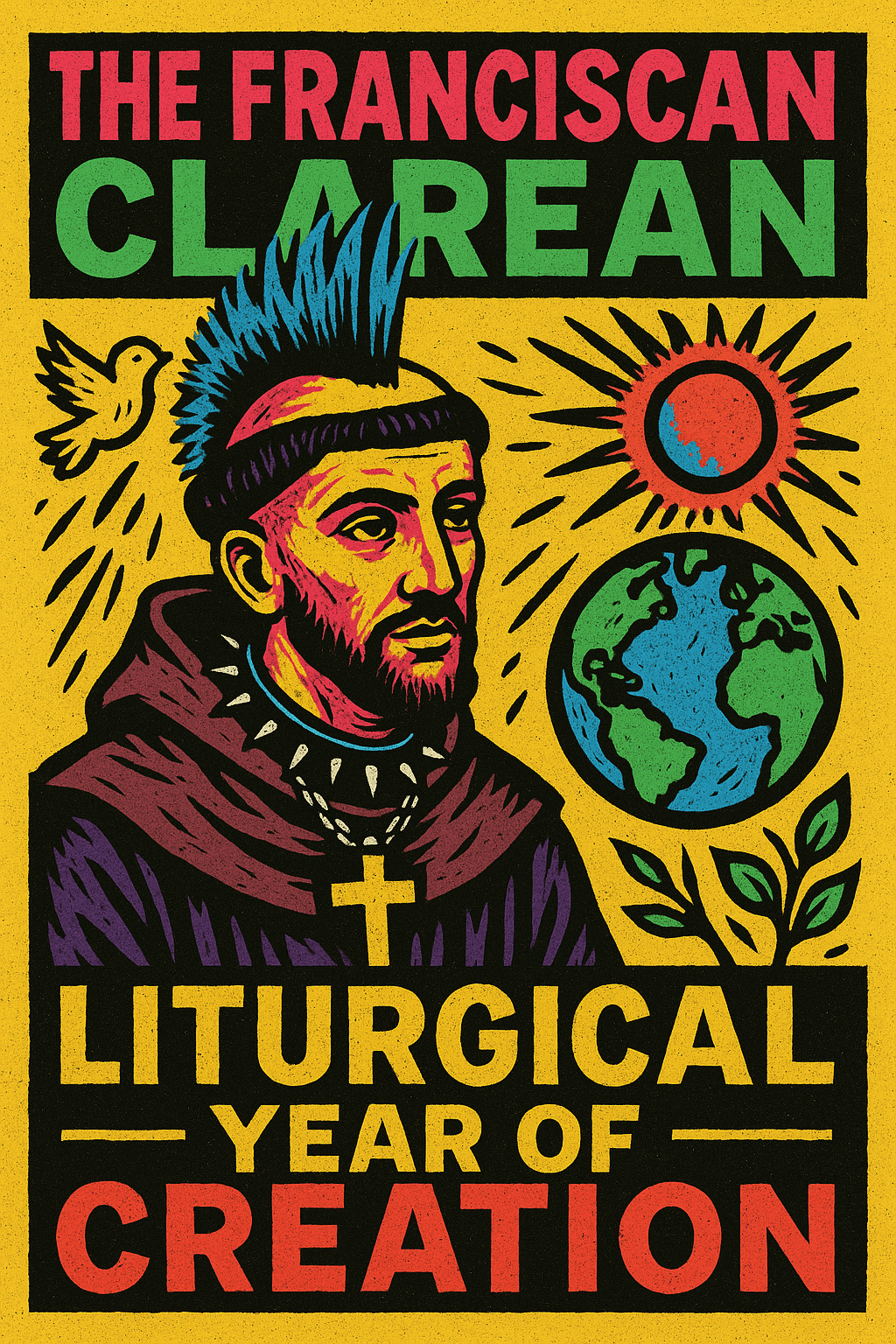
  • The Franciscan Clarean Liturgical Year of Creation

    The Franciscan Clarean Liturgical Year of Creation

    🌿 The Franciscan Clarean Liturgical Year of Creation

    “The heavens declare the glory of God; the firmament proclaims the work of His hands.” — Psalm 19:1
    “The world is charged with the grandeur of God.” — Gerard Manley Hopkins


    1. Imbolc / Candlemas (February 1–2) — Feast of Light and Renewal

    Theme: Purification • Simplicity • New Beginnings
    Scripture: Luke 2:22–32 — Simeon holds the Light of the world.
    Canticle Verse: “Praised be You, my Lord, through Sister Moon and the stars.”
    Practice of Mercy:

    Bless candles, herbs, and water.

    Begin a 40-Day Simplicity Challenge (declutter, forgive, simplify diet).

    Visit or write to someone isolated in darkness — a widow, elder, or prisoner.
    Reflection:
    Imbolc announces the first light of hope after the long night. As Francis stripped away possessions, we strip away despair. Let every candle lit be an act of resistance against cynicism.


    1. Ostara / Spring Equinox (March 20–22) — Feast of Balance and Blossoming

    Theme: Balance • Renewal • Resurrection
    Scripture: Mark 4:26-32 — “The Kingdom is like a seed.”
    Canticle Verse: “Praised be You, my Lord, through Brother Wind.”
    Practice of Mercy:

    Bless the soil and plant seeds in the Sacred Table Healing Garden.

    Write down what needs balance in your life and offer it in prayer.

    Share garden produce or herbs with a local shelter.
    Reflection:
    Ostara’s balance calls us back to equilibrium — between prayer and work, spirit and soil. Christ’s resurrection energy hums through every new sprout.


    1. Beltane (May 1) — Feast of Holy Fire and Joy

    Theme: Love • Creativity • Community
    Scripture: Acts 2:1-4 — The tongues of fire at Pentecost.
    Canticle Verse: “Praised be You, my Lord, through Brother Fire.”
    Practice of Mercy:

    Celebrate a Feast of Holy Mischief — art, dance, storytelling, friendship.

    Affirm the sacredness of bodies: bless your hands, feet, and heart.

    Host a fundraiser or meal for those facing poverty or discrimination.
    Reflection:
    Beltane reminds us that divine love is not timid — it’s creative, embodied, and contagious. The Spirit still sets hearts ablaze.


    1. Litha / Summer Solstice (June 21) — Feast of Radiance and Stewardship

    Theme: Gratitude • Abundance • Creation Care
    Scripture: Matthew 6:26-29 — “Consider the lilies.”
    Canticle Verse: “Praised be You, my Lord, through Brother Sun.”
    Practice of Mercy:

    Host an outdoor Eucharist or blessing of fruit and herbs.

    Volunteer with a local food or environmental program.

    Write your civic leaders about ecological justice or renewable energy.
    Reflection:
    The sun’s height mirrors God’s generosity. To waste abundance is sin; to share it is praise.


    1. Lughnasadh / Lammas (August 1) — Feast of Harvest and Gratitude

    Theme: Work • Service • Solidarity
    Scripture: John 6:11-12 — “Jesus took the loaves, gave thanks, and distributed.”
    Canticle Verse: “Praised be You, my Lord, through those who forgive for love of You.”
    Practice of Mercy:

    Bake bread for your community and share it freely.

    Honor the dignity of laborers — pray for farmworkers and artisans.

    Support fair-trade goods or local markets.
    Reflection:
    The bread we break is sacred. Gratitude becomes justice when it feeds others.


    1. Mabon / Autumn Equinox (September 20–23) — Feast of Letting Go and Gratitude

    Theme: Detachment • Trust • Gratitude
    Scripture: Philippians 4:11-13 — “I have learned to be content.”
    Canticle Verse: “Praised be You, my Lord, through those who endure in peace.”
    Practice of Mercy:

    Build a Gratitude Altar — include symbols of what you’re releasing.

    Donate clothes or items you no longer need.

    Pray for peace in areas of conflict and division.
    Reflection:
    Mabon teaches the holy art of release. We cannot carry everything — not even our good works. Let autumn’s falling leaves remind you: surrender is sacred.


    1. Samhain / All Hallows (October 31–November 2) — Feast of Communion with the Saints

    Theme: Remembrance • Mortality • Communion
    Scripture: Revelation 7:9-17 — “A multitude from every nation.”
    Canticle Verse: “Praised be You, my Lord, through Sister Death.”
    Practice of Mercy:

    Hold a Saints and Rebels Vigil — honor saints, ancestors, and forgotten heroes.

    Write prayers for the dead and those grieving.

    Support hospice or prison ministries.
    Reflection:
    Death is not the enemy of faith but its fulfillment. In honoring the departed, we learn how to live.


    1. Yule / Winter Solstice (December 21–22) — Feast of Incarnation and Hope

    Theme: Rebirth • Hope • Compassion
    Scripture: John 1:1-5, 14 — “The light shines in the darkness.”
    Canticle Verse: “Praised be You, my Lord, through Sister Mother Earth.”
    Practice of Mercy:

    Share warmth: clothing drives, hot meals, shelter work.

    Keep a Night Vigil with candles, singing, and prayer.

    Bless your home and the creatures within it.
    Reflection:
    The darkest night conceives divine light. Incarnation means God is not distant — God is breathing in the cold beside us.


    1. Epilogue: The Spiral Path

    “We are to live in harmony with all creation, seeing each moment as an opportunity for love.” — St. Clare

    The Franciscan Clarean Wheel is not superstition; it’s sanctified rhythm.
    The Celtic and Franciscan paths meet in their shared song: the holiness of ordinary time.

    Each turning season calls the Order to conversion — not just prayer, but participation in the world’s healing.
    The Wheel turns outward: from chapel to street, from candle to compost, from contemplation to community.


    🕊️ Suggested Annual Pattern for the Order

    Season Key Symbol Spiritual Focus Prophetic Action

    Imbolc Candle Simplicity & Renewal Fast from excess, bless light
    Ostara Seed Resurrection & Balance Plant, feed, restore
    Beltane Fire Love & Joy Celebrate creation, resist shame
    Litha Sun Stewardship Care for creation, share abundance
    Lughnasadh Bread Gratitude Share harvest with poor
    Mabon Leaf Letting Go Simplify, forgive, detach
    Samhain Candle Flame Communion Honor the dead, comfort mourners
    Yule Star Incarnation Give warmth, hold vigil


    Closing Blessing

    “May you be blessed by Brother Sun,
    cooled by Sister Water,
    sustained by Mother Earth,
    and guarded by the Spirit of Peace.
    May you turn with the seasons,
    and may your life be a liturgy of love.”

  • Franciscan Clarean Prepping: Holy Readiness in a Shaking World

    🌿 Franciscan Clarean Prepping: Holy Readiness in a Shaking World

    By Sister Abigail Hester, OFC

    When most people hear “prepping,” they think of bunkers, canned beans, and conspiracy podcasts. But for the Franciscan Clarean soul, prepping means something far more sacred — living ready in love.

    It’s not fear that drives us; it’s fidelity. We prepare because we love God, creation, and one another too much not to.

    🕊 Spiritual Readiness

    Saint Clare told her sisters, “We become what we love, and who we love shapes what we become.”
    If we love the God of peace, we become peace-prepared people — grounded in prayer, uncluttered in heart, clear in conscience.

    Our best emergency plan is still a deep, practiced peace. When the world trembles, we don’t lose our footing because our roots go down into grace.

    🌾 Practical Simplicity

    We are not stockpiling; we are stewarding.
    We learn to grow herbs, store rainwater, preserve food, care for one another’s needs. We know how to keep the lamps trimmed and burning (Matthew 25:1–13).

    As a European Commission statement urged earlier this year, “Readiness must become a way of life.” (Reuters, March 2025). For the Franciscan Clarean, this means daily mindfulness of the earth, sustainability, and mutual care — holy minimalism for maximum compassion.

    🤝 Communal Readiness

    We don’t build bunkers. We build belonging.
    If crisis comes, our doors open wider. Our pantry becomes “ours,” not “mine.” We practice the Gospel economy: what’s shared multiplies; what’s hoarded spoils.

    The WFP recently reported that over 13 million people are on the brink of famine in conflict regions (Reuters, Oct 2025). In such a world, readiness without generosity is hypocrisy.

    🔥 Prophetic Readiness

    Francis read the “signs of the times” in the brokenness of his century. We do the same. We don’t wring our hands at the headlines — we read them as invitations.

    When leaders warn of power grids at risk, or another pandemic wave, or climate dislocation, we respond as Clare would: with clear eyes and compassionate hearts.
    Not hiding. Not hoarding.
    Holding. Helping. Hoping.

    To prep Franciscan-style is to be the steady heartbeat of peace when the world’s pulse races.

    “Be ready,” says Jesus, “for the Son of Man comes at an hour you do not expect.” (Matthew 24:44)

    But the readiness He calls for isn’t anxiety — it’s availability.

    Let the world stockpile.
    Let us stock up on faith, gentleness, oil for our lamps, and bread for the stranger.

    This is Franciscan Clarean Prepping — holy readiness for uncertain days, lived with unclenched hands and fearless love.

  • Samhain According to the Order of Franciscan Clareans

    Samhain According to the Order of Franciscan Clareans

    A Feast of Holy Thresholds

    For the Order of Franciscan Clareans, Samhain (pronounced SOW-in) is not a time to fear the dark — it’s a time to become friends with it. The turning of the seasons, when autumn’s final breath gives way to winter’s stillness, is a sacred threshold — a liminal space where the seen and unseen touch hands.

    We do not approach Samhain as superstition or spectacle, but as a contemplative pause — a Franciscan honoring of Brother Death, Sister Darkness, and the Communion of Saints who walk with us still.

    The Theological Heart

    Samhain, occurring at the end of October, aligns beautifully with the Christian observances of All Saints’ Day (Nov. 1) and All Souls’ Day (Nov. 2). For Franciscan Clareans, this is the Triduum of Memory and Mystery — when heaven feels near and eternity whispers through fallen leaves.

    We remember:

    The poor and forgotten who died unnamed.

    The ancestors who carried us in faith and tenderness.

    The creation itself, entering its time of holy rest.

    We recognize that just as the earth “dies” to be reborn, so too our lives move in rhythms of surrender and resurrection.

    Our Practice

    On Samhain Eve (October 31), members of the Order may:

    Light a simple candle for each soul they wish to remember.

    Set a place at the table for those who have gone before, not to summon but to honor.

    Pray the Canticle of Brother Sun, giving thanks for the full circle of life.

    Spend time in silence, letting the veil between worlds become a teacher of peace rather than fear.

    We do not invoke spirits or seek omens — we practice remembrance as love’s continuation. Samhain becomes a Franciscan moment of ecological and spiritual harmony — a quiet nod to God’s eternal cycles.

    A Franciscan Blessing for Samhain

    “Blessed are you, Sister Night,
    who teaches us to rest and release.
    Blessed are you, Brother Death,
    who opens the door to new creation.
    Blessed are you, Holy Memory,
    weaving heaven and earth together
    in the quiet fire of God’s love.”

    🌾 The Franciscan Clarean Liturgy of Samhain

    A Service of Holy Remembrance and Threshold Grace

    October 31 – November 2


    Purpose

    This liturgy honors the turning of the seasons and the Communion of Saints.
    It celebrates God’s presence through creation’s cycles of death, rest, and rebirth.
    We gather not to conjure the dead, but to remember them in love — joining all creation in hope and renewal.


    🕯️ Preparation

    A small table or altar with:

    A candle (representing the Light of Christ)

    A bowl of autumn leaves or acorns

    A photo or token of those being remembered

    A simple cross

    Optional: a small loaf of bread and cup of cider or wine (symbol of the harvest)

    Keep the space dimly lit — simple, contemplative, earthy.


    Opening Invocation

    Leader:
    In the name of the Creator, the Redeemer, and the Spirit who breathes through all creation.

    All:
    Amen.

    Leader:
    As the veil of the year grows thin, we gather in gratitude —
    for the turning of the seasons,
    for the memory of those we love,
    for the quiet wisdom of the earth.

    All:
    We bless this holy darkness, where life begins again.


    🌙 Canticle of Creation and Passing

    Reader: From the Canticle of the Creatures by St. Francis

    Praised be You, my Lord, through Sister Moon and the stars,
    in heaven You formed them clear and precious and beautiful.

    Praised be You, my Lord, through our Sister Mother Earth,
    who sustains and governs us,
    and produces varied fruits with colored flowers and herbs.

    Praised be You, my Lord, through our Sister Bodily Death,
    from whom no one living can escape.
    Blessed are those whom death will find in Your most holy will.

    Moment of silence.


    🌾 Scripture Reading

    John 12:24

    “Unless a grain of wheat falls into the earth and dies,
    it remains just a single grain;
    but if it dies, it bears much fruit.”

    Leader:
    In God’s rhythm of love, nothing is lost.
    Even the falling leaf returns to nourish the soil.
    Even death is folded into resurrection.


    🕯️ Ritual of Remembrance

    Leader:
    We now remember those who have walked before us —
    family, friends, saints, and all who carried light into our lives.

    As each name is spoken, light a candle or place a leaf in the bowl.

    (Participants name their beloved dead.)

    After all names are spoken:

    All:
    May their memory be a blessing,
    and their presence a quiet joy in our hearts.


    🌬️ Prayer of Thresholds

    Leader:
    Loving God,
    You dwell in the turning of the seasons,
    in the hush before dawn,
    in the breath between this life and the next.
    Help us to trust the holy dark —
    to rest, release, and rise again with all creation.

    All:
    Grant us peace with the passing of time,
    and courage to walk in the mystery of Your love.


    🍁 Act of Thanksgiving

    Leader:
    Let us give thanks for the harvest of the year —
    for what has grown, what has faded, and what remains.

    All:
    We give thanks for all that has been,
    for all that is,
    and for all that shall be renewed in God.

    (If bread and cider/wine are present, share them silently or with a short blessing.)


    🌌 Closing Blessing

    Leader:
    May the darkness be gentle upon you.
    May memory guide you with kindness.
    May the light of Christ rise anew in your soul,
    as the sun returns in due season.

    All:
    Amen.

    “Blessed are you, Sister Night,
    who teaches us to rest and release.
    Blessed are you, Brother Death,
    who opens the door to new creation.
    Blessed are you, Holy Memory,
    weaving heaven and earth together
    in the quiet fire of God’s love.”