Sister Abigail Hester

Tag: catholic

  • “What’s the Point?” — A Franciscan Clarean Reflection on the Open Table

    “What’s the Point?” — A Franciscan Clarean Reflection on the Open Table

    “What’s the Point?” — A Franciscan Clarean Reflection on the Open Table

    Someone recently shared this with me:

    “I haven’t been to Mass in over a year. Since I live with someone who isn’t my spouse, I’m not permitted to take the Eucharist anyway, so I figure… what’s the point?”

    Oh friend… I hear that ache. And let me say this as clearly and fiercely as a Franciscan Clarean can:

    You are not exiled from God’s table.
    Not today. Not ever.

    Whatever someone told you about being “not permitted” doesn’t get the final word — Christ does. And Christ’s entire ministry was basically one long, holy potluck with the “wrong” people at the “wrong” times in the “wrong” places. If exclusion was the rule, Jesus broke it constantly.

    From a Franciscan Clarean perspective, the table of Christ is radically open because grace was never meant to be a reward for moral tidiness — it is food for the journey, nourishment for the hungry, medicine for the wounded.

    Francis and Clare didn’t spend their lives building gatekeeping systems.
    They built circles of welcome where the poor, the irregular, the complicated, and the scandalous could finally breathe again.

    So let me speak this truth over you:

    You belong.
    Your hunger matters.
    Your story is not disqualifying.
    The Eucharist is not a prize for the perfect, but bread for the broken.

    You don’t need to be married, sorted out, or checkbox-approved to encounter the living Christ. You just need to be human and hungry — which is all of us.

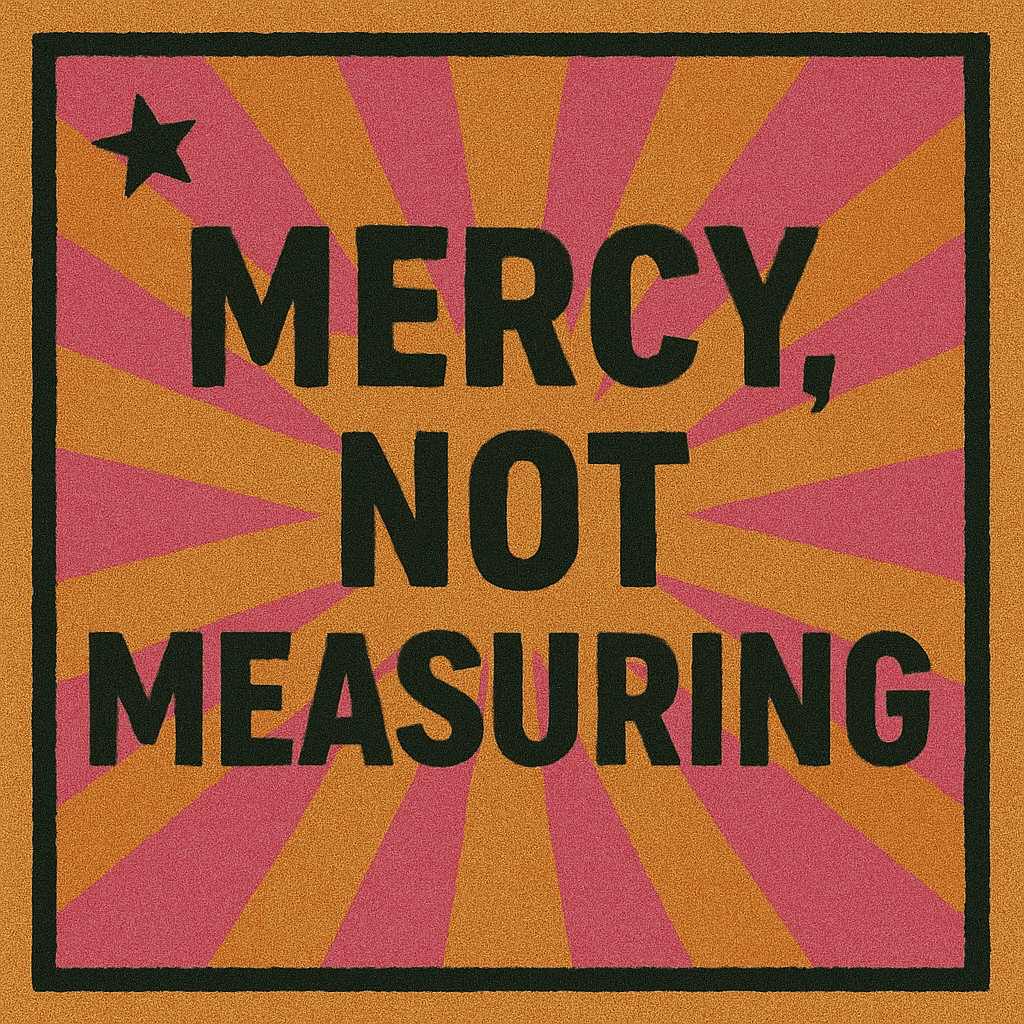
    So if your heart has been aching for Mass, don’t let shame or someone else’s rulebook convince you you’re unworthy. Come. Sit. Rest. Pray. Let the liturgy hold you, shape you, heal you. The table is mercy, not measuring.

    And if anyone tries to shut the door on you?

    Sweetheart… we’ll just build a bigger table.

  • Franciscan Clarean Reflection for All Saints and All Souls

    Franciscan Clarean Reflection for All Saints and All Souls

    Franciscan Clarean Reflection for All Saints and All Souls

    A Communion of Holy Mischief

    All Saints Day (November 1) and All Souls Day (November 2) remind us that the Franciscan Clarean family is larger than we can see. It includes every holy rebel, barefoot mystic, and gentle soul who has ever said “yes” to Love. In the words of Francis, “We have been called to heal wounds, to unite what has fallen apart, and to bring home those who have lost their way.”

    For Clareans, sainthood isn’t marble perfection—it’s earthy, tender fidelity to love in the face of empire, despair, and apathy. The saints are our siblings in the great experiment of mercy. They show us that holiness often wears work boots and smells faintly of compost and candle wax.

    All Saints Day: Celebrating the Cloud of Witnesses

    We honor not only canonized saints but all who have lived the Beatitudes with reckless grace—the peacemakers, the caretakers, the truth-tellers, the queer prophets, the nameless neighbors who carried the light through the world’s long nights.
    In Franciscan Clarean spirituality, this “cloud of witnesses” includes St. Francis and St. Clare, yes—but also anyone who dared to love without condition, resist oppression, and restore creation. Their sainthood is contagious; it reminds us to live audaciously holy lives right now.

    Ritual Suggestions

    Light seven candles for the seven virtues of Franciscan Clarean life: humility, simplicity, joy, service, compassion, creation-care, and holy mischief.

    Read the Canticle of the Creatures and add your own verses naming today’s saints and struggles.

    Share bread and soup with your community or the unhoused, recognizing the living saints among you.

    All Souls Day: Remembering the Beloved Departed

    This day honors those who have crossed the thin veil between worlds. In the Franciscan Clarean way, death is not an ending but a transformation—a returning to God’s embrace. We practice the memento mori not with fear, but with gratitude that life and death alike are sacred threads in the same tapestry.

    Ritual Suggestions

    Create an altar of remembrance: photos, candles, simple offerings like flowers, stones, or favorite foods.

    Pray the Peace Prayer of St. Francis, naming those who need healing and those who have gone before.

    Write letters to your ancestors—biological and spiritual—thanking them for what they planted in you.

    A Prophetic Call

    In a world obsessed with power and consumption, the twin feasts of All Saints and All Souls invite a radical remembrance: that our lives are bound together across time and death. The Communion of Saints calls us to resist forgetfulness. To remember the martyrs of climate justice, of racial struggle, of poverty and war, is to proclaim that love outlasts empire.

    As the world groans with ecological collapse and moral exhaustion, the Franciscan Clarean response is not despair—it’s defiant joy. We are called to be living saints—the holy fools who dare to believe peace is still possible.

  • How to Celebrate the Feast of Saint Francis of Assisi

    Here’s how to celebrate the Feast of Saint Francis of Assisi (October 4th) — no habit, no monastery required, just an open heart and maybe a few furry friends. 🕊️🐾


    🌅 1. Start with Gratitude and Simplicity

    Francis began every day with gratitude for “Brother Sun” and “Sister Moon.”
    You can honor him by doing the same: step outside, breathe the morning air, and say something like:

    “Thank you, Creator, for this day, for breath, for life, for all creatures who share it with me.”

    Unplug for a while. Eat simply. Walk instead of drive. Let the day breathe.


    🕊️ 2. Pray or Reflect in Nature

    Francis didn’t see nature as decoration — he saw it as revelation.
    Go for a walk, sit under a tree, or open a window. Pray, meditate, or just listen.
    Read the Canticle of the Creatures (Francis’s own hymn) or Psalm 104.
    If you’re feeling poetic, write your own “Canticle of Gratitude.”


    🐕 3. Bless the Animals

    If you have pets, bless them with a short prayer or sprinkle water on their heads like a mini-baptism of love.
    If you don’t, donate to a local shelter or feed the birds.
    Francis loved all creatures — even the ones that bite.

    “Blessed are you, Lord, for Brother Dog, who teaches us joy.
    Blessed are you for Sister Cat, who shows us peace.”


    ✋ 4. Serve the Poor or Lonely

    Francis wasn’t just about fuzzy animals — he was fierce about compassion.
    Do something tangible:

    Bring food or socks to someone on the street

    Call a friend who’s struggling

    Volunteer or give anonymously

    Acts of mercy are living prayers.


    💐 5. Reconcile and Forgive

    Francis constantly sought peace.
    Take a moment to forgive someone — or yourself.
    If there’s tension with a friend, family member, or even God, offer a small olive branch.
    It doesn’t need to be dramatic — just real.


    📖 6. Read or Watch Something Franciscan

    Pick a passage from:

    The Little Flowers of St. Francis

    Brother Sun, Sister Moon (the film — gloriously 70s, but heartfelt)

    The Testament of St. Francis

    Then ask: What does “living simply” mean for me, today?


    🕯️ 7. Create a Mini-Ritual at Home

    Light a candle. Place a small cross, stone, or leaf beside it. Say:

    “Lord, make me an instrument of your peace.
    Where there is hatred, let me sow love.”

    Let the candle burn as a symbol of gentleness, humility, and hope.


    🎉 Bonus: Celebrate with Joy

    Francis loved laughter and song. Sing something, dance barefoot, share a meal with someone, or write a thank-you note to life itself.
    Holiness doesn’t have to be grim — it can sparkle.

  • A New Beginning on the International Day of Peace

    On Sunday, September 21, 2025, the world pauses to recognize the International Day of Peace—a day set aside to honor the founding ideals of the United Nations: to promote peace, end conflict, and foster global cooperation. It is a day when people of every faith and nation lift up the hope that peace is not just possible, but necessary.

    And this year, on this sacred day of global reflection and renewal, we are humbled and thrilled to share an announcement close to our hearts:

    ✨ The launch of the Chaplains of Saint Francis—our new Street Ministry and the outreach arm of the Order of Franciscan Clareans. ✨


    Why Today Matters

    Choosing this day was no accident. The International Day of Peace is a call to live differently—to disarm our hearts, heal divisions, and choose love over violence. St. Francis himself, the peacemaker of Assisi, modeled this in every encounter, from embracing lepers to crossing battle lines to meet the Sultan.

    To begin our ministry on this day is to root it in the same Franciscan vision: to bring peace, compassion, and tangible hope where it is needed most—on the streets, among the marginalized, in the everyday struggles of our neighbors.


    What the Chaplains of Saint Francis Will Do

    As the outreach arm of the Order of Franciscan Clareans, the Chaplains of Saint Francis will:

    Walk with the poor, homeless, and forgotten.

    Offer pastoral care, prayer, and listening ears to those in crisis.

    Provide practical help—food, clothing, resources, and connections.

    Be visible signs of Christ’s peace in the streets, not behind walls.

    Build bridges across divisions of faith, culture, and identity.

    This isn’t charity. It’s solidarity. It’s rolling up our sleeves and stepping into the mess of real life with the conviction that every soul matters, and no one is disposable.


    A Prophetic Call to Action

    Our ministry begins in the spirit of Francis and Clare, but it belongs to everyone who hears the same radical call: to live simply, love boldly, and serve faithfully.

    If you’ve been waiting for the right moment to act, to serve, to join a movement of peace rooted in justice—this is it. We invite you to walk with us, pray with us, and serve with us. Together, we can become instruments of peace in a world aching for healing.


    🌿 On this International Day of Peace, a new chapter begins.
    The Chaplains of Saint Francis are here, and we are ready to serve.

    Peace and all good,
    The Order of Franciscan Clareans

  • What Would Francis and Clare Do About Transphobia and Christian Nationalism?


    In the town square of Assisi, Francis of Assisi stripped off his father’s fine clothes and said:
    “From now on I can truly say: Our Father who art in heaven.”[^1]

    It was more than drama—it was protest. He was rejecting wealth, patriarchy, and control. Clare of Assisi did the same when she left her noble home, cut her hair, and embraced a new life of freedom. Later, when church officials tried to bend her into obedience, she pushed back and declared to her sisters:
    “Go forward securely, joyfully, and swiftly on the path of happiness.”[^2]

    Francis and Clare lived a gospel of freedom and courage. If they were alive today, they would not be silent about the spiritual sickness of transphobia and Christian nationalism. They would name them for what they are: false gospels.


    The Franciscan-Clarean Lens

    Francis saw all creation as family—Brother Sun, Sister Moon, even Sister Death. He kissed lepers, welcomed outcasts, and called enemies “brother.” He wrote:
    “Blessed is the servant who loves his brother as much when he is sick and useless as when he is well and can be of service.”[^3]

    Clare defended the dignity of her sisters against bishops and popes, insisting that women could live the gospel without domination. She urged Agnes of Prague:
    “Place your mind before the mirror of eternity. Place your soul in the brilliance of glory.”[^4]

    In that eternal mirror, there are no flags, no borders, no gender policing—only the radiance of God shining in every creature.


    Naming Today’s Powers

    Christian nationalism fuses flag and cross, confusing domination with discipleship.

    Transphobia in the church is another mask of the same power.

    Both are rooted in fear. Both betray the gospel of Christ.

    Francis and Clare knew that same fear-driven religion in their own day: a church bloated with wealth, launching crusades, obsessed with control. And they refused to bow to it.


    How Francis Would Respond

    Francis would not sit in legislative halls waving flags. He would be on the street corners with queer youth, in shelters with trans women, and at Pride with open arms.

    This is the man who kissed lepers when others ran, who called the Sultan “brother” during the Crusades. He looked at faces and saw Christ. Today, he would see Christ in the trans teen fighting to survive, the drag queen daring to sparkle, the queer refugee seeking safety.


    How Clare Would Respond

    When soldiers came to attack her convent, Clare held up the Eucharist and prayed:
    “See, Lord, I am in your hands. Protect these whom I cannot protect.”[^5]
    The soldiers fled.

    Clare knew how to stand between the vulnerable and the powerful. She told her sisters:
    “Do not be disturbed by the clamor of the world that flies about like shadows.”[^6]

    If she lived now, she would stand in the church doorway saying, “You shall not harm my siblings.” She would not yield an inch to those who try to use God as a weapon.


    Unmasking False Piety

    Francis warned:
    “Knowledge puffs up, but love builds up.”[^7]

    Christian nationalism thrives on ideology. Transphobia thrives on theology twisted into cruelty. Both are knowledge without love—and therefore not of God.

    Clare’s reminder cuts through the noise:
    “What you hold, may you always hold. What you do, may you always do and never abandon.”[^8]

    If we claim to follow Christ, we cannot abandon His most vulnerable children.


    The Call for Us

    Francis prayed:
    “Let us all love God with our whole heart, and love our neighbor as ourselves.”[^9]

    That’s the gospel. No exceptions, no caveats, no border walls or bathroom bills. Just love.

    To follow Francis and Clare today is to stand where they would stand: with the marginalized, against the powers. It means rejecting the false gospel of nationalism and the cruelty of transphobia. It means daring to live as if God’s kingdom is already here—because it is.

    Clare said it best:
    “Love Him totally, who gave Himself totally for your love.”[^10]

    That total love includes every body, every soul, every child of God.

    The question, then, is not “What would Francis and Clare do?” The question is: What will we do?


    Footnotes

    [^1]: Thomas of Celano, The Life of Saint Francis, I.6.
    [^2]: Clare of Assisi, Rule of Clare, Chapter X.
    [^3]: Francis of Assisi, Admonitions, XXV.
    [^4]: Clare of Assisi, Fourth Letter to Agnes of Prague, 15–16.
    [^5]: The Legend of Saint Clare by Thomas of Celano, Chapter XXI.
    [^6]: Clare of Assisi, Second Letter to Agnes of Prague, 10.
    [^7]: Francis of Assisi, Admonitions, VII (echoing 1 Cor. 8:1).
    [^8]: Clare of Assisi, First Letter to Agnes of Prague, 11.
    [^9]: Francis of Assisi, Earlier Rule, Chapter XXIII.
    [^10]: Clare of Assisi, Fourth Letter to Agnes of Prague, 29.