Sister Abigail Hester

Category: Order of Franciscan Clareans

  • How to Celebrate the Feast of Saint Francis of Assisi

    Here’s how to celebrate the Feast of Saint Francis of Assisi (October 4th) — no habit, no monastery required, just an open heart and maybe a few furry friends. 🕊️🐾


    🌅 1. Start with Gratitude and Simplicity

    Francis began every day with gratitude for “Brother Sun” and “Sister Moon.”
    You can honor him by doing the same: step outside, breathe the morning air, and say something like:

    “Thank you, Creator, for this day, for breath, for life, for all creatures who share it with me.”

    Unplug for a while. Eat simply. Walk instead of drive. Let the day breathe.


    🕊️ 2. Pray or Reflect in Nature

    Francis didn’t see nature as decoration — he saw it as revelation.
    Go for a walk, sit under a tree, or open a window. Pray, meditate, or just listen.
    Read the Canticle of the Creatures (Francis’s own hymn) or Psalm 104.
    If you’re feeling poetic, write your own “Canticle of Gratitude.”


    🐕 3. Bless the Animals

    If you have pets, bless them with a short prayer or sprinkle water on their heads like a mini-baptism of love.
    If you don’t, donate to a local shelter or feed the birds.
    Francis loved all creatures — even the ones that bite.

    “Blessed are you, Lord, for Brother Dog, who teaches us joy.
    Blessed are you for Sister Cat, who shows us peace.”


    ✋ 4. Serve the Poor or Lonely

    Francis wasn’t just about fuzzy animals — he was fierce about compassion.
    Do something tangible:

    Bring food or socks to someone on the street

    Call a friend who’s struggling

    Volunteer or give anonymously

    Acts of mercy are living prayers.


    💐 5. Reconcile and Forgive

    Francis constantly sought peace.
    Take a moment to forgive someone — or yourself.
    If there’s tension with a friend, family member, or even God, offer a small olive branch.
    It doesn’t need to be dramatic — just real.


    📖 6. Read or Watch Something Franciscan

    Pick a passage from:

    The Little Flowers of St. Francis

    Brother Sun, Sister Moon (the film — gloriously 70s, but heartfelt)

    The Testament of St. Francis

    Then ask: What does “living simply” mean for me, today?


    🕯️ 7. Create a Mini-Ritual at Home

    Light a candle. Place a small cross, stone, or leaf beside it. Say:

    “Lord, make me an instrument of your peace.
    Where there is hatred, let me sow love.”

    Let the candle burn as a symbol of gentleness, humility, and hope.


    🎉 Bonus: Celebrate with Joy

    Francis loved laughter and song. Sing something, dance barefoot, share a meal with someone, or write a thank-you note to life itself.
    Holiness doesn’t have to be grim — it can sparkle.
  • 🌿 A Franciscan Clarean Prayer to Mary

    A Franciscan Clarean Prayer to Mary

    Mother of the Poor Christ,
    you carried God’s revolution in your womb
    and sang the Magnificat with fire on your tongue.

    Sister of the Little Ones,
    teach us to say yes with courage,
    to cradle the powerless,
    to feed the hungry,
    to scatter the proud,
    to lift up the lowly.

    Mother of Mercy,
    walk with us on the margins,
    stand beside us in the streets,
    pray with us in our kitchens,
    weep with us in our sorrows,
    and laugh with us in our joys.

    Queen of the Poor,
    wrap your mantle around our Franciscan Clarean family,
    that we may live simply,
    love boldly,
    and follow your Son with reckless joy.

    Amen. ✨

  • A Franciscan Clarean Prayer for Peace

    A Franciscan Clarean Prayer for Peace

    Most Compassionate God,
    You who breathed stars into being and whispered life into the dust,
    teach us again the way of peace.

    Where nations rise in anger, let us sow dialogue and listening.
    Where greed devours creation, let us walk barefoot in reverence.
    Where hatred builds walls, let us tear them down with mercy.
    Where fear divides neighbors, let us risk love without condition.

    Christ of the wounded and the wandering,
    stand with the refugee, the prisoner, the homeless,
    and with all who are silenced by power.
    Make us companions of the poor,
    and fools for peace in a violent age.

    Spirit of holy fire and gentle dove,
    burn away the violence within our hearts.
    Give us courage to disarm not only nations,
    but our own bitterness and pride.

    We vow, in the spirit of Francis and Clare,
    to live simply,
    to love broadly,
    to forgive quickly,
    and to serve joyfully,
    until swords are beaten into plowshares,
    and every tear is wiped away.

    God of Peace, make us instruments of your healing,
    for the whole world is our monastery,
    and every creature is our brother and sister.

    Amen.

  • What Would Francis and Clare Do About Transphobia and Christian Nationalism?


    In the town square of Assisi, Francis of Assisi stripped off his father’s fine clothes and said:
    “From now on I can truly say: Our Father who art in heaven.”[^1]

    It was more than drama—it was protest. He was rejecting wealth, patriarchy, and control. Clare of Assisi did the same when she left her noble home, cut her hair, and embraced a new life of freedom. Later, when church officials tried to bend her into obedience, she pushed back and declared to her sisters:
    “Go forward securely, joyfully, and swiftly on the path of happiness.”[^2]

    Francis and Clare lived a gospel of freedom and courage. If they were alive today, they would not be silent about the spiritual sickness of transphobia and Christian nationalism. They would name them for what they are: false gospels.


    The Franciscan-Clarean Lens

    Francis saw all creation as family—Brother Sun, Sister Moon, even Sister Death. He kissed lepers, welcomed outcasts, and called enemies “brother.” He wrote:
    “Blessed is the servant who loves his brother as much when he is sick and useless as when he is well and can be of service.”[^3]

    Clare defended the dignity of her sisters against bishops and popes, insisting that women could live the gospel without domination. She urged Agnes of Prague:
    “Place your mind before the mirror of eternity. Place your soul in the brilliance of glory.”[^4]

    In that eternal mirror, there are no flags, no borders, no gender policing—only the radiance of God shining in every creature.


    Naming Today’s Powers

    Christian nationalism fuses flag and cross, confusing domination with discipleship.

    Transphobia in the church is another mask of the same power.

    Both are rooted in fear. Both betray the gospel of Christ.

    Francis and Clare knew that same fear-driven religion in their own day: a church bloated with wealth, launching crusades, obsessed with control. And they refused to bow to it.


    How Francis Would Respond

    Francis would not sit in legislative halls waving flags. He would be on the street corners with queer youth, in shelters with trans women, and at Pride with open arms.

    This is the man who kissed lepers when others ran, who called the Sultan “brother” during the Crusades. He looked at faces and saw Christ. Today, he would see Christ in the trans teen fighting to survive, the drag queen daring to sparkle, the queer refugee seeking safety.


    How Clare Would Respond

    When soldiers came to attack her convent, Clare held up the Eucharist and prayed:
    “See, Lord, I am in your hands. Protect these whom I cannot protect.”[^5]
    The soldiers fled.

    Clare knew how to stand between the vulnerable and the powerful. She told her sisters:
    “Do not be disturbed by the clamor of the world that flies about like shadows.”[^6]

    If she lived now, she would stand in the church doorway saying, “You shall not harm my siblings.” She would not yield an inch to those who try to use God as a weapon.


    Unmasking False Piety

    Francis warned:
    “Knowledge puffs up, but love builds up.”[^7]

    Christian nationalism thrives on ideology. Transphobia thrives on theology twisted into cruelty. Both are knowledge without love—and therefore not of God.

    Clare’s reminder cuts through the noise:
    “What you hold, may you always hold. What you do, may you always do and never abandon.”[^8]

    If we claim to follow Christ, we cannot abandon His most vulnerable children.


    The Call for Us

    Francis prayed:
    “Let us all love God with our whole heart, and love our neighbor as ourselves.”[^9]

    That’s the gospel. No exceptions, no caveats, no border walls or bathroom bills. Just love.

    To follow Francis and Clare today is to stand where they would stand: with the marginalized, against the powers. It means rejecting the false gospel of nationalism and the cruelty of transphobia. It means daring to live as if God’s kingdom is already here—because it is.

    Clare said it best:
    “Love Him totally, who gave Himself totally for your love.”[^10]

    That total love includes every body, every soul, every child of God.

    The question, then, is not “What would Francis and Clare do?” The question is: What will we do?


    Footnotes

    [^1]: Thomas of Celano, The Life of Saint Francis, I.6.
    [^2]: Clare of Assisi, Rule of Clare, Chapter X.
    [^3]: Francis of Assisi, Admonitions, XXV.
    [^4]: Clare of Assisi, Fourth Letter to Agnes of Prague, 15–16.
    [^5]: The Legend of Saint Clare by Thomas of Celano, Chapter XXI.
    [^6]: Clare of Assisi, Second Letter to Agnes of Prague, 10.
    [^7]: Francis of Assisi, Admonitions, VII (echoing 1 Cor. 8:1).
    [^8]: Clare of Assisi, First Letter to Agnes of Prague, 11.
    [^9]: Francis of Assisi, Earlier Rule, Chapter XXIII.
    [^10]: Clare of Assisi, Fourth Letter to Agnes of Prague, 29.

  • When Apostles Get Ghostwriters: Evidence of Forgery in the New Testament

    Introduction: Holier Than Thou or Holier Than Honest?

    The New Testament is hailed as “God’s Word,” but let’s be real: much of it is anonymous, pseudonymous, or forged. Early Christians lived in a world where writing under someone else’s name was a power move—meant to claim authority, shut down rivals, and win theological battles. Think of it as the original form of identity theft, with a halo.


    Paul: The Real vs. the Fake

    Authentic Paul (7 letters): Romans, 1–2 Corinthians, Galatians, Philippians, 1 Thessalonians, Philemon. These bear Paul’s raw, fiery voice—half-mystic, half-activist.[1]

    Imposter Paul (the rest):

    Deutero-Pauline: Ephesians, Colossians, 2 Thessalonians. These smooth-talking letters sound like Paul on decaf.[2]

    Pastorals (1 & 2 Timothy, Titus): Widely regarded as forgeries. Vocabulary and style don’t fit, the church hierarchy looks too developed, and Paul suddenly obsesses over bishops and “sound doctrine.”[3]


    Peter: The Fisherman Who Couldn’t Spell Greek

    1 Peter: Its sophisticated Greek and rhetorical polish make it unlikely that an uneducated Galilean fisherman wrote it.[4]

    2 Peter: Almost universally labeled a forgery, composed in the 2nd century, and heavily plagiarizing Jude.[5]


    The Johannine Mix-Up

    Gospel vs. Revelation: The Gospel of John is smooth, mystical Greek; Revelation is rough, broken Greek. Not the same author.[6]

    1–3 John: Anonymous letters later attributed to “John” for borrowed authority.[7]


    The Interpolations: Cutting Room Floor Additions

    Some passages look like late insertions—pious frauds with staying power:

    Mark 16:9–20: The “long ending” with snake-handling and poison-drinking is absent in earliest manuscripts.[8]

    John 7:53–8:11: The woman caught in adultery. A moving story, but added later.[9]

    1 John 5:7 (Comma Johanneum): Explicit Trinitarian formula—medieval addition, not found in Greek manuscripts.[10]

    Luke 22:43–44: Jesus sweating blood in Gethsemane—missing from earliest copies.[11]


    The Gospel Truth: They’re Anonymous

    The gospels never name their authors. “Matthew,” “Mark,” “Luke,” and “John” were attached in the 2nd century as authority branding.[12] In the ancient world, name-dropping was marketing: “Buy this scroll! Endorsed by an apostle!”


    Why It Matters

    Here’s the punchline: the church has been preaching against “bearing false witness” while canonizing forged documents. Hypocrisy much? But here’s the Franciscan Clarean twist: truth doesn’t need forgery to shine. The Spirit works even through messy, forged, and human documents. God’s love doesn’t require a flawless manuscript.


    Conclusion: Holiness Over Forgery

    If anything, forged and interpolated texts remind us that Christianity was always messy, political, and human. Faith isn’t about pretending our Scriptures dropped from heaven shrink-wrapped. It’s about hearing God’s call in the cracks, the edits, and yes—even the forgeries.

    Because if God can work through forged letters, then God can work through us—hot messes, imposters, and all.


    References

    [1]: Bart D. Ehrman, Forged: Writing in the Name of God—Why the Bible’s Authors Are Not Who We Think They Are (New York: HarperOne, 2011), pp. 95–118.
    [2]: Marcus J. Borg and John Dominic Crossan, The First Paul: Reclaiming the Radical Visionary Behind the Church’s Conservative Icon (New York: HarperOne, 2009).
    [3]: Raymond E. Brown, An Introduction to the New Testament (New York: Doubleday, 1997), pp. 668–681.
    [4]: Ehrman, Forged, pp. 122–124.
    [5]: Werner Kümmel, Introduction to the New Testament (London: SCM Press, 1975), pp. 430–433.
    [6]: Elaine Pagels, Revelations: Visions, Prophecy, and Politics in the Book of Revelation (New York: Viking, 2012).
    [7]: Brown, Introduction to the New Testament, pp. 387–393.
    [8]: Bruce Metzger, A Textual Commentary on the Greek New Testament (Stuttgart: United Bible Societies, 1994), pp. 102–106.
    [9]: Ibid., pp. 187–189.
    [10]: Metzger, Textual Commentary, pp. 647–649.
    [11]: Ehrman, Misquoting Jesus: The Story Behind Who Changed the Bible and Why (New York: HarperOne, 2005), pp. 187–189.
    [12]: Richard Bauckham, Jesus and the Eyewitnesses: The Gospels as Eyewitness Testimony (Grand Rapids: Eerdmans, 2006), though defending authenticity, still acknowledges anonymous origins.

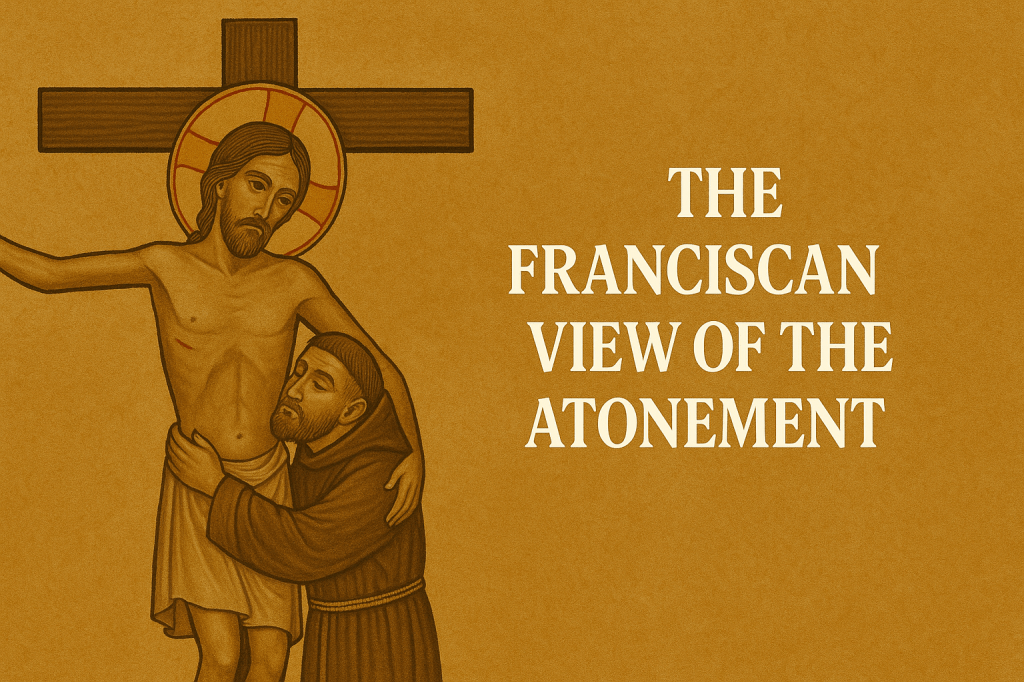
  • The Franciscan Vision of the Atonement: Love Before Law


    Introduction

    In the history of Christian theology, the doctrine of the atonement has often been framed in the language of law, debt, and punishment. Anselm of Canterbury’s Cur Deus Homo (11th century) offered the satisfaction model: humanity’s sin dishonored God, and satisfaction was required through Christ’s death.^1 Later Protestant Reformers sharpened this into penal substitution: Jesus bore divine wrath in humanity’s place.

    The Franciscan tradition, however, offers a radically different perspective. From St. Francis and St. Clare’s lived spirituality, to the speculative theology of St. Bonaventure and John Duns Scotus, Franciscans interpret the Incarnation and Cross not as reactions to sin but as the eternal expression of God’s love. For Franciscans, the atonement is not transaction but transformation, not appeasement but union.


    The Incarnation as “Plan A”

    At the heart of Franciscan atonement theology lies the Primacy of Christ. John Duns Scotus (1266–1308) argued that the Incarnation was not contingent upon human sin. God did not look down at Eden’s rebellion and scramble for a remedy. Rather, the Word-made-flesh was foreordained “before the foundation of the world” (Eph. 1:4).

    Scotus writes: “If Adam had not sinned, Christ still would have become incarnate. For the Incarnation is the greatest glory of God, and it is fitting that God should will always what is best and most glorious.”^2 In other words, Christ is not plan B after human failure, but plan A from eternity.

    This perspective reshapes the atonement: Jesus comes primarily to unite creation with God, not simply to fix sin.^3


    Bonaventure and the Cross as Revelation of Love

    St. Bonaventure (1217–1274), the “Seraphic Doctor,” emphasized the affective and mystical dimensions of the Cross. In his Tree of Life, he portrays Christ crucified as the burning heart of divine charity:

    • The wood of the cross is the ladder to heaven.
    • The wounds of Christ are windows into God’s mercy.
    • The Crucified is not merely victim but lover.

    For Bonaventure, the Cross does not primarily satisfy wrath but enflames hearts with love, drawing humanity into compassionate union with the suffering Christ.^4 The Franciscan devotion to the Passion—embodied in Francis’s stigmata—reflects this mystical vision.


    Francis and Clare: Lived Atonement in Poverty

    Francis and Clare of Assisi did not write scholastic treatises, but their lives proclaimed a theology of atonement. By embracing radical poverty, humility, and solidarity with lepers and outcasts, they embodied Christ’s own descent into littleness.

    For Francis, Christ saves not by power but by weakness. The Incarnation is God stooping down, and the Cross is God identifying with the crucified of the world.^5 To follow the Poor Christ is to share life with the poor and crucified of history.

    Clare insisted that gazing upon the mirror of the crucified Christ transforms the soul. “Place your mind before the mirror of eternity, place your soul in the brilliance of glory, place your heart in the figure of the divine substance, and transform your entire being into the image of the Godhead through contemplation.”^6 For Clare, this contemplative seeing—not legal reasoning—was the path of atonement.


    Theological Implications

    1. Union, Not Transaction
      • Salvation is not a commercial exchange of debt and payment, but a personal union of love between God and creation.^7
    2. Solidarity with the Marginalized
      • The Cross shows God standing with the oppressed. Thus, to live the atonement is to stand in solidarity with the poor, the queer, the crucified of every age.^8
    3. Cosmic Christology
      • The Incarnation integrates not only humanity but the whole cosmos into Christ. Atonement thus includes creation itself, grounding Franciscan ecological spirituality.^9
    4. Transformation of Desire
      • The Franciscan way emphasizes affectivity: the Cross changes the human heart, awakening love rather than fear.^10

    Conclusion

    The Franciscan opinion of the atonement is, at its core, a vision of divine love made visible in Christ. Against juridical models, Franciscans proclaim that God did not send Christ to change His own mind about humanity, but to change humanity’s mind about God.

    The Incarnation was always the divine intention; the Cross reveals the cost of divine love in a violent world. For Francis and Clare, Bonaventure and Scotus, the atonement is not a courtroom verdict but a love song sung from eternity: God with us, God for us, God in us.

    “Love is not loved,” Francis once lamented.^11 The Franciscan vision of the atonement dares to reply: on the Cross, Love is at last unveiled.


    Footnotes

    1. Anselm of Canterbury, Cur Deus Homo, trans. Jasper Hopkins (Minneapolis: Arthur J. Banning Press, 1974).
    2. John Duns Scotus, Ordinatio III, d.7, q.3 (see Allan B. Wolter, Duns Scotus on the Incarnation, Franciscan Institute Publications, 2004), 55–60.
    3. Richard Rohr, Eager to Love: The Alternative Way of Francis of Assisi (Cincinnati: Franciscan Media, 2014), 183.
    4. Bonaventure, The Tree of Life, in Bonaventure: The Soul’s Journey into God, The Tree of Life, The Life of St. Francis, trans. Ewert Cousins (New York: Paulist Press, 1978), 135–150.
    5. Augustine Thompson, Francis of Assisi: A New Biography (Ithaca: Cornell University Press, 2012), 102–110.
    6. Clare of Assisi, Fourth Letter to Agnes of Prague, in Francis and Clare: The Complete Works, trans. Regis J. Armstrong and Ignatius Brady (New York: Paulist Press, 1982), 66.
    7. Zachary Hayes, Bonaventure: Mystical Writings (New York: Crossroad, 1999), 89–94.
    8. Ilia Delio, A Franciscan View of Creation: Learning to Live in a Sacramental World (St. Bonaventure, NY: Franciscan Institute, 2003), 72.
    9. Ilia Delio, Christ in Evolution (Maryknoll: Orbis Books, 2008), 121–126.
    10. Ewert Cousins, Bonaventure and the Coincidence of Opposites (Chicago: Franciscan Herald Press, 1978), 142.
    11. Francis of Assisi, The Admonitions, in Francis and Clare: The Complete Works, trans. Regis J. Armstrong and Ignatius Brady (New York: Paulist Press, 1982), 36.

  • Texas Just Criminalized Being a Homeless Kid

    Texas lawmakers have decided that if you’re a homeless child, your trauma is now a suspendable offense.

    House Bill 6 overturns protections that kept homeless students in school unless they posed a serious danger. Now? You can be kicked out for “disruption” — which, when you’re homeless, might mean:

    Being late because you don’t have a stable ride.

    Falling asleep in class because you slept in a shelter.

    Having an emotional meltdown because life is chaos.

    This isn’t discipline. It’s punishment for poverty.

    From a Franciscan Clarean lens, this is the opposite of the Gospel. Jesus didn’t expel the broken from the table — He drew them closer. Texas is doing the opposite: If your suffering makes us uncomfortable, we’ll push you out of sight.

    Let’s call this what it is: state-sanctioned cruelty that will shove more kids into the dropout-to-prison pipeline. We need to fight for restorative justice, trauma-informed teaching, and policies that protect — not punish — the most vulnerable.

  • Trump’s Purge of Washington’s Homeless: A Franciscan Clarean Witness Against Spiritual Malpractice


    David Harold Pugh sat by the library wall, strumming his guitar. His tent had been bulldozed the night before, his few possessions scattered. “This is shelter,” he told reporters. “Safe. Familiar.” Another man, watching his camp dismantled, could only say, “I don’t know. I don’t know,” when asked where he would sleep next.

    These are not criminals. They are not threats. They are the beloved of God—pushed out in the name of “beautification.”


    What’s Happening

    Over the past week, the Trump administration has taken control of D.C.’s Metropolitan Police, deployed the National Guard, and begun dismantling homeless encampments near high-profile areas like the Lincoln Memorial and Constitution Avenue.

    Residents are told to accept shelter beds—or face fines and jail. Belongings are destroyed. Encampments are erased overnight.

    Trump justifies the crackdown as a public safety measure. Yet violent crime in D.C. is at a 30-year low. The truth is this is not about safety—it’s about optics, and the people paying the price are those with the least power to resist.


    A Franciscan Clarean Lens

    As a Franciscan Clarean, I cannot see this as anything but spiritual malpractice:

    1. The Poor Are Not a Problem to Be Solved—They Are Christ to Be Welcomed
      Francis and Clare didn’t “manage” the poor. They embraced them. When you bulldoze a tent, you are bulldozing the tabernacle where Christ Himself dwells.
    2. Poverty Is Not a Crime
      “It’s not illegal to be homeless,” Pugh reminded the world. But we live in a nation that criminalizes poverty every day. Jesus Himself was born into housing insecurity—His first crib was a feeding trough.
    3. Trust Is Sacred, Not Disposable
      Outreach groups like Miriam’s Kitchen spend months building trust. Sweeps destroy it in minutes. Displaced people don’t just lose shelter—they lose the fragile relationships that might have led them toward stability.
    4. Safety Without Dignity Is Not Safety
      Forcing people into overcrowded shelters where they fear theft, violence, or loss of autonomy is not mercy—it’s coercion. And coercion is not love.

    The Prophetic Alternative

    A Franciscan response would not send troops into the streets, but brothers and sisters bearing soup, blankets, and listening ears.

    It would not measure success in the number of tents destroyed, but in the number of people who find real homes and healing.

    It would replace “sweeps” with accompaniment—a long, patient walking-with that refuses to let go until the beloved has found safety, dignity, and belonging.


    The Call

    We are at a moral fork in the road. We can pave over our compassion in the name of political theater, or we can follow the One who said, “Whatever you did for the least of these, you did for Me.”

    Francis stripped himself of worldly power to be among the poor. Clare left her comforts to embrace holy dependence. Both knew: the measure of a society is not the shine of its monuments but the safety of its streets at midnight for the one with nowhere to go.

    If Christ came to Washington today, He would not be in the White House.
    He would be under the overpass, His bedroll at His side, asking if you would sit with Him a while.

  • Clare’s Radical Poverty: Reclaiming Holy Dependence

    By Sister Abigail Hester, OFC

    “Go forth in peace, for you have followed the good road. Go forth without fear, for He who created you has made you holy, has always protected you, and loves you as a mother.” — Saint Clare of Assisi

    A Scandalous Simplicity

    Clare of Assisi didn’t just embrace poverty—she dared to love it. Not out of ascetic thrill-seeking, but because she saw in it a deeper truth: we were never meant to survive on our own. In a world addicted to autonomy, she chose holy dependence. And that is scandalous.

    She defied not just her wealthy family, but the entire ecclesial structure that wanted her to “tone it down.” Bishops begged her to accept endowments. Popes tried to gently nudge her into more “reasonable” poverty. Clare? She dug in her heels. She insisted that her community have no possessions whatsoever—not even collectively. For Clare, poverty wasn’t a punishment. It was a path to freedom. A radical freedom that refused to be owned, owed, or beholden to anyone but Christ.

    Dependence as Resistance

    In our modern world, “dependence” is a dirty word. We’re taught to be self-sufficient, self-made, and preferably stylish while doing it. Neediness is weakness. But Clare flips the script: dependence isn’t disgraceful—it’s divine.

    To live in holy dependence is to confess:

    I don’t have all the answers.

    I can’t save myself.

    I need others, and I need God.

    Clare’s vision rips the mask off toxic individualism. She shows us that community—real, messy, interdependent community—isn’t a backup plan. It’s the Gospel lived out. Her sisters didn’t just pray together. They begged together, fasted together, wept together. They trusted that God would provide through the hands of the poor and the generosity of others. And often, He did.

    The Poor Christ

    What made Clare’s poverty radical wasn’t the lack of stuff. It was her refusal to turn away from the Crucified Christ. She saw in Him—naked, abandoned, pierced—her Beloved. She wanted to mirror Him in everything. His poverty, His vulnerability, His absolute surrender to the Father’s will.

    To be poor like Clare is to stare into the wound of the world and not flinch. It is to say, I will not climb the ladder. I will descend into the dust, where Christ dwells among the broken. This is not performative poverty. This is mystical union.

    A Word to the Church

    Let’s be honest: much of the Church today has made peace with wealth. We’ve baptized greed, canonized comfort, and turned boardrooms into upper rooms. Clare’s life asks us: Who do we actually trust? Mammon or Mercy?

    If our ministries, communities, and spiritual lives can’t survive without financial insulation or institutional power, then we are not poor enough to know Clare. Or Christ.

    Reclaiming Holy Dependence

    For the Order of Franciscan Clareans—and for all who dare to follow the poor, queer, and crucified Christ—this is our inheritance. Holy dependence isn’t about helplessness. It’s about wholeness. It’s about reclaiming the sacred gift of needing one another.

    What might it look like to:

    Share your income with your neighbor without tracking the “ROI”?

    Let go of owning more and opt into mutual care?

    Refuse the illusion of control and embrace the vulnerability of trust?

    Clare doesn’t give us a blueprint. She gives us a burning love—a love that says: Let go. Fall into God. And if you’re lucky, into the arms of the poor.

    Benediction

    May we be ruined for comfort.
    May we be allergic to power.
    May we live unclenched, unarmed, and unashamed to need.
    Like Clare. Like Christ.

  • When Mammon Wears a Collar: Calling Out the Prosperity Gospel

    By Sister Abigail Hester, OFC

    “You cannot serve both God and mammon.” — Jesus (Matthew 6:24)

    Introduction: The Gospel According to Greed

    There’s a poison infecting the Body of Christ. It’s slick, it’s shiny, and it’s tax-exempt. It dresses in designer suits, flies in private jets, and justifies it all with cherry-picked Scripture. It calls itself “blessed,” but it’s better described as bloated. It claims to preach the good news, but it’s selling snake oil soaked in gold.

    We’re talking about the Prosperity Gospel — that glitzy theology which proclaims that Jesus wants you rich, powerful, and problem-free… so long as you sow your “seed offering” into the preacher’s bank account.

    At the Order of Franciscan Clareans, we stand firmly and prophetically against this distortion of the Gospel. We follow a poor Christ — the one who was born in a barn, died naked on a Roman cross, and taught that the last shall be first. We believe the Prosperity Gospel is not just bad theology — it’s spiritual violence wrapped in tinsel.

    1. Mammon in the Pulpit

    When Jesus said, “You cannot serve both God and mammon,” He meant it literally. Mammon — the idol of wealth, of accumulation, of status — has found its way into the pulpit. Some preachers now sound more like motivational speakers for hedge fund managers than like prophets of the Kingdom.

    They claim:

    “If you’re struggling, it’s because you don’t have enough faith.”

    “If you give to God (meaning them), He’ll multiply your money!”

    “Jesus was wealthy — he had a treasurer!”

    This is not the Gospel. It’s a pyramid scheme with a Bible verse duct-taped to it. It turns faith into a transaction, prayer into a business plan, and the poor into expendable footnotes.

    1. The True Gospel Is Not for Sale

    The Prosperity Gospel peddles a lie: that God’s favor looks like financial success, physical health, and unending comfort. But the cross tells a different story. Jesus — God Incarnate — was poor, persecuted, misunderstood, and ultimately executed by the powers of wealth and empire.

    His apostles fared no better. Not one of them got rich from following Jesus. Most were martyred. Paul wrote half the New Testament from prison. And yet the Prosperity Gospel dares to say suffering is a sign of weak faith?

    No, beloved. The true Gospel costs us something. It calls us to deny ourselves, to carry our cross, to side with the poor, the sick, the imprisoned — not to trample over them on the way to a bigger house.

    1. A Franciscan Clarean Response

    As Franciscan Clareans, we proclaim with clarity and courage:

    Jesus is not a vending machine. Prayer is not a product return.

    Wealth is not inherently evil, but it is inherently dangerous. It numbs compassion, warps our sense of enough, and tempts us to justify injustice.

    Poverty is not a curse, and riches are not a sign of divine approval. The Beatitudes say otherwise.

    The Church is not for sale. If your pastor drives a Rolls-Royce while congregants can’t pay rent, something is spiritually rotten.

    We embrace Lady Poverty — not out of masochism, but because poverty frees us. It reminds us that love, community, and justice are the real treasures. We follow the barefoot Christ, not the bedazzled counterfeit.

    1. Preaching Jubilee, Not Jackpots

    Where the Prosperity Gospel preaches scarcity and hoarding, we preach Jubilee — the radical release of debt, redistribution of wealth, and restoration of the land and its people.

    We call for a Church that:

    Tithes not to pad bank accounts, but to feed the hungry.

    Builds not megachurches, but tiny homes for the unhoused.

    Preaches not prosperity, but solidarity with the oppressed.

    We don’t need a God who rewards the already-powerful. We need a liberating Christ who overturns the tables, kicks out the money-changers, and sets the captives free.

    1. Final Benediction: Fire in the Bones

    If you’ve been wounded by the Prosperity Gospel, we see you. We affirm that your suffering is not proof of God’s absence. Your bank account does not determine your worth. Your illness is not a sin.

    Let the false gospel collapse under its own weight. Let the Church rise up again — poor, prophetic, and full of fire.

    And if Mammon shows up wearing a clerical collar? We call it out. We cast it out.

    Because Jesus didn’t die to make us rich — He rose to make us free.