Sister Abigail Hester

Blog

  • A Sermon for the Solstice: When God Teaches by Tilting the Earth


    Beloveds,today the earth preaches before I do.

    Without asking permission.

    Without a committee meeting.

    Without a sermon outline.

    The planet tilts—and suddenly, half the world is wrapped in darkness,while the other half stands in overflowing light.

    In the north, we reach the longest night.In the south, we bask in the longest day.

    Different experiences. Same moment. Same God.

    And here’s the first truth the Solstice teaches us:

    God is not afraid of contrast.

    We are.

    We prefer uniformity. Agreement. Everyone feeling the same thing at the same time.

    But creation says, Nope.

    God builds holiness out of opposites—light and dark, rest and work, silence and song.

    Winter Solstice does not say, “Light has lost.”

    It says, “The light has gone underground.”

    It is incubating. Gathering strength. Learning patience.

    Summer Solstice does not say, “More is coming.”

    It says, “This is as bright as it gets—now steward it well.”

    Because even abundance needs wisdom.

    Some of you are standing in winter right now.

    Your prayers feel quiet.

    Your energy is low.

    Your faith feels like a single candle flickering in a long night.

    Hear the Gospel of the Solstice:

    The darkness has reached its limit.

    From this day forward, the light increases—slowly, quietly, faithfully.

    Others of you are standing in summer.

    Life is full. Busy. Loud. Fruitful.

    And the Spirit whispers, “Don’t confuse brightness with permanence.”

    Even the longest day bows to evening.

    The Solstice humbles us because it reminds us:

    You are not stuck. You are in a season.

    And seasons are not punishments.

    They are teachers.

    Jesus understood this.

    He prayed in the dark.

    He shone in the daylight.

    He rested.

    He poured himself out.

    He trusted the rhythm.

    So today, we bless the dark—because it teaches us to listen.

    And we bless the light—because it teaches us to give.

    We bless the North and the South,the winter souls and the summer souls,the tired and the blazing,the grieving and the grateful.

    Because God does not choose between light and dark.

    God creates with both.So light a candle.

    Step into the sun.

    Honor where you are without apology.

    The earth is turning.

    The light is faithful.

    And God is still very much at work.Bright blessings, beloveds.

    Amen. 🌍✨

  • Gospel of Luke — Abigail Remix

    Gospel of Luke 6:27-38 — Abigail Remix

    Here’s Jesus, doing what Jesus does best: flipping our whole little moral universe upside-down like a kid dumping out a toy box.

    Love your enemies.
    Do good to the folks who can’t stand you.
    Bless the people who drag your name through the mud.
    Pray for the ones who treat you like dirt.

    And if somebody smacks you across one cheek? Jesus basically shrugs and says, “Honey, offer the other one too.”
    If someone steals your cloak? Don’t clutch the tunic either.
    Give to whoever asks.
    And if someone snatches something from you, don’t even demand it back.

    Then he drops the line we all quote but rarely live:
    Do to others what you want done to you.

    And honestly — if we only love people who love us back, Jesus says, big deal. Even the folks we call “sinners” know how to run that play. If we only do good to the people who treat us well, who cares? Anyone can do that. And if we lend money and expect repayment? Again — not exactly saint-level stuff.

    But then he pivots to the divine mic-drop:
    Love your enemies. Do good anyway. Give freely. Expect nothing back.

    Why?
    Because that’s how you become children of the Most High — the God who is kind to the ungrateful and the wicked. Jesus says, “Be merciful, just like your Father is merciful.”

    Stop judging so you won’t be judged.
    Stop condemning so you won’t be condemned.
    Forgive — and forgiveness will boomerang right back into your life.
    Give — and God will pour blessings into your lap like grain packed down, shaken together, spilling over the edges.

    It’s karmic, but make it Christian. Jesus is basically saying:
    You are shaping the world you live in by the way you show up in it.
    Your giving, forgiving, loving, and releasing create the very atmosphere you breathe.

    Selfishness can only receive selfishness. That’s its ecosystem.
    Love knows how to recognize love.
    Mercy knows how to receive mercy.
    What goes around really does come around — not as cosmic vengeance, but as the natural flow of the human heart.

    But here’s where it gets spicy.
    Jesus gives us this gorgeous, impossible command — and we look around at the religion many of us inherited and think, “Wait… where exactly were we supposed to learn mercy from?”

    A whole lot of Christians were handed a God who looks nothing like Jesus:
    An eternal torturer.
    A cosmic scorekeeper.
    A divine rage machine who loves rules more than people.

    We were told to love our enemies…
    while believing God burns His enemies forever.

    We were told to forgive seventy times seven…
    while believing God forgives once, maybe, and after that it’s fire and doom.

    No wonder we’re confused.
    No wonder Christians struggle to be non-judgmental.
    We learned our theology from a courtroom, not a wedding feast.
    We were shaped by threats, not tenderness.

    But Jesus insists the whole thing starts with God’s mercy.
    If the Source isn’t merciful, we can’t be either.
    If God is eternally furious, then of course we inherit the same posture.
    But if God is love — wild, generous, unreasonable love — then that river flows right through us and out into the world.

    And here’s the truth we’ve been too afraid to say out loud:
    If love isn’t flowing in and out of us, if mercy isn’t reshaping our hearts, if compassion isn’t the fragrance we leave behind, then whatever we’re practicing… it’s not Christianity.

    Flush that version.
    Let it go.
    It’s not healing anybody.

    We’re called into a faith that pours out forgiveness, compassion, generosity, and radical, stubborn love.
    That’s our real work.
    That’s the business we’re in.

    We’re in the love business — always have been, always will be.

  • A Franciscan Clarean Thanksgiving: Gratitude as Holy Rebellion

    A Franciscan Clarean Thanksgiving: Gratitude as Holy Rebellion

    Thanksgiving can be a complicated holiday—full of family, food, history, grief, joy, and everything in between. But in the Franciscan Clarean spirit, we don’t dodge complexity; we transform it. We take the messy, the tender, the ordinary, and we bless it. We turn gratitude into a kind of holy rebellion that pushes back against despair, greed, and isolation.

    So here’s a simple, earthy, justice-soaked Thanksgiving ritual for anyone who wants to feast with a little more soul this year.


    Start with a Breath

    Before anything else, pause.
    Feel the ground under your feet—the quiet generosity of Sister Earth. She asks for nothing and gives everything.

    Whisper, softly or boldly:

    “Thank you, Sister Earth. I stand on holy ground.”

    A simple beginning. A grounding one.


    A Call to Gratitude (Franciscan-Style)

    Francis and Clare didn’t treat gratitude like a nicety; they treated it like a spiritual revolution. They knew that when our hearts overflow, we become dangerous to systems built on scarcity and fear.

    So speak this aloud, or let your community chant it with a little rhythm:

    “We thank You for all things—
    the small, the fragile, the overlooked,
    the daily bread and the daily breath.”

    And whether you whisper or shout:

    “For all good things, praise be!”


    Name Something Small

    Around the table, invite everyone to name something they’re grateful for—but here’s the Franciscan Clarean twist:

    It must be something small.

    A warm pair of socks.
    A bird you heard this morning.
    A laugh you didn’t expect.
    Bread fresh from the oven.
    A tiny bit of healing that snuck up on you.

    Clare teaches us to find holiness in the small things. Gratitude begins there.


    Remembering the Poor and Forgotten

    No Franciscan Thanksgiving is complete without widening the circle of our prayer. Francis never let a full table exist without remembering empty ones.

    Pray:

    “God of the margins, bless the unhoused, the hungry, the lonely.
    Make our gratitude dangerous—
    the kind that leads to justice.”

    And then answer:

    “Let our feast become shared bread.”

    Because gratitude that stops at the table isn’t real gratitude—it’s just décor. Gratitude that moves outward becomes compassion.


    Blessing the Meal

    Hold your hand over the food, or touch the table gently.

    “Bless this food and all who grew it.
    Bless the hands that harvested, shipped, cooked, and served.
    Bless the creatures and the soil,
    the workers and the waters,
    the sun and the unseen microorganisms that labored for this moment.”

    And don’t forget the Franciscan Clarean punchline:

    “May this feast strengthen us for holy mischief in the world.”

    A little humor. A little truth. A lot of love.


    A Moment of Stillness

    Let the room breathe.
    Let gratitude sink into your bones.
    Let quiet become a prayer.


    A Short Reading for the Soul

    Choose one that fits your table:

    Option A — The Canticle Vibe

    “Praise be to You, who makes each creature a sibling.
    May we walk gently,
    love wildly,
    and remember that every sparrow, every stone, every stranger
    belongs at Your table.”

    Option B — Clarean Punk Energy

    “The world is aching for tenderness.
    May we be the ones who dare to offer it.”

    Either way, it sets the tone: tenderness as revolution.


    A Thanksgiving Toast

    Lift whatever you’re drinking—tea, cider, wine, cranberry fizz.

    “To gratitude that heals.
    To community that resists despair.
    To the Franciscan Clarean revolution of radical love.”

    Everyone answers:

    “Amen—and let’s eat!”


    May Your Thanksgiving Be Tender and Wild

    Wherever you are this season—surrounded by community, walking through grief, building new traditions, or sitting at a table that looks nothing like you imagined—may gratitude meet you gently.

    And may the Franciscan Clarean way remind you that gratitude isn’t passive.
    It’s active.
    It’s wild.
    It’s a spiritual force that can reshape the world—one small, tender, holy moment at a time.

  • “What’s the Point?” — A Franciscan Clarean Reflection on the Open Table

    “What’s the Point?” — A Franciscan Clarean Reflection on the Open Table

    “What’s the Point?” — A Franciscan Clarean Reflection on the Open Table

    Someone recently shared this with me:

    “I haven’t been to Mass in over a year. Since I live with someone who isn’t my spouse, I’m not permitted to take the Eucharist anyway, so I figure… what’s the point?”

    Oh friend… I hear that ache. And let me say this as clearly and fiercely as a Franciscan Clarean can:

    You are not exiled from God’s table.
    Not today. Not ever.

    Whatever someone told you about being “not permitted” doesn’t get the final word — Christ does. And Christ’s entire ministry was basically one long, holy potluck with the “wrong” people at the “wrong” times in the “wrong” places. If exclusion was the rule, Jesus broke it constantly.

    From a Franciscan Clarean perspective, the table of Christ is radically open because grace was never meant to be a reward for moral tidiness — it is food for the journey, nourishment for the hungry, medicine for the wounded.

    Francis and Clare didn’t spend their lives building gatekeeping systems.
    They built circles of welcome where the poor, the irregular, the complicated, and the scandalous could finally breathe again.

    So let me speak this truth over you:

    You belong.
    Your hunger matters.
    Your story is not disqualifying.
    The Eucharist is not a prize for the perfect, but bread for the broken.

    You don’t need to be married, sorted out, or checkbox-approved to encounter the living Christ. You just need to be human and hungry — which is all of us.

    So if your heart has been aching for Mass, don’t let shame or someone else’s rulebook convince you you’re unworthy. Come. Sit. Rest. Pray. Let the liturgy hold you, shape you, heal you. The table is mercy, not measuring.

    And if anyone tries to shut the door on you?

    Sweetheart… we’ll just build a bigger table.

  • Riot Grrrl and the Holy Noise of Growth

    Riot Grrrl and the Holy Noise of Growth

    Riot Grrrl and the Holy Noise of Growth

    by Sister Abigail Hester, OFC

    The Riot Grrrl movement burst out of the 1990s like a raw, unapologetic scream—a feminist punk uprising that demanded space for women’s voices in a world that tried to drown them out. It was chaotic, angry, beautiful, and necessary. Yet like many early feminist spaces, it wasn’t always inclusive. Trans women, women of color, and others at the margins often found themselves on the outside of a revolution that claimed to be for everyone.

    As a transgender woman, I stand in support of the Riot Grrrl movement—not because it was flawless, but because it learned to grow. The true test of any movement is not in its perfection but in its capacity for transformation. And Riot Grrrl, at its best, has embraced that transformation—shifting from exclusivity to intersectionality, from walls to bridges, from anger without direction to anger infused with love and solidarity.

    Today, we see trans and nonbinary punks reclaiming the mic, reshaping what “girl power” means, and bringing sacred noise to the frontlines of gender justice. This isn’t a betrayal of Riot Grrrl’s roots; it’s their fulfillment. It’s the echo of that same battle cry—now broadened to include every voice that was once silenced.

    We need movements that can admit their imperfections, confront their shadows, and evolve with grace. Growth is holy work. Repentance and renewal are revolutionary acts. Whether in the Church or in punk, salvation always begins with truth-telling.

    Riot Grrrl reminds us that activism isn’t about being spotless—it’s about being real. Punk was never about perfection anyway. It was always about showing up with courage, messy hair, chipped nail polish, and a heart on fire for justice.

    So here’s to the holy noise of growth. Here’s to the movement that dares to keep learning. And here’s to every trans woman with a mic in her hand and fury in her soul, still singing, still fighting, still alive.

  • The Franciscan Clarean Contemplative Activist

    The Franciscan Clarean Contemplative Activist

    The Franciscan Clarean Contemplative Activist

    In a world addicted to noise, speed, and power, the Franciscan Clarean contemplative activist stands still long enough to hear the heartbeat of God pulsing through creation. We refuse the false choice between prayer and protest — we do both. Our silence is not escape; it’s strategy. Our contemplation fuels our compassion, and our compassion drives us into the streets.

    Contemplation as Resistance

    Saint Francis and Saint Clare didn’t withdraw from the world — they withdrew from empire. Their solitude was rebellion. Their poverty was protest. Their prayers were a declaration that Caesar is not Lord, and love cannot be monetized. As Franciscan Clareans, we carry that same fire. When we kneel in quiet prayer, we are disarming the principalities. When we meditate on peace, we are sabotaging systems of greed and domination.

    Activism as Prayer

    Every act of mercy — feeding the hungry, tending the wounded, advocating for the marginalized — is itself a form of liturgy. We see Christ in the unhoused, the trans youth, the refugee, the addict. Our protests become processions. Our signs become psalms. Our work for justice is incense rising before the Divine.

    As Franciscan Clareans, we embody “prayer with dirty hands.” We garden, march, write, heal, and organize — but never apart from that contemplative center that reminds us why we act.

    The Rhythm of the Movement

    The Franciscan Clarean rhythm is simple but radical:

    Silence before speaking truth.

    Listening before leading.

    Grounding before giving.

    Community before consumption.

    This rhythm shapes a new kind of religious life — one that refuses to choose between the monastery and the movement. We are both monks and mischief-makers, mystics and medics, healers and holy troublemakers.

    Living the Vision

    To live as a contemplative activist is to hold paradox in our hands. We are gentle yet bold, peaceful yet persistent, humble yet revolutionary. We stand where Francis stood — with the poor, the forgotten, and the earth itself — crying out: “Peace and all good, but justice too!”

    So we pray with our feet, our hands, our breath, and our hearts.
    We love fiercely.
    We act boldly.
    We contemplate deeply.

    And in all of it, we remember:

    “Preach the Gospel at all times; when necessary, use megaphones and marching shoes.”

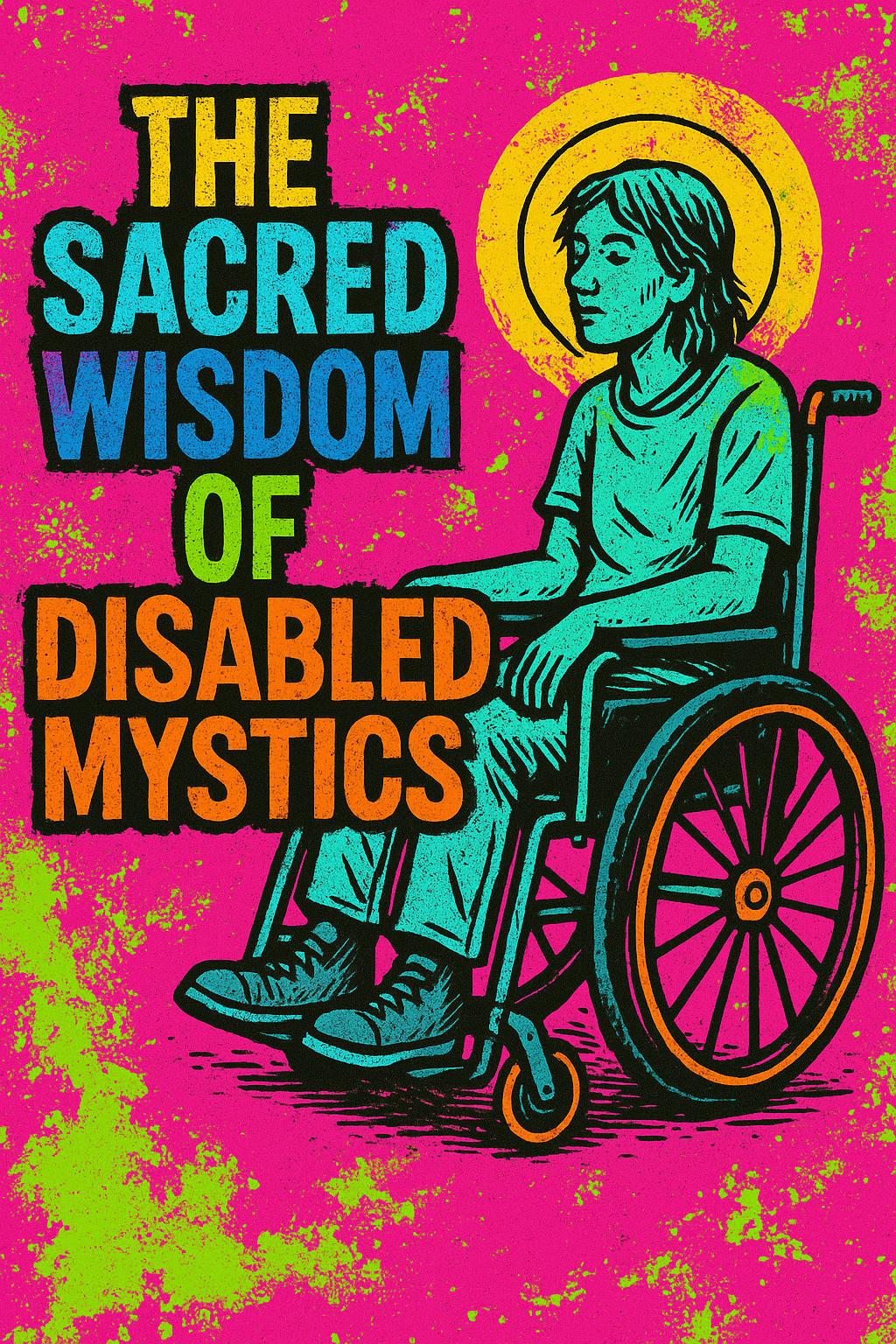
  • The Sacred Wisdom of Disabled Mystics

    The Sacred Wisdom of Disabled Mystics

    The Sacred Wisdom of Disabled Mystics

    Throughout history, mystics have often been misunderstood — prophets dismissed as mad, visionaries branded heretics, and saints hidden behind walls of pain. Among these sacred souls, the disabled mystics stand out like candles flickering in the wind — fragile, yet defiantly bright. Their wounds became windows. Their limits became lenses through which divine light shone more clearly.

    The Theology of the Broken Body

    In a world obsessed with power, perfection, and performance, disabled mystics remind us that God’s glory is revealed in weakness. As Paul wrote, “My grace is sufficient for you, for My power is made perfect in weakness” (2 Corinthians 12:9). Many of the great mystics—Julian of Norwich, who suffered grave illness; Brother Lawrence, whose physical pain led him to practice the presence of God; or Therese of Lisieux, bedridden and frail—found the deepest communion not in their strength, but in their surrender.

    Disability, in this sense, becomes not a curse but a calling — a way of living theology with one’s whole being. The body itself becomes sacred text. The wheelchair, the cane, the tremor, the memory lapse — all become syllables in the language of divine compassion.

    The Prophetic Voice of Pain

    Disabled mystics have always held a prophetic role in faith communities. They challenge the illusion that holiness looks like health or wholeness. They teach us that God doesn’t need a flawless vessel to pour out boundless love. Their existence dismantles ableist theology — the notion that God’s image is reserved for the strong, the productive, the “normal.”

    As the world glorifies independence, the disabled mystic embodies interdependence, the divine dance of mutual care. They remind us that salvation was never meant to be a solo act.

    Disability as a Doorway to Contemplation

    Silence. Stillness. Waiting. These are the hallmarks of both disability and mysticism. The slow body mirrors the slow movement of grace. The loss of certain abilities can open new capacities for spiritual sight. When one’s world shrinks, the Spirit expands to fill every inch of it.

    Julian of Norwich, confined to her cell by illness, could still proclaim, “All shall be well, and all shall be well, and all manner of thing shall be well.” That wasn’t denial — it was revelation. Her limited world was large enough to hold eternity.

    The Modern Disabled Mystic

    Today’s disabled mystics are still among us — chronic pain warriors, neurodivergent visionaries, blind poets, and bedridden prophets who livestream hope from hospital beds. They write, sing, and pray from bodies society often overlooks. They turn their suffering into solidarity. Their wheelchairs roll through holy ground. Their canes tap out the rhythm of prayer. Their assistive devices become instruments of sacred survival.

    The modern disabled mystic isn’t asking for pity — they’re offering prophecy. They are the living embodiment of resurrection, proving again and again that new life rises from brokenness.

    A Call to the Church

    The Church must stop treating disabled people as objects of ministry and start recognizing them as ministers. The sanctuary is incomplete without their wisdom. They don’t need to be “fixed” to belong — they are the Body of Christ, bruised and glorified.

    “The stone that the builders rejected has become the cornerstone” (Psalm 118:22).

    In that same way, the disabled mystic becomes the cornerstone of a more compassionate, embodied, and truthful spirituality — one that refuses to separate holiness from humanity.


    Closing Reflection:
    To be disabled and mystical is to live at the crossroads of fragility and divine fire. It is to walk—or roll, or crawl—into the heart of mystery and find there a God who also bears scars.

    Because maybe the greatest mystical truth is this:
    God’s own body is disabled too.

  • Queer and Trans Believers: The Gospel at the Margins

    Queer and Trans Believers: The Gospel at the Margins

    🌈 Queer and Trans Believers: The Gospel at the Margins

    By Sister Abigail Hester, OFC


    ✨ The Times Are Changing — and the Spirit Is Moving

    Across the world, the church is waking up to a truth long whispered in the hearts of queer and trans believers: you belong.

    More seminaries are rethinking outdated policies. Communities are learning to listen. And theologians are daring to read Scripture through the eyes of those who were long pushed aside.

    Even the Associated Press reports that evangelical seminaries are now debating how to welcome LGBTQ+ students more openly — the kind of breakthrough people once said was impossible.

    Meanwhile, queer and trans theologians are reclaiming sacred space and building lifelines for believers seeking a home inside Christianity rather than outside of it.

    This isn’t a niche issue. This is the Gospel unfolding in real time.


    📖 The Bible Still Speaks

    Genesis 1:27

    “So God created humankind in His image… male and female He created them.”
    This is not a box. It’s a blessing. Every human reflects divine beauty — beyond binary categories.

    Galatians 3:28

    “There is no longer Jew or Greek… male and female; for you are all one in Christ.”
    The Gospel dissolves hierarchies. If gender diversity can’t belong, then Paul’s declaration of unity is just ink on parchment.

    Colossians 3:14

    “Above all, clothe yourselves with love…”
    Love isn’t optional. It’s the Christian uniform.


    💔 When the Church Hurts

    Too many queer and trans believers have experienced sermons as weapons and fellowship as conditional hospitality.

    Research confirms what many already know in their bones: when faith communities reject a person’s core identity, psychological and spiritual injury follows.

    But exclusion is not the final word. Christ’s arms remain open even when church doors don’t.


    🌿 When the Margins Lead

    The question isn’t whether queer and trans Christians can belong.
    The question is what the body of Christ loses when their voices are silenced.

    Queer theology isn’t just a plea for a seat at the table.
    It’s an invitation to reimagine the table itself — larger, freer, more reflective of a God who transcends every box we create.


    🕊️ A Franciscan-Clarean Call

    In a Franciscan Clarean community, this becomes a lived commitment:

    Study circles exploring queer and trans theology.

    Sermons that proclaim belonging without apology.

    Community covenants that explicitly welcome all gender identities and orientations.

    Partnerships with affirming Christian groups doing this work on the ground.

    Hospitality is holy. Radical welcome is a spiritual discipline.


    🔥 The Prophetic Word

    To my queer and trans siblings:
    You are made in God’s image. Your identity is not an obstacle to holiness — it’s a window into divine creativity.

    To the broader church:
    The Spirit is waiting at the margins, still whispering, still blessing, still disrupting.

    And to all who seek Christ:
    Love is the beginning, middle, and end of the story.


    📚 References

    News & Cultural Commentary

    Associated Press. California evangelical seminary ponders changes that would make it more welcoming to LGBTQ students. AP News.

    Nursing Clio. Trans Theology: Reclaiming Christian Identity and Community Space for Trans People. NursingClio.org.

    PMC National Library of Medicine. Religion and Attitudes Toward Transgender People. PMC Article.

    The Reformation Project. Affirming Theology vs. Queer Theology.

    Q Christian Fellowship. Organization overview.

    Biblical Texts

    Genesis 1:27

    Galatians 3:28

    Colossians 3:14

    2 Corinthians 3:17

    Theological Resources

    St. Andrews Encyclopaedia of Theology: Queer Theology (Slater & Cornwall).

    QueerTheology.com — various articles on transgender Christian identity.

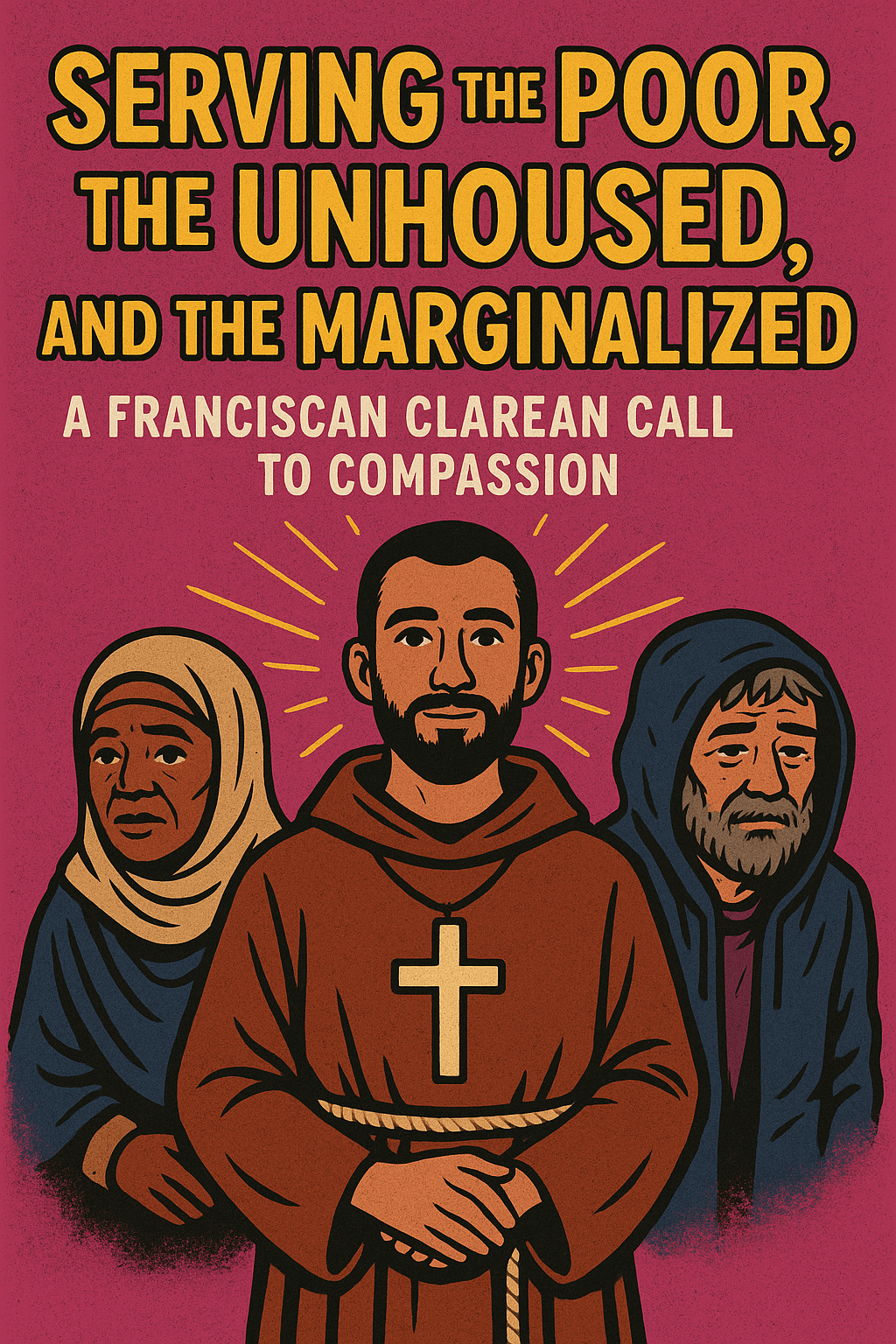
  • Serving the Poor, the Unhoused, and the Marginalized: A Franciscan Clarean Call to Compassion

    Serving the Poor, the Unhoused, and the Marginalized: A Franciscan Clarean Call to Compassion

    Serving the Poor, the Unhoused, and the Marginalized: A Franciscan Clarean Call to Compassion

    In an age when the wealth gap widens and compassion too often thins out, our Franciscan Clarean calling remains crystal clear: “We are dedicated to serving the poor, the unhoused, and those on the margins with dignity, compassion, and non-judgmental care.”

    A Crisis of Humanity

    Recent reports from the United Nations and the World Bank show that global homelessness and food insecurity have reached levels unseen in decades. In the United States alone, the Department of Housing and Urban Development reported in early 2025 that over 653,000 people experience homelessness on any given night — a sharp increase tied to rising rents, stagnant wages, and mental-health neglect. Around the world, economic instability and conflict have driven millions into displacement.
    These are not mere statistics — they are human beings, beloved of God, sleeping under bridges and in doorways, bearing the divine image in the dust and cold.

    Scripture’s Uncomfortable Reminder

    The Bible refuses to let us ignore them.

    “Is not this the kind of fasting I have chosen: to loose the chains of injustice… to share your food with the hungry and to provide the poor wanderer with shelter?” — Isaiah 58:6–7

    Christ himself identifies with the marginalized:

    “For I was hungry and you gave me food, I was thirsty and you gave me drink, I was a stranger and you welcomed me.” — Matthew 25:35

    And in James 2:15-17, the apostle writes bluntly:

    “If a brother or sister is poorly clothed and lacking in daily food, and one of you says to them, ‘Go in peace, keep warm and well fed,’ but does nothing about their physical needs, what good is that?”

    Faith without compassion in action is not faith at all — it is spiritual theater.

    Non-Judgmental Care as Revolution

    In a world obsessed with moral policing and “worthiness tests,” the radical mercy of Francis and Clare is revolutionary. To serve without judgment is to imitate the Christ who ate with tax collectors and touched lepers.
    True ministry does not begin with what brought you here? but rather how can I help you heal?

    This is why our Franciscan Clarean ministries reject hierarchy, stigma, and pity. We see Christ’s face in every person — especially in the ones society fears or ignores. Every cup of soup, every bandaged wound, every kind word whispered to someone who feels invisible is a sacrament of love.

    Signs of Hope Amid Despair

    Even in the midst of crisis, the Spirit is stirring. Across the globe, grassroots mutual-aid networks and faith-based street ministries are rising. From tent-chapels in Los Angeles to Franciscan communities in Kenya and the Philippines, ordinary people are rediscovering the Gospel’s raw power — not in cathedrals, but in compassion.

    This movement echoes the Canticle of the Creatures: a song of kinship, not separation. It insists that the poor are not “clients” but companions. The unhoused are not “the least of these” — they are our brothers and sisters, fully part of the household of God.

    The Franciscan Clarean Challenge

    To be Franciscan Clarean is to live dangerously tender. It means trading comfort for compassion, prestige for presence, and safety for solidarity. Our task is not to fix the world — but to love it fiercely enough that healing becomes possible.

    “Blessed are the merciful, for they shall obtain mercy.” — Matthew 5:7

    So we press forward, barefoot and bold, building communities of radical welcome.
    We will continue to feed, to clothe, to sit beside, to listen.
    We will continue to believe that even one act of love is a rebellion against despair.

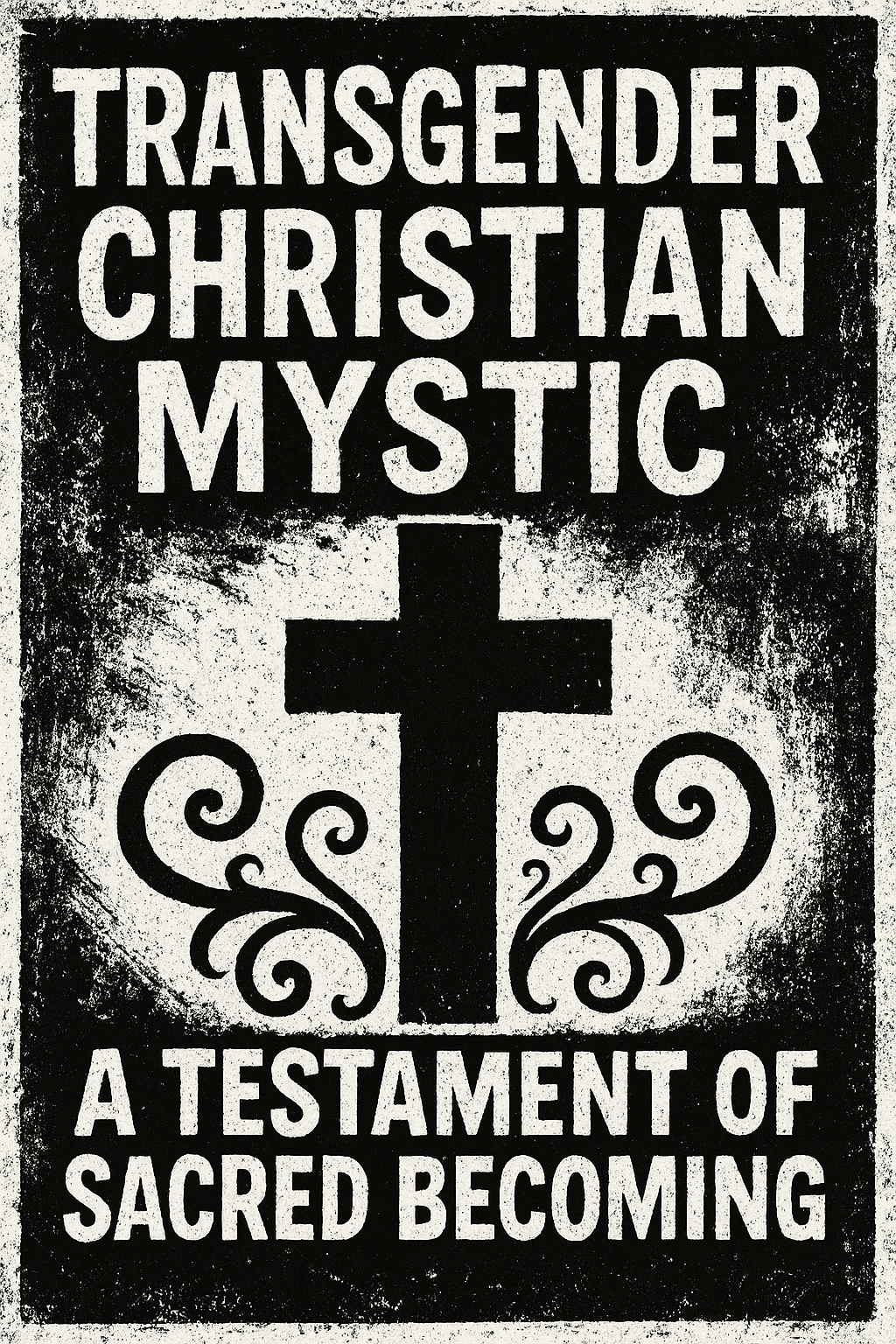
  • Transgender Christian Mystic: A Testament of Sacred Becoming

    Transgender Christian Mystic: A Testament of Sacred Becoming

    Transgender Christian Mystic: A Testament of Sacred Becoming

    by Sister Abigail Hester, OFC

    To be a transgender Christian mystic is to live as both revelation and resistance — a living parable of the God who refuses to be confined by binaries, hierarchies, or fear. It is to bear witness that divine mystery cannot be caged in male or female, sinner or saint, but moves freely, tenderly, and rebelliously through every soul that dares to say, “Here I am.”

    The Sacred Rebellion of Being

    My transness is not a rebellion against God — it’s a rebellion against the false gods of conformity and fear. It’s the refusal to let empire theology dictate where holiness can be found. When I embrace who I am — every strand of gender, every layer of becoming — I am saying yes to the Creator’s wild imagination. I am saying yes to the image of God as fluid, relational, and ever-unfolding.

    In that sense, being transgender is not about changing from one thing to another, but about revealing what was always divine within. It’s a mystical unveiling — an inner apocalypse where false identities fall away, and the soul steps out radiant and unashamed.

    The Mysticism of the Margins

    Mysticism is not about escaping the world but seeing through it — finding the divine shimmer in the cracks of creation. Trans mystics live in the holy tension between what is and what can be. We see heaven breaking into the present moment — not as escape, but as transfiguration.

    Like Francis stripping naked in the public square, the transgender mystic also stands unguarded before the world, saying, “This is who I am — and God is still good.” The wounds we carry become our stigmata; the love that sustains us becomes our resurrection. We are both cross and empty tomb, both pain and promise.

    A Gospel of Wholeness

    To walk this path is to live the Gospel in the flesh — the good news that nothing true can ever be lost, and no one who loves deeply can ever be outside God’s grace. The Incarnation itself is the great transition — God taking on human flesh, showing us that divinity is not distant but embodied.

    Every time a trans person claims their name, their pronouns, their authenticity, they echo the words of Jesus at the tomb: “Unbind them, and let them go.”
    This is resurrection power — not a metaphor, but a lived, daily act of spiritual defiance.

    The Call to the Transfiguration of the Church

    The Church, too, must transition — from fear to freedom, from dogma to love, from control to compassion. Trans mystics stand as prophets at the edge of that transformation, calling the Body of Christ to remember her own diversity, her own queerness, her own divine fluidity.

    We are the ones crying out in the wilderness: “Prepare ye the way of Love!”
    And like all true prophets, we know the cost — but we also know the joy that comes when Spirit blows where She wills.

    Living as a Sacred Mirror

    Being a transgender Christian mystic is to hold up a mirror to the world and whisper: “You too are divine. You too are becoming.”
    It’s to remind creation that holiness was never about fitting in — it was always about becoming whole.

    So I live my truth — not as rebellion, not as shame, but as a hymn of gratitude.
    For the God who made me this way, who walks with me through shadow and light, and who calls me, still, by name.